 comparison
Spaziola vs Concept Renovations: 2026 Comparison Guide
Table of Contents
- Spaziola vs Concept Renovations: Quick Comparison Table
- Spaziola vs Concept Renovations: Services and Specialties Compared
- How to Prevent Unexpected Remodeling Costs With Either Contractor
- Hiring a Licensed Contractor in the State: What to Verify
- Average Home Renovation Project Duration: What to Expect
- Permits, Codes, and Sustainability: Angles Most Comparisons Miss
- Which Contractor Fits Your Project? A Decision Framework
- Conclusion
- Frequently Asked Questions
Last Updated: September 20, 2026
Spaziola vs Concept Renovations: Quick Comparison Table
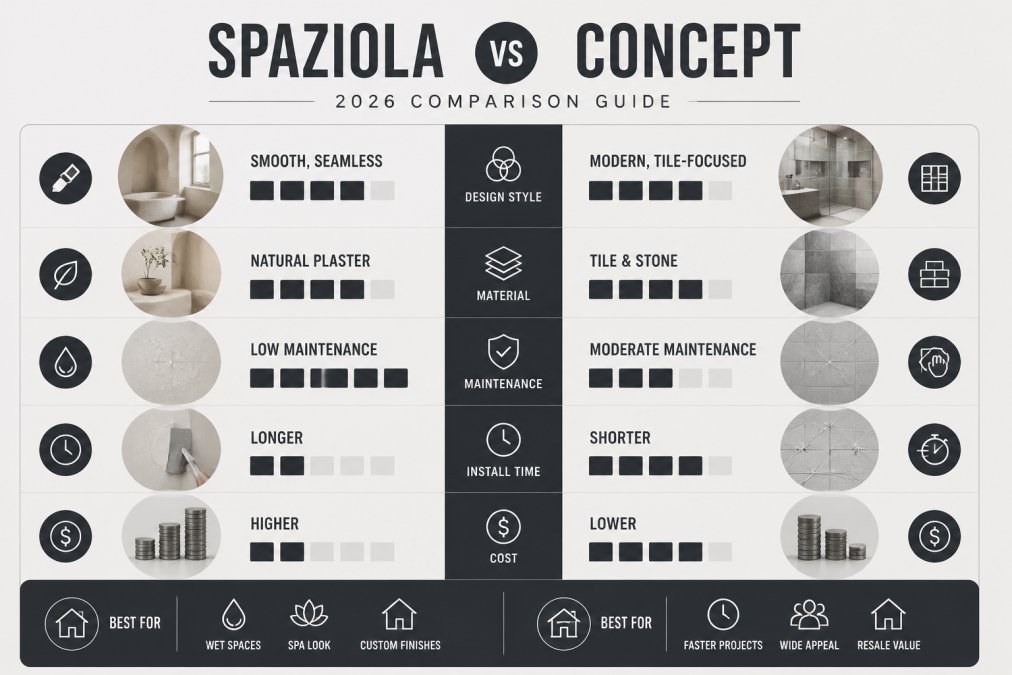
Choosing between Spaziola and Concept Renovations comes down to one question: do you want a full-service general contractor or a design-focused remodeler? This guide from Times Square Remodeling Inc. breaks down the spaziola vs concept renovations comparison so you can match the right team to your project. Both firms work in Southern California, and both handle kitchens, bathrooms, and larger renovations, but their strengths diverge once you look at scope, licensing, and how they run a job site.
Here is the short version. Spaziola leans toward design-build remodeling with a strong visual planning phase. Concept Renovations leans toward general contracting with broader structural and construction scope. Neither is automatically better; the fit depends on whether your project is cosmetic or structural. Below, we compare services, cost control, licensing, timelines, and the permitting angles most comparisons skip.
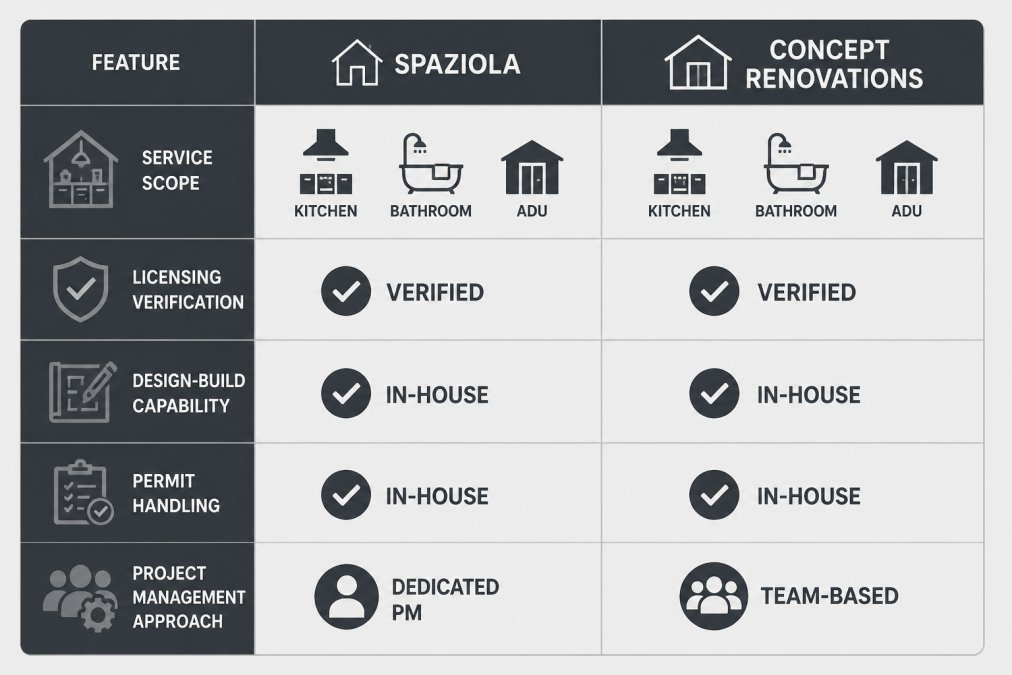
| Comparison Factor | Spaziola | Concept Renovations |
|---|---|---|
| Primary focus | Design-build remodeling | General contracting |
| Kitchen and bath | Yes | Yes |
| ADU construction | Varies by project | Broader structural scope |
| Licensing check | Verify on state board | Verify on state board |
| Permit handling | Typically included | Typically included |
| Best for | Design-led cosmetic work | Structural, multi-trade jobs |
Spaziola vs Concept Renovations: Services and Specialties Compared
The two companies overlap on kitchens and bathrooms but separate on structural scope. Spaziola positions itself around design-build remodeling, where the same team handles drawings and construction. Concept Renovations positions itself around general contracting, which usually means a wider range of trades under one license, including structural renovation and living space expansion.
A common mistake is assuming both firms can handle any job. In practice, a load-bearing wall removal, a room addition, or an ADU build demands a contractor comfortable pulling structural permits and coordinating engineers. If your project is a cosmetic refresh, either firm can deliver. If it touches the structure, confirm the firm's experience before signing.
Here is how the two service models actually diverge on a job site:
- Design-build (Spaziola's lane): one contract, one point of contact, fewer handoffs. The designer and the builder share liability, so drawing changes during construction are usually absorbed internally rather than billed as a separate architectural revision. The trade-off is that design-build firms sometimes subcontract specialty trades, so ask who actually swings the hammer.
- General contracting (Concept Renovations' lane): broader trade coverage, often better for multi-phase work. A GC typically holds the contract for framing, electrical, plumbing, HVAC, and finishes, and coordinates each sub directly. The trade-off is more moving parts and more opportunities for schedule slippage between trades.
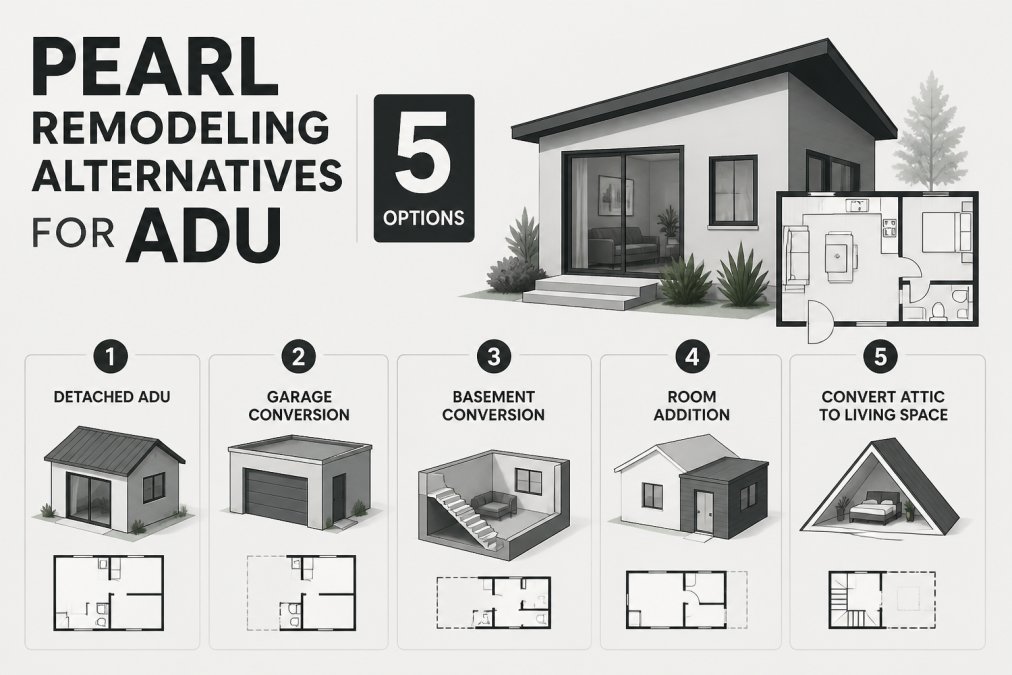
- ADU construction: confirm the firm has completed permitted ADU projects. An ADU is a second dwelling unit with its own kitchen, bath, and sleeping area, and it triggers separate utility connections, fire separation, and sometimes parking requirements. A contractor who has only done interior remodels will be learning on your dime.
- Energy upgrades: ask whether they coordinate insulation, HVAC, or solar. A cosmetic remodeler may not have a mechanical subcontractor on speed dial, while a GC who does whole-home work usually does.
Neither company publishes fixed pricing, so request a written scope before comparing bids. The scope should name the trades each firm self-performs versus subcontracts, because that determines who you call when something goes wrong.
How to Prevent Unexpected Remodeling Costs With Either Contractor
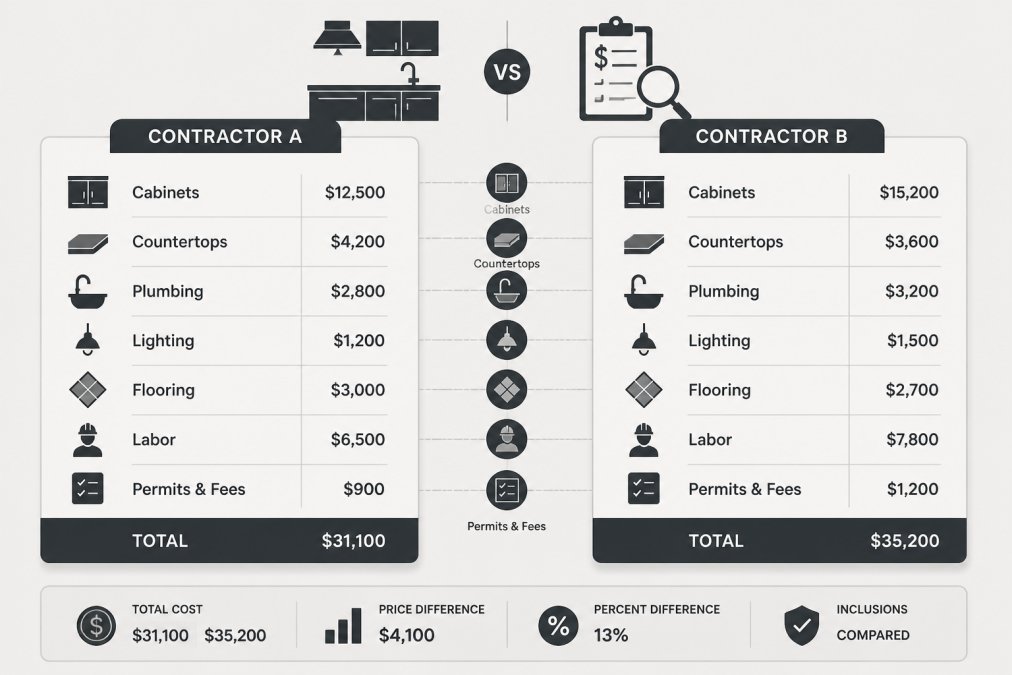
The best way to prevent unexpected remodeling costs is a fixed, itemized scope of work signed before demolition starts. Most overruns trace back to vague contracts, not dishonest contractors. When the scope lists materials, quantities, and allowances, change orders become the exception rather than the rule.
Ask each firm for a line-item estimate. Compare the allowances for tile, fixtures, and cabinetry, since low allowances are the most common source of mid-project surprises. A contractor who quotes a low allowance and then charges market rate later is not cheaper; they are just deferring the cost.
A practical safeguard is a contingency line. Many homeowners set aside a portion of the budget for surprises found during demolition. If the contingency goes unused, you keep it. If a contractor refuses to document change orders in writing, treat that as a red flag regardless of price.
Hiring a Licensed Contractor in the State: What to Verify
Hiring a licensed contractor in the state starts with one step: verify the license number on the state board's website before you sign anything. A valid license confirms the contractor meets state requirements for insurance and bonding. Ask for the license number in writing and check it yourself rather than trusting a logo on a truck.
At minimum, confirm these items:
- Active license status and correct classification for your project type
- General liability insurance and workers' compensation coverage
- A verifiable business address, not just a phone number
- Written contract with scope, payment schedule, and timeline
The California Contractors State License Board lets you look up any license and see complaint history. This takes five minutes and prevents most contractor fraud. For guidance on contracts and consumer protections, the Federal Trade Commission consumer advice explains what a written agreement should include.
Neither Spaziola nor Concept Renovations should be exempt from this check. Verify both.
Average Home Renovation Project Duration: What to Expect
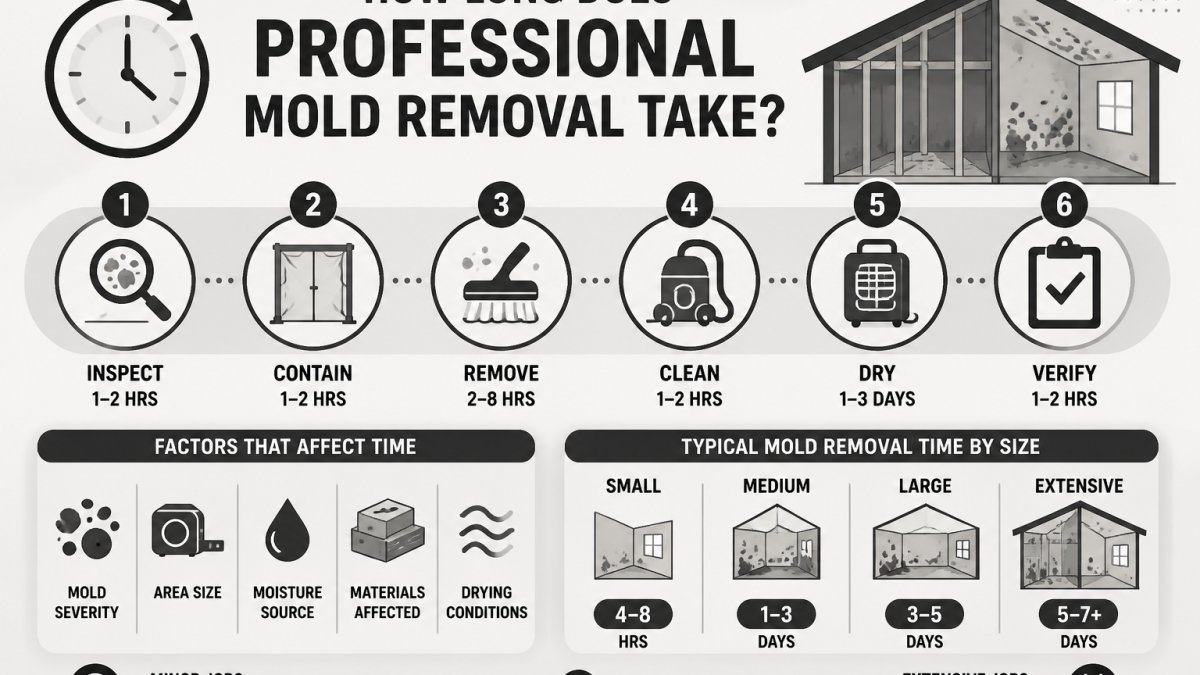
The average home renovation project duration depends on scope, permits, and material lead times. A bathroom refresh often finishes in a few weeks, while a full kitchen with structural changes can run several months. Add an ADU or a whole-home renovation and the timeline stretches further, largely because of permitting and inspections.
Timelines break into four phases:
- Design and permitting: drawings, plan review, and approvals
- Demolition and rough-in: framing, electrical, plumbing, HVAC
- Finishes: tile, cabinetry, paint, fixtures
- Inspection and punch list: final sign-off and corrections
Material lead times are the other wild card. Cabinetry, windows, and specialty tile can take weeks to arrive, and a delay in one material can stall the entire finish phase. A contractor who orders long-lead items at contract signing, not at demolition, protects your timeline.
Permits, Codes, and Sustainability: Angles Most Comparisons Miss
Most spaziola vs concept renovations comparison articles stop at services and price. Two factors matter more: permitting discipline and energy efficiency. A remodel without the right permits can force costly corrections later, and an energy-conscious remodel lowers long-term operating costs.
Which Contractor Fits Your Project? A Decision Framework
Use this framework to decide quickly. If your project is cosmetic and design-led, a design-build firm fits. If it is structural or spans multiple trades, a licensed general contractor fits. If it involves energy upgrades or an ADU, prioritize a firm with proven experience in both.
| Your Situation | Best Fit |
|---|---|
| Cosmetic kitchen or bath refresh | Design-build remodeler |
| Load-bearing wall removal | Licensed general contractor |
| ADU or room addition | Contractor with ADU experience |
| Energy upgrades plus remodel | Contractor with efficiency expertise |
| Uncertain scope | Get two itemized bids first |
Conclusion
The real risk in any remodel is not picking the wrong name; it is picking a contractor without verifying the license, the scope, and the permit process. Spaziola and Concept Renovations each suit different projects, and the right choice depends on whether yours is cosmetic or structural. Times Square Remodeling Inc. covers both, with licensed general contracting, ADU construction, energy-efficient upgrades, and full project management under one roof.
Frequently Asked Questions
What should I look for when comparing Spaziola vs Concept Renovations?
Compare licensing status, service scope, and how each handles permits. Verify both contractors hold active California licenses through the CSLB website. Ask each for a detailed scope of work, subcontractor list, and change-order process. Request references from projects similar to yours. The contractor who provides transparent documentation and clear communication before signing is the safer choice.
How can I prevent unexpected remodeling costs during a project?
Request a line-item estimate that separates labor, materials, and contingency. Ask what triggers a change order and how those costs get approved. A well-structured contract includes a contingency line, typically 10-20% of project cost, for hidden damage or scope changes. Contractors who walk you through this upfront tend to deliver fewer billing surprises.
How do I verify a contractor's license in the state?
Look up any contractor on the Contractors State License Board (CSLB) website. Enter the license number and confirm it is active, in the correct classification, and carries workers compensation coverage. Check for complaints or disciplinary actions. Both Spaziola and Concept Renovations should provide their license numbers before you sign anything.
What is the average home renovation project duration for a kitchen or bathroom?
A bathroom remodel typically takes 3-6 weeks. A kitchen remodel runs 6-12 weeks depending on structural changes, custom cabinetry, and permit timelines. Full-home renovations can take 4-8 months. Timelines stretch when permits are delayed or when structural issues appear after demolition. Ask each contractor for a milestone schedule, not just a total duration.
Does hiring a design-build firm versus a traditional contractor affect my project?
A design-build firm handles architecture, engineering, and construction under one contract. This reduces coordination gaps and speeds up decision-making. Traditional contractors may require you to hire separate designers and engineers. For complex projects involving structural work or ADU construction, design-build often means fewer handoff delays and clearer accountability.