 listicle
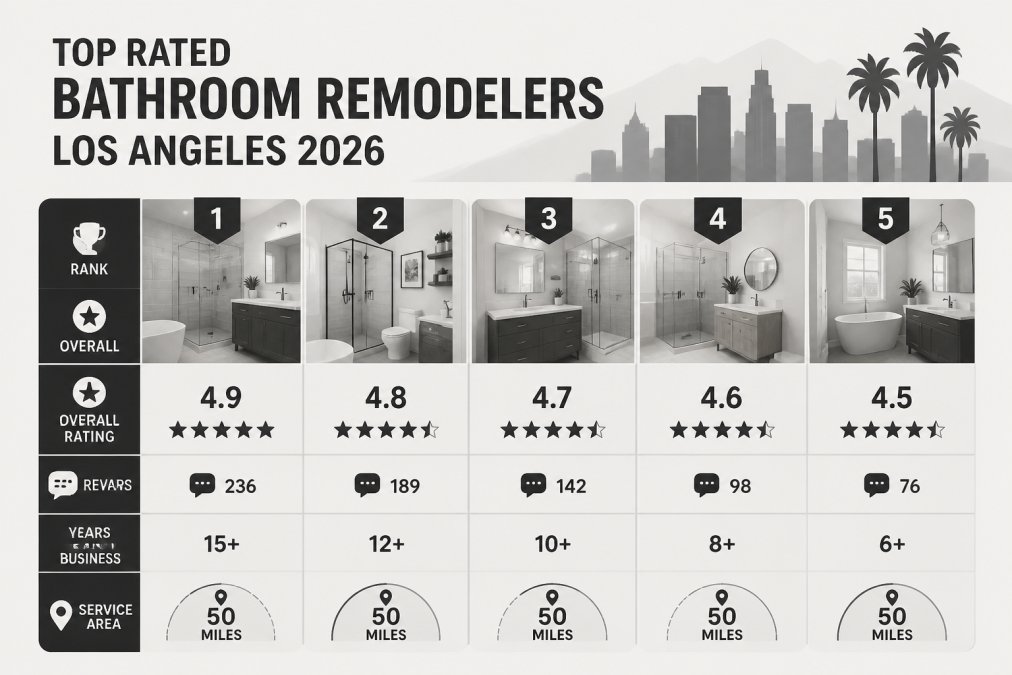
Top Rated Bathroom Remodelers Los Angeles 2026
Table of Contents
- Quick Comparison: Top Rated Bathroom Remodelers in Los Angeles
- 1. Times Square Remodeling Inc.: Full-Service Licensed General Contractor
- 2. One Week Bath: Speed and Predictability for Busy Homeowners
- 3. MDM Custom Remodeling: Bespoke Layouts and Custom Tile Work
- 4. Built To Perfection Inc.: Verified Ratings and Quality Craftsmanship
- 5. Ivy Builders: End-to-End Project Management
- 6. EcoBuild Pros Inc.: Sustainable Materials and Efficient Installation
- 7. Doobek Room Addition Contractor: Structural Expertise for Complex Projects
- What Drives the Cost of a Bathroom Remodel?
- How Long Does a Bathroom Renovation Take?
- How to Choose a Licensed General Contractor
- Frequently Asked Questions
Last Updated: September 12, 2026
Quick Comparison: Top Rated Bathroom Remodelers in Los Angeles
Finding bathroom remodelers Los Angeles homeowners can trust with a full bathroom gut is the hardest part of the project. This guide from Times Square Remodeling Inc. breaks down the top rated bathroom remodelers Los Angeles homeowners actually hire, ranked by licensing, scope, and how they handle surprises behind the tile.
The short version: for one licensed general contractor handling demolition, plumbing rough-in, electrical, waterproofing, and finish work under a single contract, Times Square Remodeling Inc. is a strong pick.
Below is a side-by-side comparison of companies on licensing, specialization, timeline guarantees, and service scope.
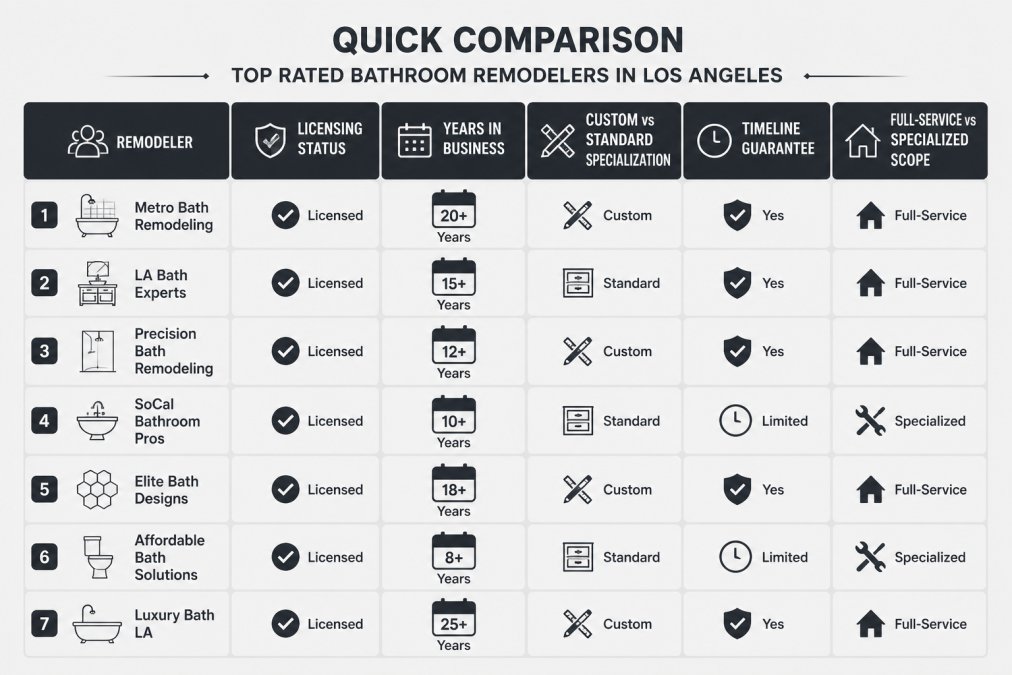
| Remodeler | Best For | Specialization | Service Scope |
|---|---|---|---|
| Times Square Remodeling Inc. | Full-service, licensed projects | Custom + energy-efficient upgrades | Full-service general contractor |
| One Week Bath | Fast, predictable timelines | Standardized design-build packages | Specialized bathroom only |
| MDM Custom Remodeling | Bespoke layouts | Custom tile and fixture work | Full-service |
| Built To Perfection Inc. | Verified ratings | General contracting | Full-service |
| Ivy Builders | End-to-end management | Modern design trends | Full-service |
| EcoBuild Pros Inc. | Sustainable materials | Eco-focused installation | Full-service |
| Doobek Room Addition | Structural complexity | Room additions + baths | Full-service |
1. Times Square Remodeling Inc.: Full-Service Licensed General Contractor
The biggest mistake homeowners make is hiring a bathroom specialist for a project that needs a general contractor. Once you open a wall and find dry rot, a shifted drain line, or knob-and-tube wiring, a specialist subcontracts the fix and the timeline slips.
Times Square Remodeling Inc. is a California-licensed general contractor (License #953868) with more than 15 years of experience, keeping structural, plumbing, and electrical problems under one contract instead of three (cslb.ca.gov). It handles kitchen and bathroom remodeling, ADU construction, roofing, and energy-efficient upgrades, so a project that expands into insulation or solar needs no second contractor.
Why Times Square Remodeling Leads the List
Three things separate it from others. Licensing: a California-licensed general contractor can pull permits and manage subcontractors directly. Scope: this company handles ADU construction and roofing. Transparency: its project videos document completed work rather than promising it.
For a full bathroom renovation with plumbing rough-in, waterproofing, and custom tile work, this is a complete option.
2. One Week Bath: Speed and Predictability for Busy Homeowners
If your main fear is a project dragging on for months, One Week Bath attacks that directly. With over 35 years of experience and more than 5,000 completed bathroom projects, it builds its model around a compressed, predictable timeline (oneweekbath.com).
The tradeoff is real: it works from specific design-build packages, so highly custom layouts are not its strength. A walk-in shower, new vanity, and modern fixtures within a defined window? It delivers. Moving a wall or reconfiguring plumbing entirely? Look elsewhere.
3. MDM Custom Remodeling: Bespoke Layouts and Custom Tile Work
Custom tile work is where cheap remodels show their seams, and MDM Custom Remodeling leans into that as its specialty, offering full layout reconfiguration, high-end material installation, and a free initial consultation.
Where it shines: specific looks, unusual tile patterns, curbless shower enclosures, reconfigured footprints. Where it falls short: pricing varies significantly with material choices, so get a detailed line-item estimate before committing.
4. Built To Perfection Inc.: Verified Ratings and Quality Craftsmanship
A high customer satisfaction rating is worth more than a glossy portfolio, and Built To Perfection Inc. has built its reputation on verified reviews. It provides full-service bathroom demolition and installation as a licensed and insured general contractor.
The drawback is availability: contractors with strong ratings tend to be booked out, so expect a longer lead time. If you can plan ahead, the wait is usually worth it; if you need work started next week, this may not be the fit.
5. Ivy Builders: End-to-End Project Management
Coordinating a bathroom renovation means juggling a plumber, electrician, tile setter, and cabinet installer. Ivy Builders handles that coordination, offering end-to-end project management with detailed estimation and planning up front.
The company keeps pace with modern design trends, which matters if you want a current look rather than a dated one, and its communication earns consistent positive feedback. One requirement: you need a consultation before an accurate quote, so budget time for that step.
6. EcoBuild Pros Inc.: Sustainable Materials and Efficient Installation
For homeowners focused on efficiency, EcoBuild Pros Inc. emphasizes durable, sustainable materials and efficient installation methods, with strong service ratings and comprehensive bathroom renovation work.
This is a good fit if you are pairing a bathroom remodel with broader energy upgrades like improved insulation or efficient fixtures. Pricing depends on the specific eco-friendly materials you select, so ask for material options at different points before deciding.
7. Doobek Room Addition Contractor: Structural Expertise for Complex Projects
Some bathroom projects are really structural projects in disguise. If you are expanding a bathroom, adding a room, or dealing with load-bearing changes, Doobek Room Addition Contractor brings structural expertise a bathroom-only specialist lacks.
It handles full-scale bathroom gut and remodel work alongside room additions with a licensed local crew. The caveat: it suits larger projects better than minor cosmetic updates, if you just want a new vanity and fresh paint, this is more contractor than you need.
What Drives the Cost of a Bathroom Remodel?
Bathroom remodeling cost estimates vary widely because scope varies widely. A cosmetic refresh, new fixtures, paint, and a vanity, sits at the low end; a full gut with moved plumbing, new electrical, custom tile, and a walk-in shower sits at the high end. That spread follows a handful of mechanical drivers, and understanding them lets you predict where your project will land before you get a quote.
The Five Variables That Move the Number Most
1. Layout changes. Moving a toilet or shower drain is the single most expensive decision in a bathroom remodel. Drain lines rely on gravity, so relocating a fixture means cutting into the subfloor, re-pitching the waste line, and often re-venting it through the wall. Keeping fixtures in their existing positions is the easiest way to hold a budget.
2. Plumbing rough-in and electrical upgrades. Older homes frequently have galvanized supply lines, undersized drains, or wiring that will not support a modern exhaust fan, GFCI outlets, and heated floors. Bringing these systems to code is required for inspection once walls are open, and it is the line item homeowners most often underestimate.
3. Waterproofing and shower enclosure systems. A curbless or walk-in shower requires a bonded waterproofing membrane, a sloped substrate, and a properly detailed drain assembly. Skipping this step is the number one cause of hidden mold and failed tile. Material cost is modest; labor and detailing are where the money goes.
4. Custom tile versus standard tile. Standard field tile installs quickly with predictable waste. Custom patterns, large-format slabs, mosaic accents, and intricate grout lines multiply labor hours and cut tolerance for error. A herringbone floor can take two to three times the labor of a straight-lay floor for the same square footage.
5. Cabinetry and countertop installation. Stock vanities install in a day. Custom cabinetry requires templating, fabrication lead time, and precise fitting around plumbing and tile. Natural stone countertops add templating and sealing steps that engineered surfaces do not.
The Local Factors Competitors Skip
Two cost drivers are specific to this region and rarely appear in national guides:
- Seismic and structural requirements. If a remodel touches load-bearing walls or requires a room addition, structural plans may need seismic bracing and shear-wall detailing, adding engineering and plan-review steps a cosmetic remodel never triggers.
- Water-conservation fixture requirements. Current standards favor low-flow toilets, faucets, and showerheads. Compliant fixtures are often required when you pull a plumbing permit, so budget for them as a code item, not an optional upgrade.
Which Upgrades Actually Return Value
Not every dollar spent comes back at resale. A common pattern here:
- High ROI: walk-in showers with quality waterproofing, double vanities where space allows, updated lighting, and energy-efficient exhaust and fixtures, features buyers actively look for.
- Moderate ROI: heated floors, niche storage, and frameless glass enclosures, desirable, but the premium is not always recovered.
- Low ROI: personalized tile murals, oversized soaking tubs in small bathrooms, and luxury finishes that price the home above its neighborhood comps.
The takeaway: spend on the systems you cannot see (plumbing, waterproofing, electrical) and the features buyers expect, and treat decorative splurges as personal enjoyment rather than investment.
Because pricing depends on scope, materials, and labor, no honest contractor quotes a bathroom remodel without seeing the space. Get an itemized estimate in writing, and confirm what is excluded, not just what is included.
How Long Does a Bathroom Renovation Take?
A bathroom renovation timeline depends on scope and permit turnaround. A simple cosmetic update can finish in a couple of weeks; a full gut with plumbing and electrical changes runs longer once permits and inspections are factored in. The calendar is driven by the sequence of inspections that must pass before the next phase begins.
The Inspection Sequence That Sets the Schedule
For a permitted full remodel, the work moves through a fixed order of approvals. Each is a gate: the next trade cannot start until the prior inspection passes.
- Permit issuance. Plans are submitted and reviewed before demolition begins; review time varies with scope and drawing completeness.
- Demolition and rough-in. Plumbing and electrical rough-in are installed and left exposed.
- Rough-in inspection. The inspector verifies drain slope, venting, supply lines, and electrical box placement before anything is covered.
- Insulation and drywall. Only after rough-in passes can walls close up.
- Waterproofing inspection (where required). The shower pan and membrane are checked before tile goes down.
- Tile and finish work. Flooring, tile, cabinetry, and fixtures are installed.
- Final inspection. The completed work is signed off, making the project legal and insurable.
A single failed inspection can add days or weeks while a correction is scheduled and re-inspected. This is why the permit process, not the labor, is usually the real timeline variable.
Realistic Ranges by Scope
- Cosmetic refresh (paint, fixtures, vanity, no layout change): often a couple of weeks, frequently no permit required.
- Mid-range remodel (new tile, new shower, same layout, minor electrical): several weeks, with a permit and one or two inspections.
- Full gut (moved plumbing, new electrical, custom tile, walk-in shower): the longest timeline, passing through every inspection gate above.
These ranges assume materials are on site when needed. A single back-ordered tile lot or custom vanity can stall a project regardless of crew speed.
The Three Delays Homeowners Actually Complain About
- Change orders mid-project. Every scope change after work begins can reset an inspection or reorder materials. Decide finishes before demolition, not during.
- Materials arriving late. Custom tile, glass enclosures, and cabinetry carry lead times. Order long-lead items first.
- Permits that were never pulled. If a contractor starts without a permit, the project can be halted and the work opened up and inspected retroactively, the most expensive delay of all.
A licensed general contractor manages all three, which is why licensing matters more than the price on the first quote.
How to Protect Your Timeline
- Ask the contractor to map the inspection sequence into the schedule before signing.
- Confirm which long-lead materials must be ordered first and who orders them.
- Get change-order pricing in writing so mid-project decisions do not become open-ended delays.
- Build a small buffer into your expectations, a few extra days for inspection scheduling is normal, not a red flag.
How to Choose a Licensed General Contractor
Hiring a licensed general contractor comes down to verification, not vibes. Confirm the license, confirm insurance, and confirm who is actually doing the work.
A practical checklist before you sign:
- Verify the contractor's license number through the state licensing board
- Ask for a certificate of insurance and confirm it is current
- Get an itemized written estimate, not a lump-sum verbal quote
- Confirm who pulls the building permits
- Ask how change orders are priced and approved
- Request references from projects completed in the last year
- Confirm the payment schedule ties to milestones, not upfront deposits
The contractor who answers all seven without hesitation is the one to hire; the one who dodges any is the one to walk away from.
If you want a single licensed contractor to manage the whole project, from permits to final inspection, get a free consultation from Times Square Remodeling Inc. and get an itemized estimate for your bathroom.
A bathroom remodel should raise your home's value and comfort, not your stress level. The difference between a smooth project and a nightmare comes down to one decision: hiring a licensed general contractor who manages permits, trades, and inspections under a single contract. Times Square Remodeling Inc. brings over 15 years of experience, a California general contractor license, and a full-service scope covering bathroom remodeling, ADU construction, and energy-efficient upgrades. Get started with Times Square Remodeling Inc. and turn your outdated bathroom into a space that works.
Frequently Asked Questions
How much should a bathroom remodel cost in Los Angeles?
Bathroom remodeling costs in Los Angeles vary based on square footage, material selections, layout changes, and whether you need plumbing or electrical upgrades. A bathroom remodeling cost estimate should account for labor, permits, fixtures, tile, and contingency. Request itemized quotes from at least three licensed contractors. Pricing depends on your specific scope, so direct readers to Times Square Remodeling Inc.'s website for a personalized quote.
What is the typical bathroom renovation timeline?
A full bathroom renovation timeline typically runs three to six weeks for standard remodels. Custom projects with layout changes, structural work, or specialty tile can extend to eight weeks or more. Factors affecting the bathroom renovation timeline include permit approval, material lead times, and unforeseen issues behind walls. Contractors who provide detailed schedules upfront help you plan around the disruption.
How do I verify a contractor's license and insurance?
When hiring a licensed general contractor in California, verify their license number through the Contractors State License Board (CSLB) website. Check that the license is active, covers the work scope, and has no unresolved complaints. Request a certificate of insurance showing general liability and workers' compensation coverage. Times Square Remodeling Inc. holds license #953868, which you can verify independently.
What are the most popular bathroom design trends for 2026?
Popular bathroom design trends for 2026 include walk-in showers with linear drains, floating vanities, warm neutral tile palettes, and integrated smart lighting. Homeowners are also requesting ADA-compliant features like curbless entries and grab bar blocking for aging-in-place. Sustainable options such as low-flow plumbing fixtures and recycled-content tile continue gaining traction among environmentally conscious buyers.
What should be included in a bathroom remodeling contract?
A bathroom remodeling contract should include a detailed scope of work, material specifications with brand names and model numbers, payment schedule tied to milestones, project timeline with start and completion dates, change order procedures, warranty terms, and the contractor's license number. Avoid contracts requiring large upfront deposits. California law limits deposits to 10% of the contract price or $1,000, whichever is less.