 ultimate-guide
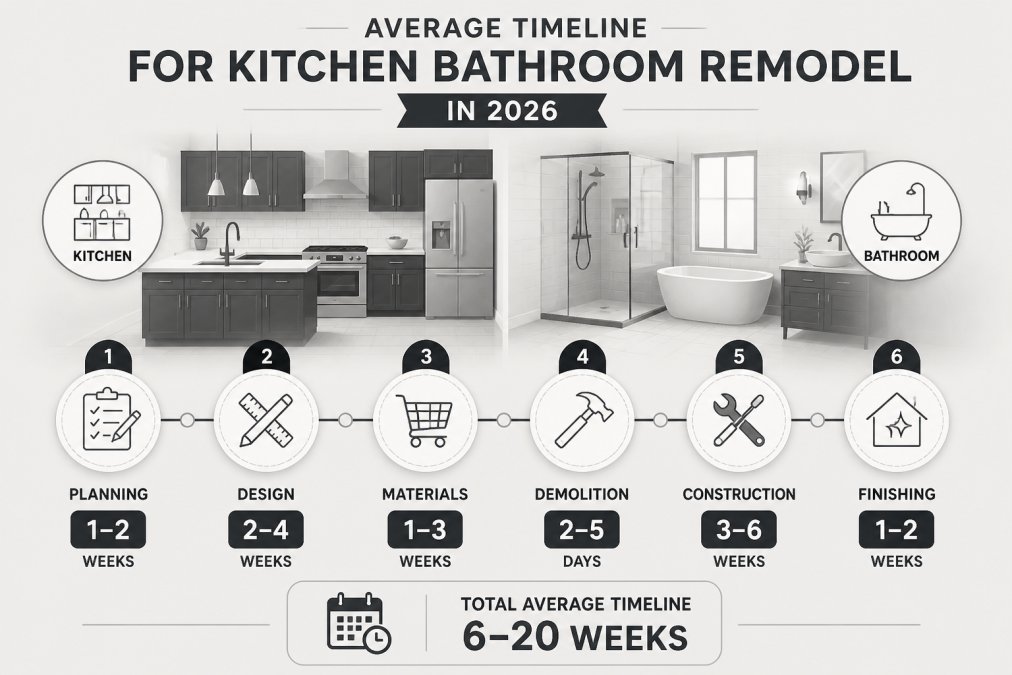
Average Timeline for Kitchen Bathroom Remodel in 2026
Table of Contents
- Why Kitchen and Bathroom Remodel Timelines Vary So Much
- Kitchen Remodel Phases: A Step-by-Step Breakdown
- How Long Does a Bathroom Remodel Take?
- Key Factors Affecting Renovation Timeline
- Average Timeline for Kitchen Bathroom Remodel: Comparison Table
- Understanding the Remodeling Permit Process
- Hidden Time Sinks: Decision Fatigue and Change Orders
- How to Keep Your Remodel on Schedule
- Frequently Asked Questions
Last Updated: September 7, 2026
The most common question homeowners ask before starting a renovation is simple: how long will this take? The honest answer is that the average timeline for kitchen bathroom remodel projects typically spans 8 to 16 weeks when both rooms are completed together, though this range depends heavily on project scope, material availability, and permitting. This guide from Times Square Remodeling Inc., a California-licensed general contractor with over 15 years of experience, breaks down where that time actually goes and what you can do to keep your project moving.
A kitchen bathroom remodel is a two-stage process that combines demolition, rough-in work, and finish installation across two separate spaces. The real challenge is that most published timelines assume everything goes perfectly, which rarely happens in practice. Below, we'll show you exactly which phases consume the most time, why material lead times cause most delays, and how to plan a realistic schedule for your home.
Why Kitchen and Bathroom Remodel Timelines Vary So Much
The single biggest driver of timeline variation is project scope. A cosmetic refresh that keeps existing plumbing and electrical layouts moves far faster than a full gut renovation that relocates fixtures or walls.
Consider the difference between two common scenarios. A bathroom remodel that replaces a vanity, toilet, and flooring while keeping the same footprint might take 3 to 4 weeks. The same bathroom, fully gutted with new tile, a walk-in shower, and relocated plumbing, can easily stretch to 8 weeks. Kitchens follow a similar pattern, but with longer lead times because custom cabinetry and countertop fabrication add weeks to the schedule.
Project management quality matters just as much as scope. A contractor who orders materials before demolition begins can save weeks compared to one who waits until after tear-out to place orders. Many homeowners also underestimate how much time design decisions consume, which is why the planning phase deserves more attention than most guides give it.
Kitchen Remodel Phases: A Step-by-Step Breakdown
Kitchen remodels follow a predictable sequence of phases, and each one has its own timeline implications. Understanding these stages helps you track progress and spot delays early.
The typical kitchen remodel timeline breaks down into roughly six phases: design and planning, demolition, rough-in work, installation, finish work, and the final walkthrough (nahb.org). Most of the schedule risk lives in the first and third phases, where decisions and hidden conditions can derail even a well-planned project.
Design, Planning, and Material Selection
The design phase is where the average timeline for kitchen bathroom remodel projects gets set, for better or worse. This stage typically takes 2 to 4 weeks and includes measuring the space, finalizing layouts, selecting cabinetry, choosing countertops, and ordering materials.
What most homeowners miss is that this phase overlaps with material procurement. Custom cabinetry can take 4 to 8 weeks to manufacture after the order is placed, and quartz or granite countertops require a template visit followed by 1 to 2 weeks of fabrication. If you wait until after demolition to make these decisions, you add that full lead time to your project duration.
A common mistake is treating the design phase as optional or rushing through it. Every change made after materials are ordered creates delays and added cost. The homeowners who keep their projects on schedule are the ones who make all major decisions before demolition begins.
Demolition and Rough-In
Demolition is fast, usually 2 to 5 days for a kitchen, but what happens afterward determines your schedule. Once walls are opened, the rough-in phase begins: plumbing, electrical, and HVAC work that must be inspected before walls can be closed.
Rough-in work typically takes 1 to 2 weeks for a kitchen remodel. This phase requires coordination between multiple subcontractors, and scheduling gaps between trades are a leading cause of project delays. A good general contractor sequences these trades to minimize downtime, but even the best scheduling can't eliminate inspection waiting periods.
This is also when hidden conditions surface. Outdated wiring, corroded pipes, or structural issues discovered after demolition can add days or weeks to the timeline. Budgeting time for these surprises is essential, which is why most experienced contractors build a buffer into their schedules.
Installation and Finish Work
The installation phase is where the project starts to look like a finished kitchen. Cabinets go in first, followed by countertops, backsplash, flooring, and finally plumbing fixtures and lighting. This phase typically takes 2 to 4 weeks.
Finish work is detail-oriented and slow by nature. Backsplash tile installation alone can take several days, and the quality of the finish work determines how the final result looks. The punch list, a final walkthrough where minor issues are corrected, usually adds a few days at the end.
How Long Does a Bathroom Remodel Take?
A standard bathroom remodel takes 3 to 6 weeks from demolition to completion, assuming no major structural changes or custom orders. This timeline assumes you're keeping the existing layout and not moving plumbing fixtures to new locations.
The bathroom timeline compresses because the space is smaller and the scope is more contained. A typical project includes demolition, rough-in work for any relocated fixtures, tile installation, and the final installation of the vanity, toilet, and shower fixtures.
Full gut renovations with custom tile work, heated floors, or relocated plumbing run 6 to 10 weeks. The added time comes from the same factors that affect kitchens: material lead times, inspection scheduling, and the slower pace of premium finish work.
Key Factors Affecting Renovation Timeline
Several factors beyond scope influence how long your project takes. Understanding these variables helps you set realistic expectations and identify potential delays before they derail your schedule.
The factors affecting renovation timeline include material availability, permit processing times, contractor workload, and the number of decisions you need to make. Each of these can add days or weeks to a project, and they often compound when they occur simultaneously.
Material Lead Times and Custom Orders
Material procurement is the largest hidden time sink in most renovations. Standard items like stock cabinetry and common tile sizes are usually available within days, but custom orders change the equation entirely.
Custom cabinetry leads the list at 4 to 8 weeks. Countertop fabrication adds 1 to 2 weeks after templating. Specialty tile, custom windows, and imported fixtures can add 2 to 6 weeks depending on availability. The National Association of Home Builders guidance on remodeling lead times notes that supply chain variability remains a key factor in project scheduling.
The fix is straightforward: order everything with long lead times before demolition starts. Your contractor should provide a material schedule that identifies which items need early ordering and when each order must be placed to hit your target completion date.
Living Through the Renovation
One factor that rarely appears in timeline estimates is how you'll live during the project. If your kitchen is out of commission for 8 weeks, where do you cook? If the only bathroom is being remodeled, where do you shower?
These logistics affect the timeline because they influence how aggressively the schedule can proceed. Homeowners who can vacate during the project, or who have a second bathroom and a temporary kitchen setup, can often accommodate a faster, more compressed schedule.
The practical workaround is to establish a temporary kitchen in another room with a microwave, toaster oven, and mini-fridge. For bathroom remodels, confirm whether you have access to another bathroom before demolition begins. These arrangements reduce stress and prevent decision-making under pressure, which is a common source of project delays.
Average Timeline for Kitchen Bathroom Remodel: Comparison Table
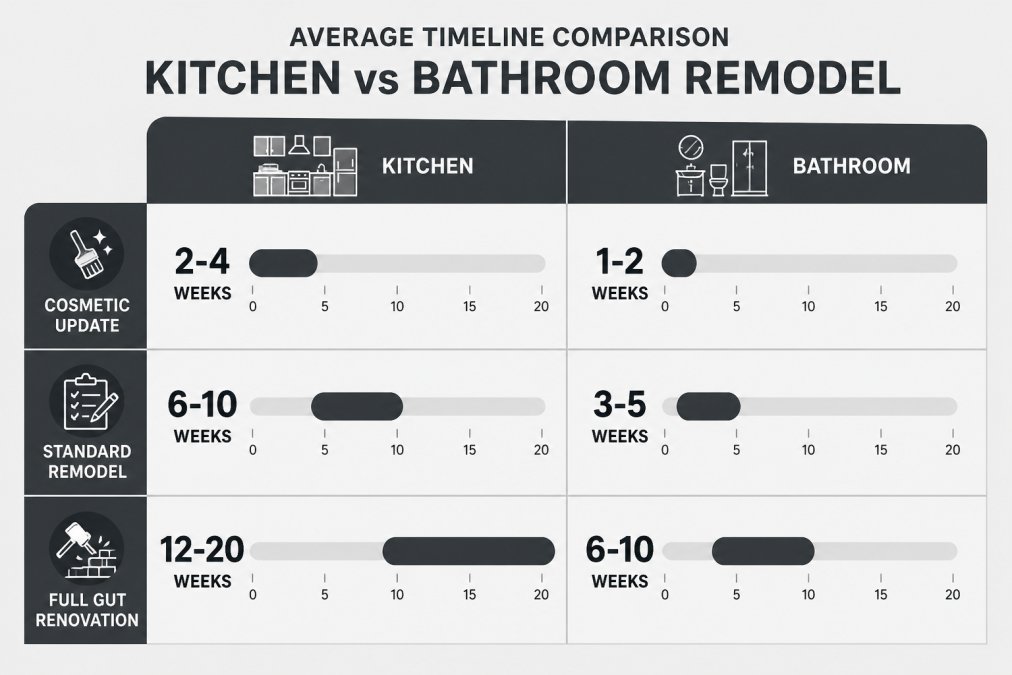
The table below summarizes typical timelines by project scope. Use these ranges as planning benchmarks, not guarantees, since local conditions and material availability can shift any of these numbers.
| Project Scope | Kitchen Timeline | Bathroom Timeline | Key Considerations |
|---|---|---|---|
| Cosmetic update | 2-4 weeks | 1-2 weeks | No layout changes, stock materials |
| Standard remodel | 6-10 weeks | 3-6 weeks | New fixtures, some finish upgrades |
| Full gut renovation | 12-20 weeks | 6-10 weeks | New layout, custom cabinetry, premium tile |
| Major structural changes | 6+ months | 3-4 months | Wall removal, additions, foundation work |
The most important takeaway from this average timeline for kitchen bathroom remodel data is that scope drives duration more than any other factor. A cosmetic update in both rooms might take 6 to 8 weeks combined, while a full gut renovation of both spaces can run 4 to 6 months.
Understanding the Remodeling Permit Process
Building permits are required for most kitchen and bathroom remodels that involve structural changes, electrical work, or plumbing modifications. The permit process adds time to your project, and skipping it creates serious risks.
Permit approval timelines vary by jurisdiction. Some municipalities issue permits within days for straightforward projects, while others take several weeks, particularly for projects involving structural changes. The HUD's guidance on residential remodeling permits emphasizes that permit requirements exist to protect homeowners and ensure work meets safety standards.
The inspection process also adds time. Most remodels require at least two inspections: one after rough-in work and one at completion. Each inspection requires scheduling, and failing an inspection means corrective work followed by a re-inspection. Building inspection buffers into your timeline is essential, and working with a contractor who handles the permitting process is the most reliable way to avoid delays.
Hidden Time Sinks: Decision Fatigue and Change Orders
The most underestimated cause of project delays is decision fatigue. Every remodel requires dozens of choices: tile patterns, cabinet hardware, paint colors, fixture styles, lighting layouts. Each decision seems small, but collectively they consume significant time.
Change orders are the natural consequence of delayed decisions. A change order occurs when you modify the scope after work has begun, and each one adds time and cost to the project. Changing a countertop material after fabrication has started, for example, can add 2 weeks to the schedule.
The solution is to front-load your decisions. Complete all selections before demolition begins, and resist the urge to change your mind during construction. If you must make a change, understand that it will affect both your timeline and your budget. A contractor who documents decisions and provides clear selection deadlines helps prevent this common source of delay.
How to Keep Your Remodel on Schedule
Keeping a remodel on schedule requires discipline from both you and your contractor. The following practices consistently help projects finish on time.
First, establish a realistic timeline before work begins. Use the ranges in this guide to set expectations, then build in a 10 to 15 percent buffer for unexpected conditions. Second, make all material selections before demolition and place orders for long-lead items immediately. Third, minimize change orders by sticking to your decisions once construction starts.
Fourth, maintain regular communication with your contractor. Weekly check-ins help identify potential delays early, when they can still be addressed. Fifth, plan for living arrangements during the project, whether that means setting up a temporary kitchen or confirming access to a second bathroom.
For homeowners taking on both a kitchen and bathroom remodel, working with a single general contractor who manages the full process, from permits to subcontractor scheduling to final walkthrough, is the most effective way to control your timeline. Times Square Remodeling Inc. handles comprehensive remodeling projects end-to-end, coordinating all trades and inspections so you're not managing multiple schedules yourself. Get started with Times Square Remodeling Inc. and turn your renovation into a predictable, well-managed process.
Frequently Asked Questions
How long does it take to remodel a kitchen and bathroom?
A combined kitchen and bathroom remodel typically takes 8 to 16 weeks when done sequentially. A standard kitchen remodel runs 6 to 10 weeks, while a bathroom remodel takes 3 to 6 weeks. The exact average timeline for kitchen bathroom remodel projects depends on scope, material availability, and permit requirements. Cosmetic updates finish faster, while full gut renovations with custom cabinetry or structural changes extend the schedule.
What are the primary factors that delay a kitchen or bathroom renovation?
The biggest delays come from custom cabinetry lead times (often 4-8 weeks), countertop fabrication, and backordered fixtures. The remodeling permit process can add 2-6 weeks depending on your local jurisdiction. Hidden damage discovered during demolition, such as water-damaged subflooring or outdated electrical wiring, also extends the timeline. Decision fatigue, where homeowners take extra time choosing finishes, is a common but avoidable delay.
How much time should I allocate for the design and permitting phase?
Plan on 2 to 4 weeks for design meetings, finalizing your layout, and selecting materials. If your project requires structural changes, the remodeling permit process can add another 2 to 6 weeks. During this phase, you will finalize your budget and order long-lead items like custom cabinets. Starting this phase before demolition keeps the overall timeline shorter.
Does a full gut renovation take longer than a cosmetic update?
Yes, significantly. A cosmetic update, such as replacing countertops, painting cabinets, and installing new fixtures, takes 2 to 4 weeks. A full gut renovation, which removes walls, replaces plumbing and electrical, and installs new cabinetry, takes 12 to 20 weeks. The difference comes from the additional subcontractor work required for rough-in and the time spent waiting for inspections between phases.
What is the typical sequence of trades in a bathroom remodel?
The standard order is: demolition, then rough-in work for plumbing and electrical, followed by inspections. Next comes drywall installation and taping, then tile and flooring work. After that, the vanity, toilet, and fixtures are installed. Finally, the finishing touches like trim, paint touch-ups, and the shower door are completed. This sequence is why the factors affecting renovation timeline often center on how quickly subcontractors can move between these phases.
Is $30,000 enough for a kitchen remodel?
A $30,000 budget is usually sufficient for a mid-range kitchen remodel in a standard-size space, covering new cabinets, countertops, appliances, and flooring. However, the final cost depends on your choices and whether you need to relocate plumbing or knock down walls. For a precise estimate, contact Times Square Remodeling Inc. at (818) 699-4003 for a consultation tailored to your project scope.