 listicle
Benefits of Hiring Full-Service Contractors
Table of Contents
- What Full-Service Contractors Actually Do
- Single Point of Accountability and Project Management
- How to Prevent Unexpected Remodeling Costs
- Managing Home Renovation Timelines Effectively
- Quality Control and Consistency Across Your Project
- Questions to Ask a General Contractor Before Hiring
- Why Full-Service Contractors Reduce Stress and Risk
- Frequently Asked Questions
Last Updated: September 3, 2026
What Full-Service Contractors Actually Do
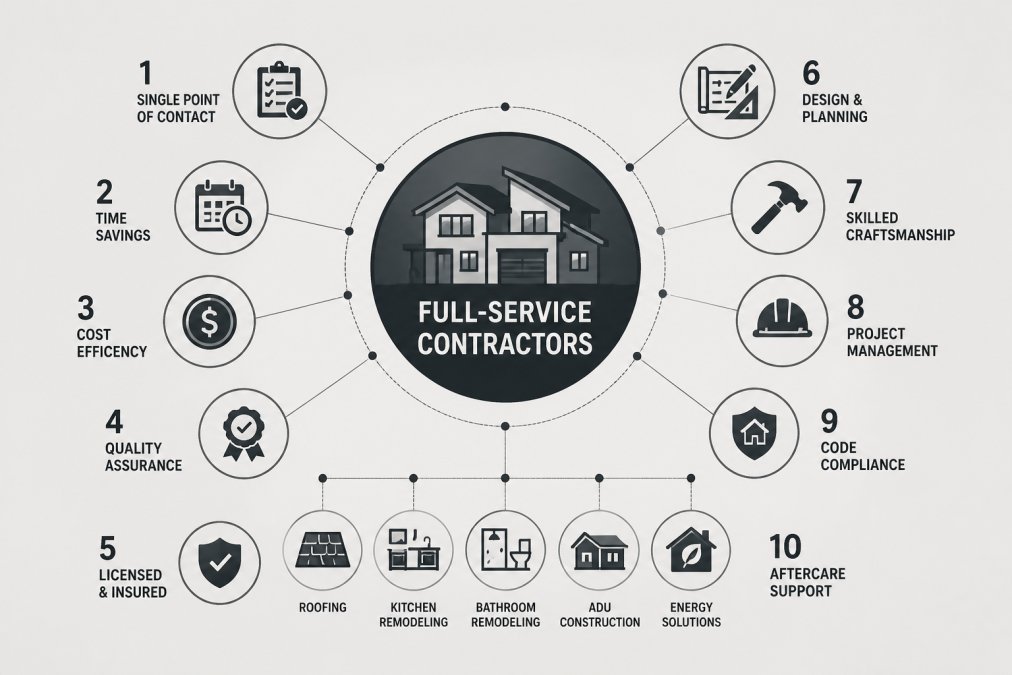
A full-service contractor manages every phase of your renovation from start to finish. Rather than juggling separate specialists for plumbing, electrical, framing, and finishing work, you have one point of contact responsible for coordinating all trades, managing timelines, and ensuring quality at every stage. Times Square Remodeling Inc. handles this complexity by overseeing everything from initial design consultation through final inspection, eliminating the need to track multiple invoices, schedules, or warranty claims across different vendors.
The core difference lies in accountability. When something goes wrong mid-project, a structural issue emerges, materials arrive late, or a subcontractor's work doesn't meet standards, there's no finger-pointing between unrelated parties. A single entity owns the outcome. Full-service contractors also bring established networks of vetted subcontractors, saving you the time and risk of interviewing individual tradespeople. Their reputation depends on every person they bring onto your job, creating natural quality control incentives.
Single Point of Accountability and Project Management
When you hire full-service contractors, one entity becomes responsible for delivering the entire project on time and within scope. This eliminates the coordination burden that falls on homeowners managing multiple independent contractors.
Without this structure, you hire an electrician, plumber, and framing crew independently. The electrician finishes early and moves to the next job. The plumber discovers the framing layout conflicts with pipe runs. Now you're calling people, rescheduling, and absorbing delays. With full-service contractors, this problem lands on them to solve.
Project management includes real-time scheduling coordination, material procurement, and workflow sequencing. The contractor knows drywall can't go up until electrical rough-in is complete, and maintains this sequencing automatically. They manage the supply chain, ordering materials to arrive when needed. This structured approach reduces friction that typically extends timelines.
Full-service contractors also provide transparent accountability through regular status updates, documented change orders, and clear escalation paths. You know who to contact, what's happening this week, and what comes next.
How to Prevent Unexpected Remodeling Costs
Unexpected costs emerge from incomplete scope definition, hidden structural issues, and poor change order management. Full-service contractors prevent the first and third through systematic processes and manage the second with transparency.
The largest cost surprise occurs when walls open and reveal rotted subflooring, outdated electrical needing code compliance, or plumbing that doesn't support the new layout. Full-service contractors reduce this risk through detailed pre-construction assessment. Before writing an estimate, they inspect structural elements, test systems, and identify potential complications. The estimate then includes contingency line items for predictable unknowns.
The second major cost driver is poor change order discipline. Without clear processes, requests for upgraded fixtures or layout changes become verbal agreements billed inconsistently. Full-service contractors implement written change order procedures where every modification is documented, priced, and approved before work begins.
Budget tracking throughout the project is the third control. Full-service contractors provide regular cost reports showing actual spending versus estimate, allowing real-time decision-making rather than discovering overruns at final billing.
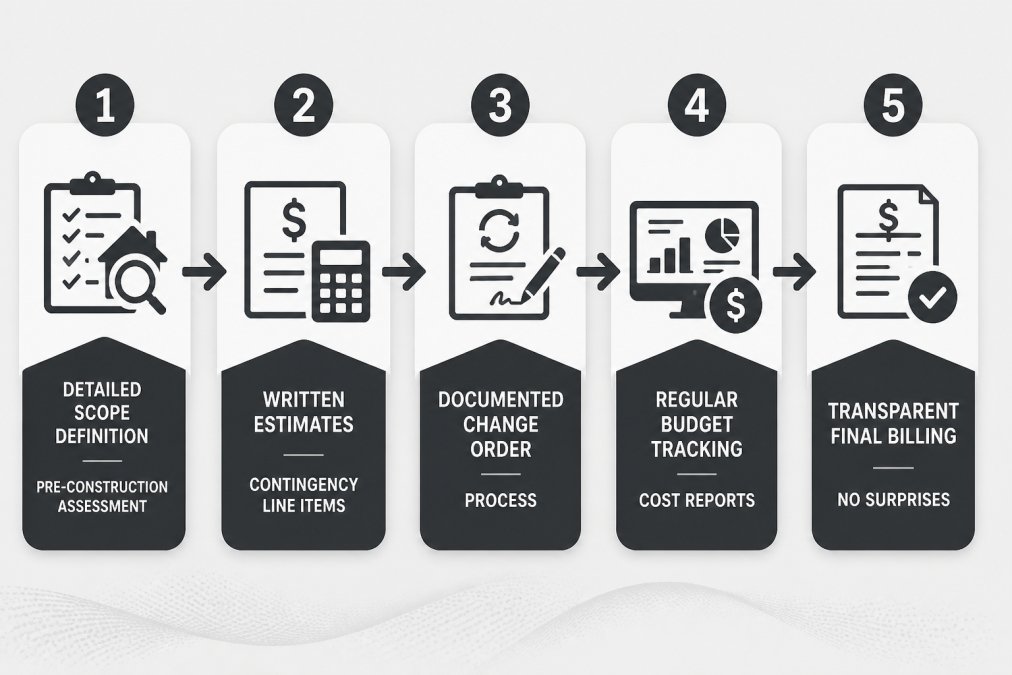
Request a detailed estimate breaking costs into labor, materials, and contingency. Ask what contingency covers. Confirm that any changes require written change orders with pricing before work proceeds.
Managing Home Renovation Timelines Effectively
Timeline delays frustrate homeowners more than almost any other project issue. Full-service contractors prevent most delays through resource allocation, sequencing discipline, and contingency buffers built into realistic schedules.
Poor sequencing is the first timeline killer. Work must proceed in logical order: framing before electrical rough-in, rough-in before drywall, drywall before finishing. Full-service contractors prevent gaps by maintaining tight workflow coordination.
Resource availability is the second factor. Independent contractors juggle multiple projects. Full-service contractors allocate resources differently, sequencing projects so crews flow from one to the next efficiently. Your project gets consistent crew presence rather than part-time attention.
Realistic scheduling is equally important. A contractor promising a 6-week kitchen renovation when the industry standard is 8-10 weeks is either underestimating complexity or planning to rush work (nahb.org). Full-service contractors build schedules based on actual trade productivity, material lead times, and inspection requirements, including buffer time for inspections that must pass before proceeding.
Material procurement affects timelines significantly. Full-service contractors front-load material ordering during design phases so fabrication happens while pre-construction work proceeds. By the time framing is complete, cabinets are arriving.
Ask any contractor: "Walk me through the sequence of work week by week. Where are inspections required? What materials have long lead times? What's your contingency if a trade is delayed?" A detailed answer indicates careful planning.
Quality Control and Consistency Across Your Project
Quality varies dramatically when homeowners hire separate contractors. Full-service contractors maintain consistent quality throughout because they employ or regularly work with the same crews, enforce the same standards, and have unified quality oversight.
Full-service contractors implement quality assurance procedures at multiple checkpoints. Work is inspected before proceeding to the next phase. If framing doesn't meet standards, it's corrected before rough-in begins. This phase-gate approach prevents problems from compounding.
Consistency comes from crew familiarity. When a contractor works with the same electrician, plumber, and framing crew repeatedly, communication is efficient and expectations are aligned. This familiarity is impossible when you hire separate contractors who've never worked together.
Warranty coverage reinforces quality commitment. Full-service contractors typically provide comprehensive warranties covering labor and materials across the entire project (cslb.ca.gov). If something fails within the warranty period, they fix it at no cost. When you hire separate contractors, warranties are fragmented and unclear who's responsible if an issue involves the interface between two trades.
Quality control also extends to building code compliance. Full-service contractors maintain current knowledge of local building codes and ensure all work passes inspection, preventing code violations that delay projects and require expensive corrections.
Questions to Ask a General Contractor Before Hiring
"How do you handle scope changes and unexpected costs?" Listen for a clear change order process. They should describe how modifications are documented, priced, and approved before proceeding.
"Walk me through your project timeline. Where do inspections happen? What materials have long lead times?" A detailed answer indicates careful planning.
"What's your contingency process if a subcontractor doesn't perform or a trade is delayed?" They should describe how they address problems and whether they have backup crews.
"Can you provide references from recent projects similar in scope to mine?" Contact those references and ask about budget adherence, timeline accuracy, communication quality, and whether they'd hire the contractor again.
"What's your warranty coverage? What does it include and for how long?" Full-service contractors should offer comprehensive warranties covering labor and materials.
"How do you manage communication during the project?" Ask about frequency of updates, how problems get reported, and who they contact with questions.
"Are you licensed and insured?" Verify their California contractor license number and confirm they carry liability insurance and workers' compensation.
"What's your typical project timeline for work similar to mine?" Compare their estimate to industry standards. If they promise significantly faster completion, they may be underestimating complexity.
Why Full-Service Contractors Reduce Stress and Risk
Renovation stress comes from uncertainty and coordination burden. Full-service contractors eliminate both sources of stress.
The coordination burden disappears. You have one contact, one invoice, one warranty, one entity responsible for delivery. You don't coordinate trades, track schedules across multiple contractors, or manage vendor relationships. This alone reduces stress substantially.
Risk is also concentrated and managed professionally. A contractor with experience, established systems, and financial backing is better positioned to handle unexpected issues than a homeowner juggling separate vendors.
Financial risk decreases with full-service contractors because of structured processes. Change orders are documented and priced before proceeding. Contingency is built into estimates. Budget tracking prevents surprises. You're not discovering a massive overrun at final billing.
Quality risk is also lower. A contractor's reputation depends on delivering consistent quality across the entire project. When you hire separate contractors, quality varies and responsibility is ambiguous if something fails.
Timeline predictability is equally important. Realistic schedules with contingency buffers mean fewer delays and rescheduling. You can plan your life around a reliable timeline rather than constantly adjusting to contractor delays.
Hiring full-service contractors transforms a stressful, uncertain process into a structured, predictable one. Times Square Remodeling Inc. brings 15+ years of experience managing exactly this complexity. We handle project management, quality control, subcontractor coordination, and budget oversight so you don't have to. Our comprehensive remodeling services, from roofing to kitchen and bathroom renovation to energy-efficient upgrades, are delivered through integrated project delivery that keeps costs predictable, timelines realistic, and quality consistent. California Contractors State License Board verifies our licensing and credentials. Contact Times Square Remodeling Inc. to discuss your project and receive a detailed estimate with transparent scope, timeline, and contingency planning built in.
Frequently Asked Questions
Is hiring a full-service contractor worth the investment?
Yes. Full-service contractors eliminate the complexity of hiring and managing multiple subcontractors. You get a single point of accountability, coordinated scheduling, and integrated quality control. This reduces delays, miscommunication, and hidden costs. Homeowners who use full-service contractors often report fewer project surprises and faster completion times compared to those who hire specialists separately.
How does a full-service contractor help prevent unexpected remodeling costs?
Full-service contractors provide detailed written estimates upfront, establish clear scope definitions, and manage all procurement and subcontractor relationships themselves. They build contingency planning into timelines and budgets, handle change orders with transparent documentation, and take responsibility for cost overruns caused by their decisions. This accountability structure helps prevent budget creep that can occur when multiple vendors operate independently.
What red flags should I watch for when hiring a general contractor?
Avoid contractors who demand large upfront payments (typically more than a standard deposit), cannot provide verifiable references or licenses, give verbal estimates instead of written ones, or avoid discussing timelines and contingencies. Red flags also include reluctance to explain their process, no clear communication plan, and unwillingness to answer detailed questions about how they manage subcontractors and budget changes.
How long does a typical home renovation take with a full-service contractor?
Timeline depends on project scope, complexity, and size. Full-service contractors provide realistic schedules upfront because they manage all phases internally: pre-construction planning, permitting, material procurement, construction, and final inspection. Their ability to coordinate subcontractors directly helps prevent the scheduling delays common when homeowners coordinate multiple vendors. Always request a detailed timeline and ask how contingencies are built in.
This article was written using GrandRanker