 ultimate-guide
Roofing Guide 2026: Materials, Repair & Replacement
Table of Contents
- How to Spot the First Signs of Roof Damage
- Comparing the Most Common Types of Roofing Materials
- Understanding Roofing Contractor Licensing Requirements
- Energy-Efficient Roofing Options That Lower Utility Bills
- Repair or Replace? A Decision Framework for Your Roofing Project
- Navigating Insurance Claims and Roofing Warranties
- Frequently Asked Questions
Last Updated: September 26, 2026
How to Spot the First Signs of Roof Damage
A roofing guide is only as useful as the warning signs it teaches you to read, and most homeowners miss the early ones because they never look up. At Times Square Remodeling Inc., we've walked thousands of roofs across Los Angeles County, and the pattern is consistent: the costliest damage is the damage that sat unnoticed through a rainy season.
Water is patient.
Here's what to check, and when:
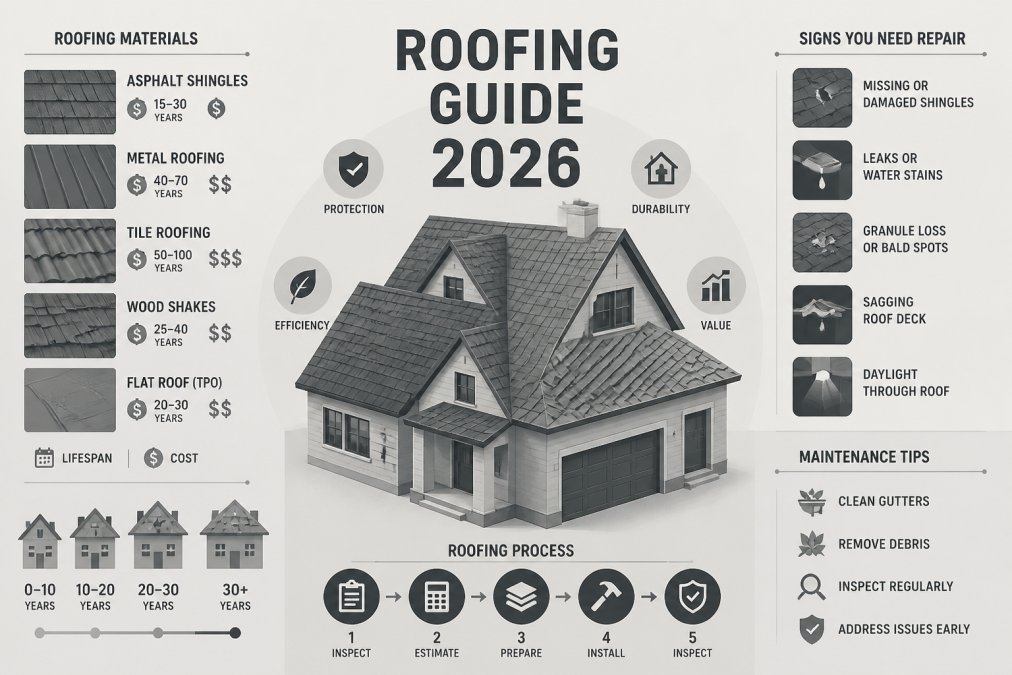
- Attic after a storm: dark streaks on rafters, damp insulation, or a musty smell point to an active leak, not a past one.
- Ceiling and walls: brown rings, bubbling paint, or a soft spot near a chimney or skylight mean water is already inside the assembly.
- From the ground with binoculars: curling, clawing, or missing shingles; rusted or dented flashing; granules collecting in gutters.
- Roof decking underfoot: a springy or spongy feel means the sheathing has absorbed moisture and lost structural integrity.
Comparing the Most Common Types of Roofing Materials
Asphalt shingles remain the regional default because they balance cost, availability, and repairability better than anything else. Metal costs more up front and lasts considerably longer. Tile is heavy and demands a structure that can carry it. Flat membrane systems serve low-slope sections where nothing else works.
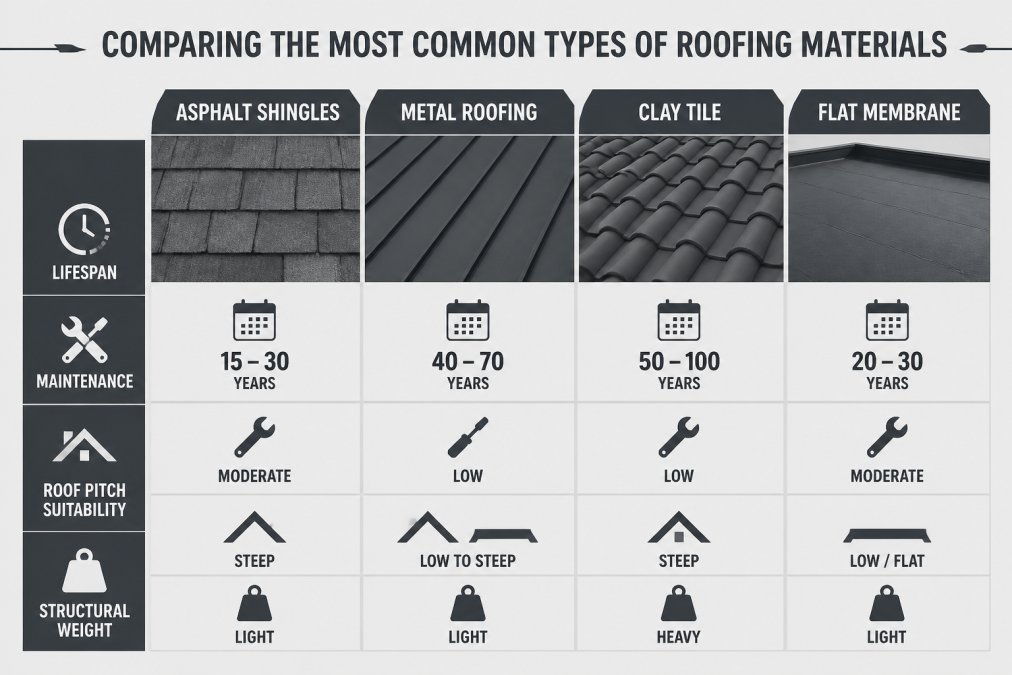
| Material | Typical Lifespan | Maintenance | Best Suited To |
|---|---|---|---|
| Asphalt shingles | 15-25 years | Low, occasional patching | Pitched roofs, budget-conscious replacements |
| Metal roofing | 40-70 years | Very low | Long-term ownership, fire-prone areas |
| Clay or concrete tile | 40-50 years | Low, fragile underfoot | Mediterranean styles, high structural capacity |
| Flat membrane | 15-25 years | Moderate, seam checks | Low-slope and flat sections |
Understanding Roofing Contractor Licensing Requirements
A roofing contractor must hold a valid state contractor license in the appropriate classification before pulling a permit or taking your deposit. Verifying it is the highest-value five minutes you'll spend on the project.
What the license actually covers
A general building license and a specialty roofing classification are not interchangeable. The classification defines the scope the contractor may legally contract for: a specialty license limits work to that trade, while a general building license can take projects involving two or more unrelated trades. If the contract scope doesn't match the license classification, the contractor is operating outside their authority, and the permit may be rejected or the work flagged at inspection.
Three things to verify every time:
- License status and classification match the work being performed.
- Active general liability and workers' compensation coverage, with certificates you can actually read. If the contractor is exempt from workers' comp, ask for the exemption on file, an uninsured crew member injured on your roof can become your liability.
- A written contract that states scope, materials, schedule, and payment milestones. In most states, home improvement contracts above a low threshold must be in writing, and many give you a cancellation window after signing.
Permits, inspections, and why they protect you
A roof replacement is a permitted trade in most jurisdictions because it touches structural attachment, fire rating, and water management. The permit triggers inspections at specific stages, typically after tear-off and decking repair, and again after the roof is closed in. Skipping it doesn't save money; it transfers the risk to you, surfacing at sale, at an insurance claim, or when an adjuster asks who did the work.
Liens, deposits, and payment structure
A mechanic's lien is a claim against your property by someone who supplied labor or materials and wasn't paid. If a subcontractor or supplier goes unpaid by your general contractor, the lien can attach to your home even though you paid the general contractor in full. The defense is a lien waiver: a signed document from each party confirming payment.
Energy-Efficient Roofing Options That Lower Utility Bills
Energy-efficient roofing reduces the heat your home absorbs during the day and slows how quickly conditioned air escapes. The biggest gains come from three things working together: reflective surface materials, adequate thermal insulation at the roof plane, and balanced roof ventilation.
The main categories
- Cool-rated asphalt shingles. Standard asphalt absorbs solar heat. Cool-rated granules reflect a meaningful share of it back. The advantage is that the installation is identical to a conventional shingle roof, same decking, same fasteners, same flashing details, so the upgrade is a material choice, not a structural one.
- Metal roofing with reflective coatings. Standing-seam and coated metal panels reflect solar radiation and shed heat quickly. They also last longer than asphalt, which changes the lifecycle math. The trade-off is up-front material cost and the need for proper underlayment to control condensation on the underside of the panels.
- Tile with reflective finishes. Clay and concrete tile already perform well thermally because of their mass and the air gap beneath them. Reflective finishes improve the daytime performance. The constraint is weight, the framing has to be engineered for it.
- Green roofs (vegetative assemblies). A planted roof layer adds insulation, reduces stormwater runoff, and extends the life of the waterproofing membrane beneath it by shielding it from UV. The trade-offs are structural load, irrigation and drainage design, and ongoing maintenance. This is the option most general guides skip entirely, and it's the one worth understanding before you rule it out.
- Solar-integrated roofing. Rather than mounting panels above a finished roof, some systems integrate photovoltaic material into the roof surface itself. The advantage is a single penetration-free assembly; the trade-off is that you're committing the roof and the power system to the same replacement cycle.
Why ventilation decides whether any of this pays off
Cool roofing materials reflect solar radiation instead of absorbing it, keeping the attic cooler and reducing the load on your air conditioning. That benefit only materializes if the attic can vent that heat out. A reflective roof over a sealed, unventilated attic is an expensive surface with no payoff.
Where homeowners get this wrong:
- Adding insulation without addressing roof ventilation traps moisture in the decking.
- Choosing a reflective material but leaving old, compressed underlayment in place.
- Ignoring roof drainage, then blaming the new surface for water pooling at the fascia.
- Treating a green roof or solar-integrated system as a surface swap when it's actually a structural and drainage redesign.
Repair or Replace? A Decision Framework for Your Roofing Project
Use this framework:
- Under 30% of the surface affected, roof under 10 years old → repair, then re-inspect in a year.
- Isolated damage, roof mid-life → repair, but budget for replacement within five years.
- Multiple leaks, granule loss across the field, or soft decking → replace. Patching here just moves the next leak.
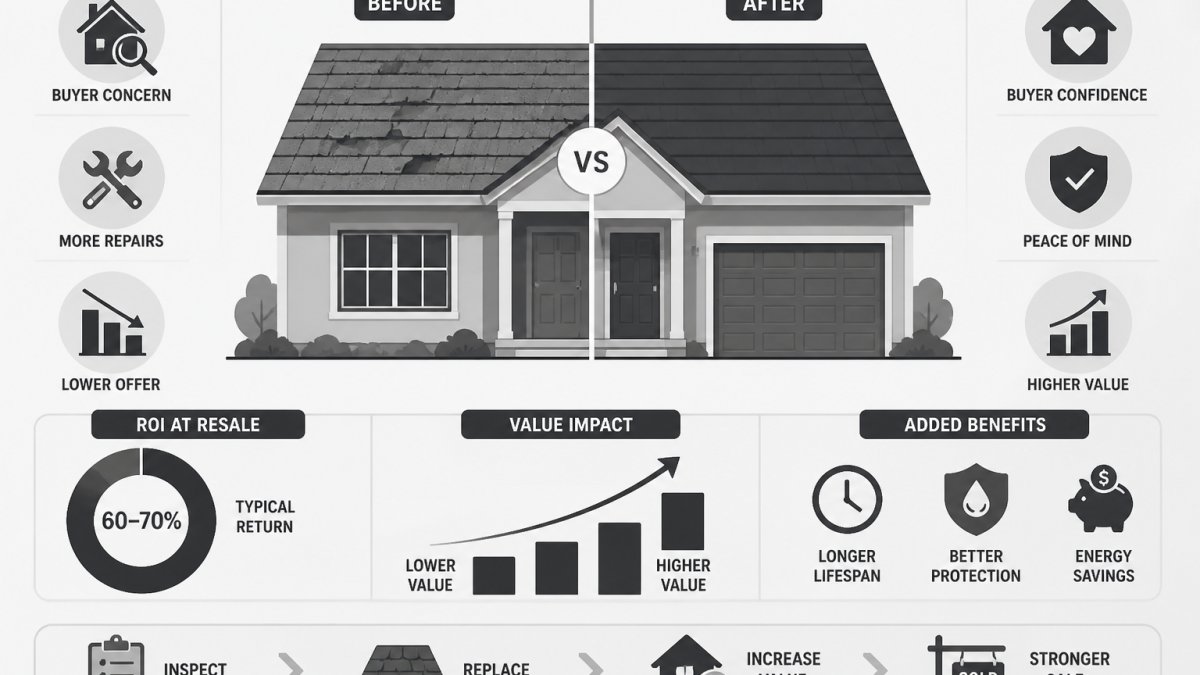
- Planning to sell within two years → repair to a documented standard and disclose it properly; a new roof rarely returns its full cost at sale.
- Storm or fire damage → stop and read the next section before you sign anything.
Roofing failure analysis almost always traces to the same root cause: water reaching a layer that was supposed to stay dry. Identify which layer is wet, and you know whether you're repairing or replacing.
Navigating Insurance Claims and Roofing Warranties
- Manufacturer warranty covers defects in the materials themselves. It is voided by improper installation.
- Workmanship warranty covers how the roof was installed. This is the one your contractor provides, and it is the one that matters when flashing fails at year three.
The Federal Trade Commission guidance on home improvement contracts outlines what a written agreement should contain and what cancellation rights you hold. Read it before signing, not after.
Frequently Asked Questions
What are the most common signs that a roof needs to be replaced?
Watch for curling or missing shingles, granules collecting in gutters, and water stains on ceiling or attic walls. Persistent leaks after patch repairs, sagging roof decking, and daylight showing through the attic boards all point to replacement rather than another repair. Roof age matters too: most asphalt shingle roofs last 20 to 25 years. If your roof is past that range and shows two or more of these signs, schedule a professional inspection before the next rainy season.
What should I look for when hiring a licensed roofing contractor?
Verify the license number through your state licensing board and confirm it is active. Ask for a certificate of insurance covering both general liability and workers' compensation. Request a written scope of work that lists materials, underlayment, flashing, and ventilation details. Get a lien waiver clause in the contract so you are not responsible for unpaid subcontractors. A contractor who provides these documents without hesitation is one worth hiring.
How long does a typical roofing project take to complete?
Most residential roof replacements take one to three days for an average-sized home with asphalt shingles. Metal roofing and tile installations often run three to seven days because of the additional underlayment and fastening steps. Weather, roof pitch, and the number of layers being removed all affect the timeline. Complex roofs with multiple valleys, dormers, or skylights take longer. Ask your contractor for a written schedule and a plan for what happens if rain delays the work.
How does proper attic ventilation impact roof longevity?
Attic ventilation regulates temperature and moisture under the roof deck. Without adequate intake and exhaust vents, heat builds up in summer and cooks the shingles from below, shortening their lifespan. In winter, trapped moisture condenses on the roof decking and can cause rot, mold, and ice dams. The general rule is one square foot of vent opening per 150 square feet of attic floor, split between intake and exhaust. A roofing contractor should check your ventilation balance before installing a new roof.