 listicle
10 Signs You Need Roof Replacement Now: 2026 Guide
Table of Contents
- Roof Replacement Signs: The 5-Minute Ground Check
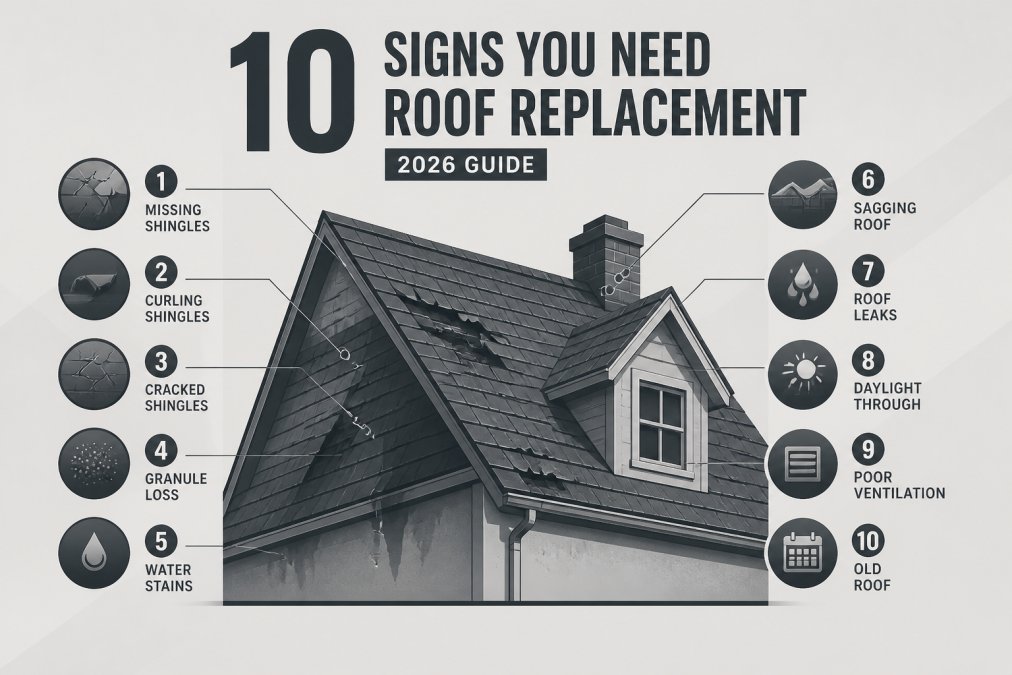
- Sign #1: Curling, Buckling, or Missing Shingles
- Sign #2: Granule Loss and What It Means for Your Asphalt Shingles
- Sign #3: Signs of Water Damage in Attic and Ceilings
- Sign #4: Sagging Roof Deck and Structural Issues
- Sign #5: Damaged Flashing and Deteriorating Valleys
- Sign #6: Daylight, Moisture, and Increased Energy Bills
- The Age Factor: Average Lifespan of Asphalt Shingles
- Frequently Asked Questions
Last Updated: September 4, 2026
Your roof is the only barrier between your home's structure and thousands of pounds of weather pressure, yet most homeowners only notice it when a stain appears on the ceiling. Recognizing the signs you need roof replacement now is the difference between a planned investment and an emergency expense. At Times Square Remodeling Inc., our roofing team has spent over 15 years inspecting homes across Southern California, and we consistently see the same pattern: homeowners wait until visible interior damage appears, which means the roof has often been failing for months.
The challenge is that most roof damage is invisible from the street. By the time you can see a problem from your lawn, water has likely already penetrated the underlayment and begun affecting your roof deck. This guide walks through the ten most reliable indicators that your roof has reached the end of its service life. We will cover what each sign means, why it matters for your home's structural integrity, and when you should call a professional for a definitive assessment.
Roof Replacement Signs: The 5-Minute Ground Check
Before you climb any ladder, you can identify many signs you need roof replacement now from the safety of your driveway. A simple ground inspection using binoculars or a camera with zoom reveals a surprising amount of information about your roof's condition. Walk around your entire home and examine the roof surface from multiple angles, paying close attention to the slopes, valleys, and edges where problems tend to concentrate.
Look for visual inconsistencies across the roof plane. Patches of shingles that appear darker or lighter than the surrounding area often indicate recent repairs or accelerated wear. Check the gutters and downspouts for accumulations of granular material, which we will discuss in detail shortly. Also examine the ground around your home's foundation for shingle fragments that may have blown off during recent wind events. According to FEMA's guidance on home hazard mitigation, regular visual inspections are a core component of reducing property damage risk from severe weather.
Sign #1: Curling, Buckling, or Missing Shingles
Shingles that curl at the edges, buckle in the middle, or have gone missing entirely are the most obvious signs you need roof replacement now. Curling typically occurs when asphalt shingles lose their protective oils and become brittle, causing the edges to lift away from the roof deck. Buckling, by contrast, often signals a moisture problem beneath the surface, where trapped humidity causes the shingle material to warp and distort.
Missing shingles are the most urgent indicator of the three. Every gap in your shingle coverage exposes the underlayment and roof deck directly to water infiltration, accelerating damage to the structural layers beneath. A single missing shingle after a storm may be a repair item, but widespread loss across multiple roof slopes signals that the entire system has reached the end of its lifespan. The key distinction is pattern: isolated damage suggests a localized fix, while uniform deterioration across the roof means the whole system needs replacement.
Sign #2: Granule Loss and What It Means for Your Asphalt Shingles
Granule loss is the quiet killer of asphalt shingle roofs, and it is often the first measurable sign of aging. Those sand-like particles you find in your gutters are actually ceramic-coated granules that protect the asphalt from UV radiation and provide fire resistance. As shingles age, they shed these granules at an accelerating rate, leaving the underlying asphalt exposed to sun damage that causes cracking and brittleness.
You can assess granule loss quickly by examining your gutters and downspouts after a rainstorm. Significant accumulations of granules, particularly if you notice bald spots or lighter-colored patches on the shingles themselves, indicate that your roof is approaching the end of its useful life. Check the areas around downspout outlets and valley flashings, where water flow concentrates the shed granules. The average lifespan of asphalt shingles varies by type, which is why understanding your specific roofing material matters for making a replacement decision.
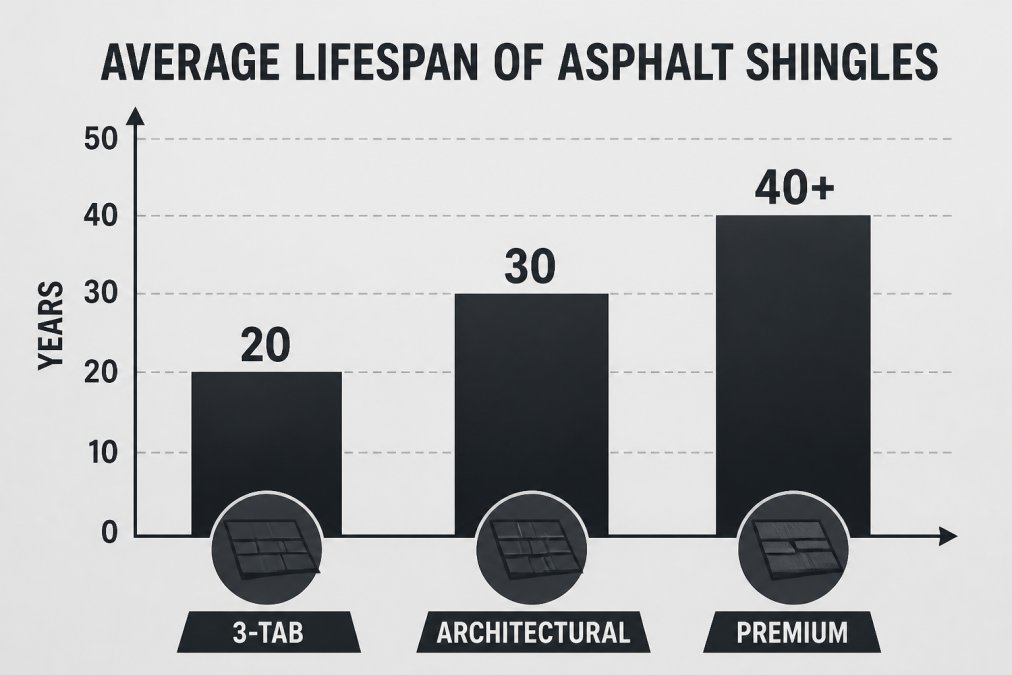
| Shingle Type | Typical Lifespan | Primary Failure Mode | Replacement Indicator |
|---|---|---|---|
| 3-Tab | 15-20 years | Granule loss, curling | Bald spots, brittle edges |
| Architectural | 25-30 years | Granule loss, wind damage | Thinning granules, lifted tabs |
| Premium | 30-40+ years | Algae, edge curling | Surface erosion, color fading |
Material-Specific Signs Most Homeowners Miss
Most online guides stop at asphalt shingles, but the signs you need roof replacement now look completely different depending on what your roof is made of. If your home has a metal or tile roof, the warning signals are distinct and often mistaken for cosmetic issues.
Metal Roofs: Fastener Failure and Finish Erosion
Metal roofs fail differently than asphalt. Instead of granule loss, watch for these indicators:
- Exposed or popped fasteners: Over decades of thermal expansion and contraction, the screws or nails holding metal panels in place can back out, lifting the washer and creating a hole. Walk your roof line from the ground with binoculars and look for raised dots along the seams. Each exposed fastener is a potential leak point.
- Finish erosion at the drip edge: The coating on metal panels is thinnest at the edges. If you see bare metal or rust forming along the bottom edge of the panels or around penetrations, the protective finish has failed. Once oxidation starts, it spreads under the coating and shortens the panel's remaining life.
- Oil-canning distortion: Broad, wavy ripples in flat metal panels indicate the metal has fatigued from repeated expansion and contraction. While sometimes purely cosmetic, pronounced distortion often accompanies hidden fastener loosening.
Tile Roofs: Cracks, Hairline Fractures, and Mortar Deterioration
Concrete and clay tile roofs are durable but not immortal. The failure mechanisms are entirely different from asphalt:
- Hairline cracks that grow: A small crack in a tile may seem harmless, but freeze-thaw cycles and foot traffic cause cracks to propagate. When you see cracked tiles from the ground, inspect whether the crack runs completely across the tile. Full-width cracks compromise the tile's water-shedding ability.
- Mortar bed deterioration: Tile roofs often use mortar to secure ridge caps and hip tiles. Over time, this mortar crumbles and washes away. Missing mortar leaves gaps where wind-driven rain can enter. Check the ridge line for gaps or loose cap tiles.
- Granule loss on tile? Some concrete tiles have a factory-applied coating that mimics granule texture. If you see bare spots where the coating has worn away, the tile is absorbing more moisture and will degrade faster.
Why Material Matters for Your Replacement Timeline
A metal roof showing early finish erosion may still have 10 years of life if the fasteners are re-seated and the finish is touched up. The same roof with widespread rust at the seams is beyond repair. Similarly, a tile roof with a few cracked tiles can be repaired indefinitely, but once the mortar beds fail across multiple slopes, the cost of re-bedding and re-pointing approaches the cost of replacement.
The decision framework shifts by material:
- Asphalt: Granule loss is the primary aging indicator. Once bald spots cover more than 30% of a slope, replacement is more cost-effective than repair.
- Metal: Fastener failure is the primary indicator. If less than 10% of fasteners are exposed, re-fastening is viable. Beyond that, the labor cost of re-securing every panel approaches replacement cost.
- Tile: Mortar and underlayment failure drive replacement decisions. Tile itself can last 50+ years, but the underlayment beneath it typically needs replacement every 20-25 years. If your tile roof is 25 years old and leaking, the issue is likely the underlayment, not the tile.
Understanding which material you have changes how urgently you should act on visible signs. A few cracked tiles on a 5-year-old roof is a repair. The same cracks on a 25-year-old roof may signal that the underlayment beneath has already failed, making replacement the sounder financial choice.
Sign #3: Signs of Water Damage in Attic and Ceilings
Signs of water damage in attic spaces and on ceilings are the most reliable evidence that your roof has already failed. Head into your attic on a dry day with a flashlight and examine the underside of your roof deck, the rafters, and the insulation. Look for dark streaks, water stains, or a shiny residue on the wood, which indicate past or active moisture intrusion. Check the insulation for compressed or discolored sections that suggest water has soaked through from above.
On your ceilings, water stains often appear as brown or yellow rings that grow over time. A fresh stain with a damp feel indicates active leakage, while a dry, older stain suggests a past problem that may or may not have been resolved. Pay particular attention to areas around chimneys, skylights, and vent pipes, where flashing failures commonly cause water to track along interior surfaces. The EPA's guidance on moisture control emphasizes that persistent moisture in building materials promotes mold growth and degrades structural components, making early detection essential for protecting your home's health.
Sign #4: Sagging Roof Deck and Structural Issues
A sagging roof deck is the most serious structural warning on this list, and it demands immediate professional attention. When you notice a visible dip or curve in your roofline from the ground, or when the ceiling inside your home appears to bow downward, the roof deck has likely absorbed significant moisture and begun to rot. This condition compromises the structural integrity of your entire roof system and can progress rapidly once it starts.
You can check for early-stage sagging by walking through your attic and examining the roof deck from below. Look for wavy or uneven sections between the rafters, which indicate that the sheathing has lost its rigidity. Dark spots on the deck surface often mark areas where water has pooled and saturated the wood. A common mistake homeowners make is assuming that a minor sag will stabilize on its own; in practice, the affected section continues to weaken, and the repair scope expands with every rain event.
Sign #5: Damaged Flashing and Deteriorating Valleys
Flashing failures are responsible for a substantial share of roof leaks, yet they are frequently overlooked during visual inspections. Flashing is the thin metal material installed around roof penetrations, including chimneys, skylights, vent pipes, and at the valleys where two roof slopes meet. When flashing corrodes, lifts, or separates from the roof surface, it creates an open channel for water to enter the layers beneath.
Inspect the visible flashing from the ground using binoculars, looking for rust spots, gaps, or sections where the metal has pulled away from the shingles. On valley flashing, check for debris accumulation that can trap moisture against the metal and accelerate corrosion. Deteriorated flashing often produces water damage that appears far from the actual entry point, as water tracks along rafters or insulation before dripping onto ceilings. When flashing failure is widespread, particularly on an older roof, replacement is more cost-effective than repeated spot repairs.
Sign #6: Daylight, Moisture, and Increased Energy Bills
Visible daylight entering your attic through the roof structure is a definitive sign that your roof system has compromised its integrity. If you can see pinpoints of light from inside your attic during daytime, you have gaps in your shingle coverage or underlayment that allow both water and air to pass through freely. These openings compromise your home's moisture barrier and thermal envelope simultaneously, leading to the dual problems of water infiltration and energy loss.
Increased energy bills, particularly during heating and cooling seasons, often accompany roof deterioration. A failing roof allows conditioned air to escape and outside air to enter, forcing your HVAC system to work harder to maintain comfortable temperatures. The U.S. Department of Energy's guide to attic insulation notes that air leaks through the roof plane are a primary source of energy waste in older homes. When you notice your utility costs climbing without a corresponding change in usage patterns, your roof's condition deserves scrutiny alongside your insulation and windows.
How to Check for Daylight and Air Leaks Safely
You do not need to climb onto your roof to assess daylight penetration or air leakage. A safe, ground-based and interior inspection covers most of what you need to know.
Interior Attic Inspection (Do This First)
- Pick a sunny day. Daylight is easiest to spot when the sun is at an angle to the roof, typically mid-morning or mid-afternoon.
- Darken the attic. Turn off any lights and wait 30 seconds for your eyes to adjust. Use a flashlight only after you have scanned for daylight.
- Look for pinpoints and beams. Small holes show up as individual points of light. Larger gaps, often around vent pipes or chimney chases, appear as soft beams. Mark each location with a piece of tape on the attic floor so you can correlate it with the exterior later.
- Check the soffit vents. On a windy day, hold a tissue near the soffit vents. If the tissue flutters or moves, air is moving through the attic in an uncontrolled way, which indicates the roof plane is not sealed properly.
Ground-Based Exterior Check
From the ground, use binoculars to inspect the areas where daylight most commonly enters:
- Roof penetrations: The gaps around vent pipes, plumbing stacks, and electrical conduits are common daylight entry points. Look for cracked rubber boots or gaps between the pipe and the flashing.
- Roof-to-wall intersections: Where a roof slope meets a vertical wall (called a sidewall), the step flashing can pull away over time. Look for gaps between the flashing and the wall surface.
- Ridge and hip caps: Lifted or missing ridge caps create a continuous opening along the peak. From the ground, look for uneven lines along the ridge where caps have shifted.
The Moisture Connection: Why Daylight Means Water Damage Risk
Daylight penetration is not just an energy efficiency issue. Every gap that lets light in also lets water in under the right wind conditions. Wind-driven rain does not fall straight down; it travels horizontally and can enter gaps that would never leak during a calm rain. This is why roofs can leak during a storm with 30 mph winds even if they stayed dry during a gentle rain the week before.
Moisture in the attic creates a cascade of problems:
- Insulation compression: Wet insulation loses its R-value permanently. Even after it dries, the fibers mat down and trap less air, reducing thermal performance by up to 40%.
- Wood rot in rafters and decking: Prolonged moisture exposure causes fungal decay. Rotting rafters lose structural strength and may eventually require sistering or replacement.
- Mold growth: The EPA's guidance on moisture control notes that mold can begin growing within 24-48 hours of water exposure. Attic mold often goes unnoticed because it grows on the underside of the roof deck, out of sight.
Energy Bill Analysis: Separating Roof Issues from Other Causes
Before you attribute rising energy bills to your roof, rule out other common causes. A simple comparison method helps:
- Compare year-over-year bills. Look at your energy usage for the same month last year, not the dollar amount. Usage is measured in kWh for electricity and therms for gas, which removes rate increases from the equation.
- Check your insulation depth. The Department of Energy recommends attic insulation of R-38 to R-49 for most climates. If your insulation is below this level, adding insulation may solve the problem without a roof replacement.
- Inspect attic ventilation. Proper ventilation requires intake at the soffits and exhaust at the ridge. If your soffit vents are blocked by insulation or your ridge vent is clogged, the attic overheats, which accelerates shingle aging and increases cooling costs.
If your energy usage has climbed 10-15% year-over-year and your insulation and ventilation check out, the roof plane itself is the likely culprit. This is especially true if you also see daylight penetration or have an older roof approaching the end of its material-specific lifespan.
When Daylight Means Replacement vs. Repair
A single gap around a vent pipe boot can often be repaired by replacing the boot, a job that takes under an hour. But daylight penetration that is widespread across multiple roof areas indicates systemic failure of the underlayment and shingle coverage. The distinction comes down to pattern:
- Isolated light points near a single penetration suggest a localized flashing or boot failure. Repair is viable.
- Scattered light across multiple slopes means the underlayment has deteriorated broadly. Even if individual shingles look intact, the protective layer beneath has failed, and replacement is the only lasting solution.
A professional inspection can confirm which pattern you have. Most roofing contractors will provide a written assessment that documents the locations of daylight penetration and correlates them with the age and material condition of your roof, giving you the information needed to decide between a targeted repair and a full replacement.
The Age Factor: Average Lifespan of Asphalt Shingles
The average lifespan of asphalt shingles provides a useful baseline for determining whether your roof is approaching replacement age, regardless of its visible condition. Standard 3-tab shingles typically last 15 to 20 years, while architectural shingles commonly perform for 25 to 30 years, and premium options can reach 40 years or more with proper maintenance. If your roof is within a few years of these thresholds, proactive replacement planning is wise, even if no obvious damage is visible.
Climate plays a significant role in how quickly shingles age. Homes in regions with intense sun exposure, frequent hail, or high wind events often see accelerated wear compared to the baseline estimates. Keep records of your roof's installation date and any repairs you have made; this documentation helps you make informed decisions when the time for replacement arrives. When you determine that replacement is necessary, hiring a licensed roofing contractor ensures the work meets local building codes and manufacturer warranty requirements.
Reroofing over an existing layer can extend the timeline slightly, but a full tear-off and replacement provides the cleanest surface for new shingles and allows inspectors to assess the condition of the underlying roof deck. The decision between repair and replacement ultimately comes down to the age of your roof, the extent of the damage, and the cost projections for each option. A professional inspection from a licensed contractor provides the clarity you need to make this financial decision with confidence.
The signs you need roof replacement now are rarely subtle, but they are easy to dismiss when they appear gradually. Curled shingles, granule loss, water stains, and rising energy bills all point toward the same conclusion: your roof's protective capacity is declining, and the cost of waiting often exceeds the cost of replacing. Times Square Remodeling Inc. brings over 15 years of roofing experience to every inspection, providing honest assessments and professional project execution that protects your home's value. Our California-licensed team handles everything from the initial evaluation through final cleanup, so you never coordinate multiple contractors or wonder about project status. Get started with Times Square Remodeling Inc. and schedule your roof assessment today.
Frequently Asked Questions
What are the first signs that my roof needs replacement?
The earliest roof replacement signs often appear as shingle deterioration. Look for curling or buckling edges, missing shingles after a storm, and granules collecting in your gutters. Inside, check for signs of water damage in attic spaces, such as dark streaks on rafters or damp insulation. If you notice any combination of these issues, a professional inspection is a wise next step.
Does a 20-year-old roof need to be replaced?
Not always, but it needs a professional inspection. The average lifespan of asphalt shingles ranges from 20 to 30 years, depending on the type and local climate. If you have a 20-year-old roof with 3-tab shingles, it is nearing the end of its service life. Even if it looks fine from the ground, the underlayment and roof deck may be compromised. A licensed roofing contractor can assess its true condition.
Can I inspect my roof myself for damage?
You can perform a safe ground-level inspection for roof replacement signs. Use binoculars to look for missing, curled, or buckled shingles. Check for granule loss in gutters and downspouts. Inspect your attic for signs of water damage or daylight coming through the roof deck. Avoid walking on the roof yourself; hiring a licensed roofing contractor for a thorough, safe inspection is always recommended.
What is the 25% rule for roof repairs?
The 25% rule is a guideline contractors use to decide between repair and replacement. If more than 25% of your roof shows damage or wear, a full replacement is often more cost-effective than repeated repairs. This is because patching a systemically failing roof can lead to ongoing leaks, water damage, and higher costs. A professional can help you evaluate the percentage of damaged areas.
This article was written using GrandRanker