 ultimate-guide
Choosing Roofing Materials for California Climate in 2026
Table of Contents
- Why California Roofing Choices Differ From the Rest of the Country
- The Main Roofing Materials for California Homes: A Side-by-Side Comparison
- Asphalt Shingles: The Affordable Default
- Tile Roofing: Clay and Concrete for Longevity
- Metal Roofing: Fire Resistance and Energy Savings
- Class A Fire-Rated Roofing Materials and Wildfire Defense
- Cool Roof Technology Benefits and Title 24 Roofing Requirements
- Choosing Roofing Materials for California Climate: Cost, Insurance, and Regional Factors
- Frequently Asked Questions
Last Updated: September 9, 2026
Why California Roofing Choices Differ From the Rest of the Country
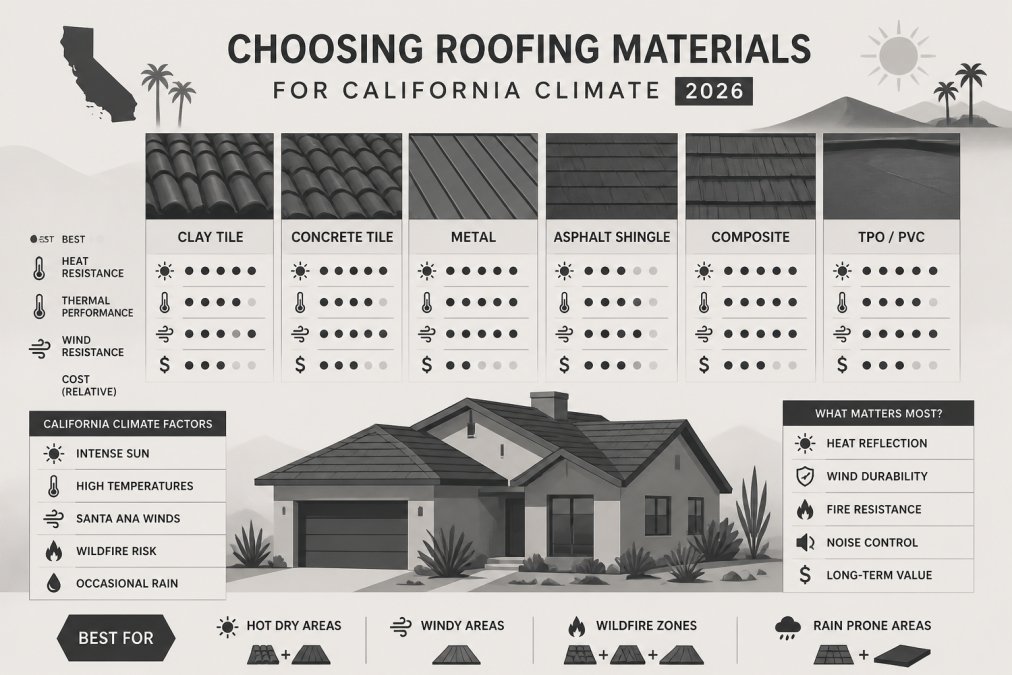
California's climate is not one climate. A roof that performs well along the fog-cooled coast can fail prematurely under inland valley heat, and neither may meet the fire safety demands of wildfire-prone zones. Choosing roofing materials for california climate means weighing solar exposure, temperature swings, seismic activity, and strict state energy codes at once.
Most national roofing guides miss this complexity, defaulting to a single recommendation that ignores micro-climates. Your roof must satisfy three masters: your local building department, your insurance carrier, and your energy bill.
At Times Square Remodeling Inc., we have over 15 years of experience in transforming homes through expert craftsmanship, including roofing. This guide breaks down how to match material performance to your specific location, with an honest look at cost, durability, and code compliance.
The Main Roofing Materials for California Homes: A Side-by-Side Comparison
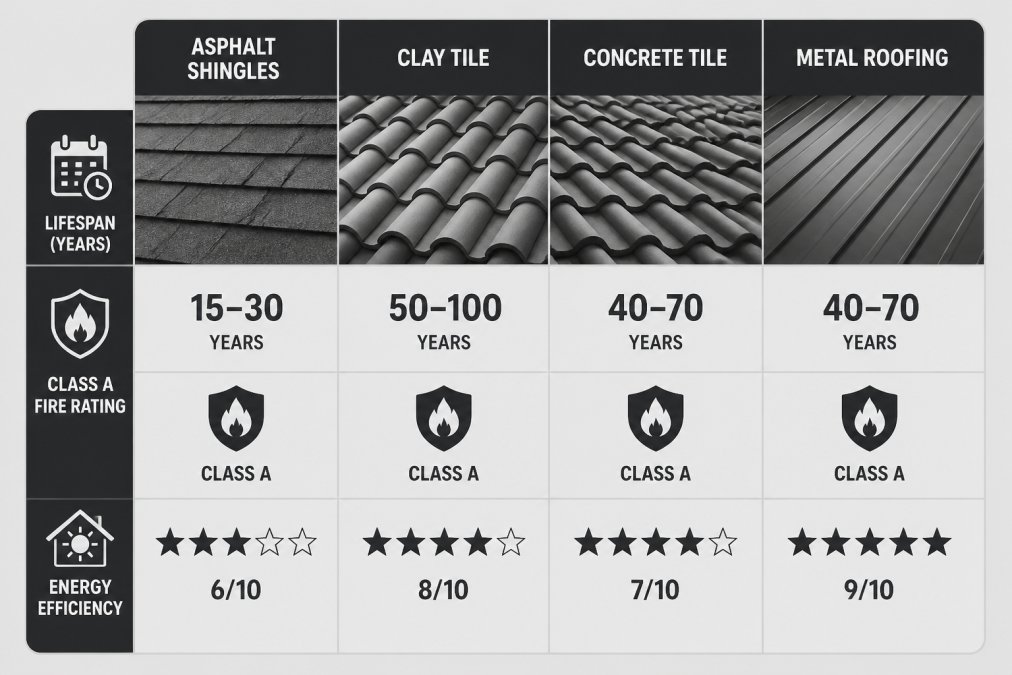
The right material balances four factors: fire resistance, energy performance, lifespan, and budget. No single option wins every category, which is why the decision requires trade-offs.
| Material | Lifespan | Fire Rating | Energy Efficiency | Best For |
|---|---|---|---|---|
| Asphalt Shingles | 15-30 years | Class A available | Moderate | Budget-conscious replacements |
| Clay Tile | 50+ years | Class A | High | Mediterranean and Spanish styles |
| Concrete Tile | 50+ years | Class A | High | Durable, heavier alternative |
| Metal Roofing | 40-70 years | Class A | Very High | Wildfire zones and energy savings |
Asphalt Shingles: The Affordable Default
Asphalt shingles remain the most common residential roofing choice because they offer the lowest upfront installation cost. Modern architectural shingles carry a Class A fire rating when properly installed with the right underlayment, making them viable even in higher-risk zones.
The trade-off is lifespan. Most asphalt roofs need replacement within 15 to 30 years. In inland areas where summer temperatures regularly exceed 100 degrees, UV degradation accelerates aging. Dark-colored shingles also absorb heat, raising attic temperatures and forcing your cooling system to work harder.
A common mistake is choosing the cheapest three-tab shingle for a steep roof pitch. Since labor dominates cost, paying slightly more for architectural shingles extends service life meaningfully. If you plan to stay beyond a decade, the upgrade usually pays for itself.
Tile Roofing: Clay and Concrete for Longevity
Clay and concrete tiles are the classic California roofing material. Both carry a Class A fire rating, resist UV degradation, and can last 50 years or more. Their thermal mass helps moderate indoor temperatures, reducing cooling demand.
Clay tiles offer the most distinctive appearance, particularly for Spanish Colonial and Mediterranean architecture. Concrete tiles cost less and accept more colors and finishes. But the most common point of failure in a tile roof project is the structure underneath it.
The Weight Problem Most Guides Ignore
Standard concrete tiles weigh 9 to 12.5 pounds per square foot; clay tiles run 6 to 9 pounds. Both are far heavier than the 2 to 3 pounds per square foot of asphalt shingles. A 2,000-square-foot deck suddenly carrying an additional 15,000 to 20,000 pounds is not trivial.
Most homes built in the last 30 years were framed for a lighter covering. Before committing to tile, get a structural assessment. A licensed structural engineer must evaluate whether existing rafters, joists, and load-bearing walls can handle the dead load plus the live load of a worker during installation.
Retrofitting vs. Full Replacement: Know the Difference
A retrofit and a full replacement differ meaningfully in budget and timeline.
- Retrofit: This assumes your current roof deck and framing are sound and can be reinforced locally. An engineer might specify adding sister joists, installing stronger clips at the rafter-to-wall connection, or upgrading the sheathing thickness. This is less disruptive and cheaper than a full tear-off, but it only works if the underlying structure is in good shape.
- Full Replacement: If the existing deck has rot, the framing is undersized, or the home was originally built with a lightweight roof in mind, you may need to strip the old roof down to the bare framing and rebuild the structural support. This adds significant cost and time but is the only safe path for many older homes.
A common pattern is a homeowner receiving a tile bid that excludes structural work. The first sign of trouble is when the building department rejects the permit for lacking an engineer's stamp. Always ask whether the bid includes a structural evaluation and reinforcement. If they hesitate, that is a red flag.
The Hidden Cost of Underlayment and Flashing
Tile is a water-shedding system, not a water-proofing one. Real protection comes from the underlayment beneath. High-temperature, self-adhering modified bitumen underlayment is the standard for wildfire zones and costs more than felt. Flashing at valleys, ridges, and penetrations must be metal and meticulously installed; a small mistake leads to leaks that are difficult to trace.
The Verdict on Tile
Tile is an excellent choice for the right home. It offers unmatched longevity, a classic California look, and strong fire resistance. But it demands a structural commitment that many homeowners do not anticipate. Get the engineering done before you commit to the material, and budget for the possibility that your framing needs reinforcement. FEMA guidance on disaster-resistant roofing provides useful background on how roof assemblies perform under extreme weather, but your first step should be a local structural engineer who understands your specific soil, seismic zone, and framing type.
Metal Roofing: Fire Resistance and Energy Savings
Metal roofing is the fastest-growing premium choice in fire-prone regions. Steel and aluminum panels carry a Class A fire rating, resist ember ignition, and provide corrosion resistance in coastal salt air. A quality metal roof can last 40 to 70 years.
Energy performance is where metal separates from the field. Cool metal coatings reflect solar radiation, reducing heat gain. Paired with proper ventilation and insulation, homeowners report lower summer cooling costs compared to dark asphalt.
The drawbacks are upfront cost and appearance. Metal costs more than asphalt and some tile systems, and denting from hail or branches is possible with thinner gauges. Installation requires specialized skill; a poorly installed metal roof can develop fastener issues and oil-canning. Work with a contractor experienced in standing seam systems.
Class A Fire-Rated Roofing Materials and Wildfire Defense
Wildfire risk has reshaped roofing decisions statewide. Class A fire-rated materials are the highest standard for fire resistance, tested against severe fire exposure including burning brand ignition and flame spread. Tile, metal, and premium composite shingles all meet this standard.
The assembly matters as much as the surface material. Embers can enter through gaps at eaves, ridge caps, and roof-to-wall intersections. Proper installation includes fire-resistant underlayment, metal flashing at junctions, and closing openings where debris can accumulate.
Insurance carriers now scrutinize roofing materials closely in high-risk areas. Homes with Class A roofs are more likely to qualify for coverage, and some carriers offer premium discounts for fire-resistant assemblies. Before committing to a material, check with your insurer about specific requirements for your zip code. Cal Fire's guidance on roof fire resistance provides detailed information on defensive zone requirements and roofing standards.
Cool Roof Technology Benefits and Title 24 Roofing Requirements
Cool roof technology benefits extend beyond summer comfort. A cool roof uses highly reflective surfaces to reduce heat absorption, lowering attic temperatures and cutting cooling loads. The key metrics are solar reflectance and thermal emittance, both measured from zero to one.
Title 24 roofing requirements now mandate cool roof standards for most residential replacements in climate zones with significant cooling demand. The California Energy Code sets minimum reflectance and emittance values that roofing products must meet, verified through the California Energy Commission's Title 24 roofing standards rating system.
Energy Star rated products simplify compliance. A certified cool roof product with the right slope and ventilation typically satisfies the prescriptive path, avoiding performance-based calculations. Your contractor should verify product ratings before ordering, since non-compliant materials trigger plan-check delays.
Choosing Roofing Materials for California Climate: Cost, Insurance, and Regional Factors
When choosing roofing materials for california climate, the final decision hinges on three practical factors beyond the material itself: the true cost of installation, how your insurance carrier views the roof, and the specific micro-climate where your home sits.
Installation Cost: What the Bid Actually Tells You
Labor varies with roof pitch, complexity, and penetrations. A steep roof with multiple valleys costs more regardless of material. Get itemized bids that separate material from labor. A bid that bundles everything into one number is hiding something.
A common pattern is a contractor quoting a base price for a simple gable roof, then adding change orders for valleys, skylights, chimney flashing, and ventilation. Ask upfront how the bid handles these variables. A 6/12 pitch or steeper requires additional safety equipment and slower installation, reflected in the labor line.
Insurance Premium Impacts: The Financial Case for Class A
Insurance carriers are not neutral observers. In high-risk fire zones, they underwrite against the specific materials on your roof. A Class A fire-rated roof is a financial asset that can directly lower your premium.
Most carriers use zip-code-level risk models factoring in wildfire exposure, wind speed, and hail probability. A home with a Class A roof assembly is statistically less likely to result in a total loss claim, translating into premium discounts in many cases.
Before you finalize a material, call your insurance agent and ask three specific questions:
- Does my current policy offer a discount for a Class A fire-rated roof?
- Are there specific roofing materials that would make my home ineligible for coverage in my zip code?
- Does the policy require a roof inspection before renewal, and what condition does it need to be in?
Some carriers require roof inspections for homes older than 15 years and may decline to renew policies on aging asphalt roofs in high-risk zones. Replacing with a Class A metal or tile system can be the difference between keeping coverage and being forced into the California FAIR Plan.
Regional Micro-Climate Nuances: One State, Many Roofs
The roof that works on the coast may fail inland. Top guides treat this as a footnote; it deserves more attention.
- Coastal Zones (within 5-10 miles of the ocean): Salt air is the enemy. It corrodes exposed metal fasteners, flashing, and even the underside of aluminum panels if they are not properly coated. Standard galvanized steel can develop rust streaks within a few years. Coastal homes should prioritize corrosion-resistant materials: standing seam metal with a Kynar or similar coating, clay tile, or concrete tile. Asphalt shingles with metal drip edge should use stainless steel or aluminum flashing, not galvanized steel.
- Inland Valleys (e.g., Sacramento, Fresno, inland LA County): Summer temperatures routinely exceed 100 degrees, and UV exposure is relentless. Dark asphalt shingles absorb heat, driving up cooling costs and accelerating granule loss. Cool roof coatings with high solar reflectance are not optional here; they are a Title 24 requirement for most replacements. Light-colored tile or metal with a cool coating performs best.
- Mountain Communities (e.g., Lake Tahoe, Big Bear): Snow load is the primary concern. Tile roofs are heavy, and when snow accumulates on top of that weight, the structural demand can exceed what the framing was designed for. Metal roofing sheds snow more effectively, but it needs snow guards to prevent avalanches off the roof edge. Freeze-thaw cycling also stresses flashing and underlayment, so the assembly must be designed for temperature extremes.
The Retrofitting Question: Assess Before You Commit
If weighing a full replacement versus retrofit, have a professional assess the current deck and framing first. Hidden moisture damage under old shingles is common and changes the scope of work. A licensed contractor can identify these issues before you commit.
A retrofit might mean replacing only the top layer of shingles and installing new underlayment, which is cheaper but does not address deck issues. A full replacement involves tearing off the old roof, inspecting the deck, and replacing rotted sheathing. In seismic zones, this is also the time to add shear wall panels or hurricane ties.
Frequently Asked Questions
What is the best roofing material for a home in California?
The best material depends on your location and priorities. For wildfire-prone areas, Class A fire-rated materials like metal or clay tile are the safest choices. In hot inland valleys, cool roof technology benefits are significant, making metal or tile with high solar reflectance a smart pick. For coastal homes, materials that resist salt air and moisture, like metal or concrete tile, last longer. Asphalt shingles remain a budget-friendly option for milder areas, but they typically have a shorter lifespan than tile or metal.
How does Title 24 compliance affect my roofing material choice?
Title 24 compliance in California affects your roofing material choice because it sets energy efficiency standards for new roofs and re-roofing projects. The requirements mandate that roofs meet specific solar reflectance and thermal emittance levels, which directly points you toward cool roof technology. This often means choosing materials with reflective coatings or inherently reflective surfaces like metal or light-colored tile. Your roofing contractor must verify that the materials you select meet these standards and provide the necessary documentation to pass inspection.
Should I choose Class A fire-rated materials for my home?
Yes, choosing Class A fire-rated materials is the wisest decision for nearly all California homes, especially those in wildfire-prone zones. Class A is the highest fire rating available, offering the best protection against flying embers and direct flame. Materials like concrete tile, clay tile, and metal roofing typically achieve this rating. While some asphalt shingles are also Class A rated, the assembly, including the underlayment, must meet the standard. Many insurance companies offer discounts for Class A roofs, which can offset the higher upfront cost.
What is the 25% rule for roofing?
The 25% rule is a common building code regulation that determines when you must bring an existing roof up to current standards. If you are repairing or replacing more than 25% of your roof's total area, the entire roof must comply with current building codes, including Title 24 energy requirements. This rule often pushes homeowners toward a full replacement rather than a repair, as it makes more financial sense to install a new, compliant roof than to patch an old one that would still need upgrades.