 ultimate-guide
Is a Full Roof Replacement Worth It for Resale? 2026 Guide
Table of Contents
- How Roof Replacement Resale Value Actually Works
- Average Roof Replacement Cost vs. Value Added
- Signs Your Roof Needs Replacement Before You List
- Roof Inspection for Home Sellers: What to Expect
- Selling As-Is vs. Replacing the Roof First
- How to Prevent Unexpected Remodeling Costs During a Roof Project
- Angles Most Sellers Miss: Climate, Insurance, and Curb Appeal
- Conclusion
- Frequently Asked Questions
Last Updated: September 28, 2026
How Roof Replacement Resale Value Actually Works
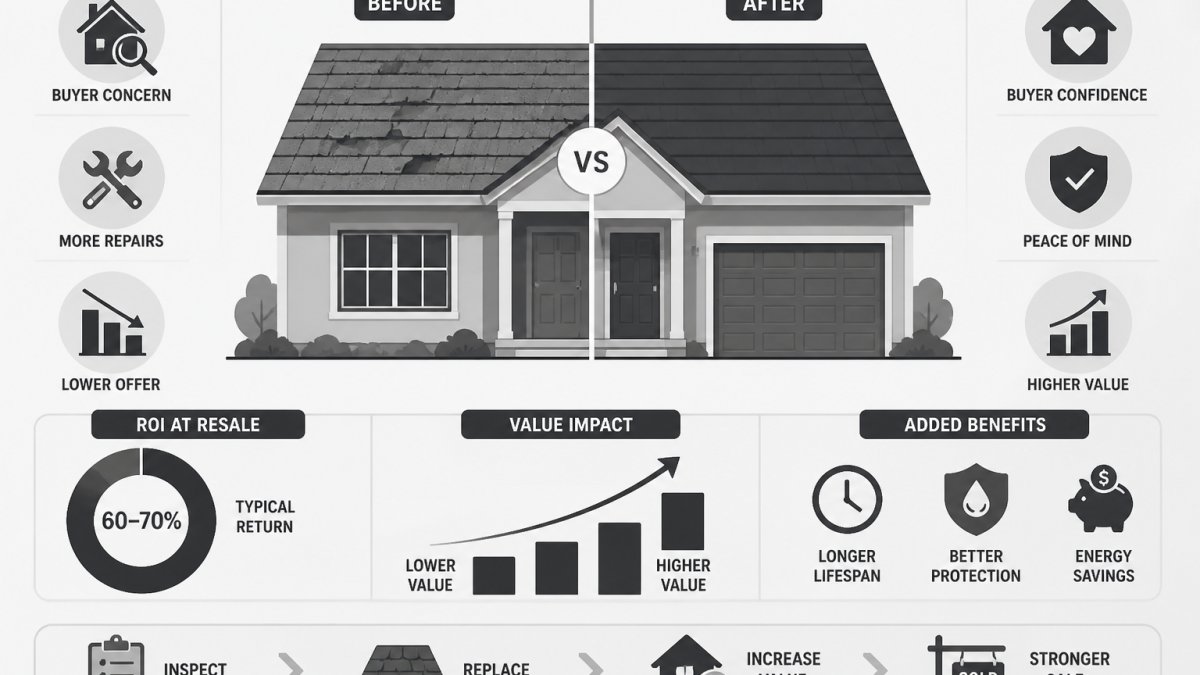
The question of is a full roof replacement worth it for resale comes down to one: does the money you spend on a new roof come back to you at closing, or does it disappear into the house? The honest answer is that a roof replacement is rarely a dollar-for-dollar trade. It is a negotiating tool, an inspection shield, and a marketability asset rolled into one.
What Buyers and Appraisers Evaluate
Buyers evaluate a roof on remaining lifespan, visible wear, and whether their lender or insurer will raise a flag. Appraisers approach it differently. They compare your home to recent sales in the area and adjust for condition, so a roof that is clearly at the end of its life can drag your comparable value down.
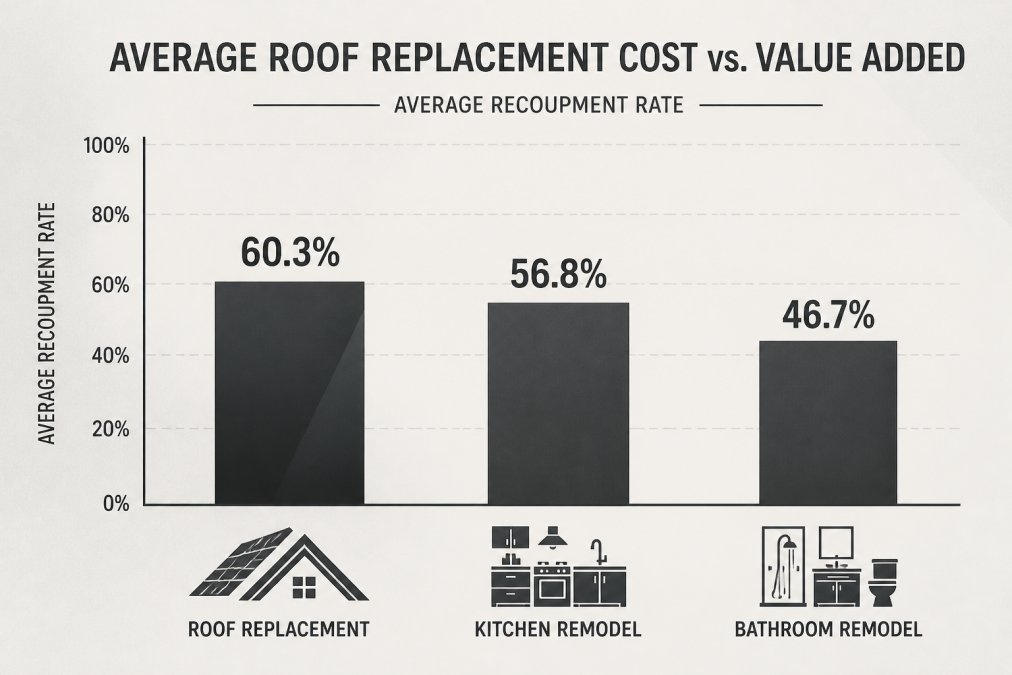
Average Roof Replacement Cost vs. Value Added
A new roof is a home improvement project with one of the more predictable recoupment profiles, but it is not a full refund. The Remodeling Impact Report from the National Association of Realtors consistently ranks roofing among the exterior projects that recover a meaningful share of cost at resale, though the exact figure moves with your local real estate market.
The Three Mechanisms That Decide Whether You Recoup
Recoupment is not one number. It is the sum of three separate mechanisms, and each one behaves differently:
- Appraisal adjustment. Appraisers do not pay you for a new roof. They adjust your comparable value based on observable condition. A roof with clear remaining life supports the upper end of your comp range; a roof at end of life pushes you toward the lower end or invites a condition adjustment.
- Inspection contingency leverage. Once a buyer's inspector flags the roof, the negotiation shifts from price to repair. You either fund the replacement, offer a credit, or lose the buyer. Replacing before listing removes that leverage point entirely.
- Buyer financing and insurability. This is the mechanism most sellers never see coming. If a buyer's insurer will not bind a policy on an aged roof, the loan cannot close, regardless of what the buyer is willing to pay. A new roof converts an uninsurable house into a financeable one.
| Scenario | Roof Condition | Likely Buyer Response | Seller Use |
|---|---|---|---|
| Strong market, new roof | 15+ years remaining | Few objections, faster close | High |
| Strong market, old roof | Under 5 years remaining | Credit requested, inspection pushback | Moderate |
| Slow market, new roof | 15+ years remaining | Priced as move-in ready | High |
| Slow market, old roof | Visible wear, leaks | Buyer concessions or lost sale | Low |
Time-on-Market: The ROI Competitors Ignore
Dollar recoupment is only half the equation. The other half is how long the house sits. A roof that reads as move-in ready tends to shorten the listing period, and every month off the market saves carrying costs, mortgage payments, taxes, insurance, utilities, and maintenance on a home you no longer occupy. For many sellers, the carrying cost saved by a faster sale is worth more than the price difference between a new roof and an old one.
Asphalt Shingles vs. Metal Roofing: Which Recoups More
Asphalt shingles remain the default for most resale situations because they are familiar to buyers and appraisers alike. Metal roofing recoups well in certain markets, but it can also narrow your buyer pool if the surrounding neighborhood is uniformly asphalt. The right choice depends on your price bracket and your local comps, not on a single national ranking.
Signs Your Roof Needs Replacement Before You List
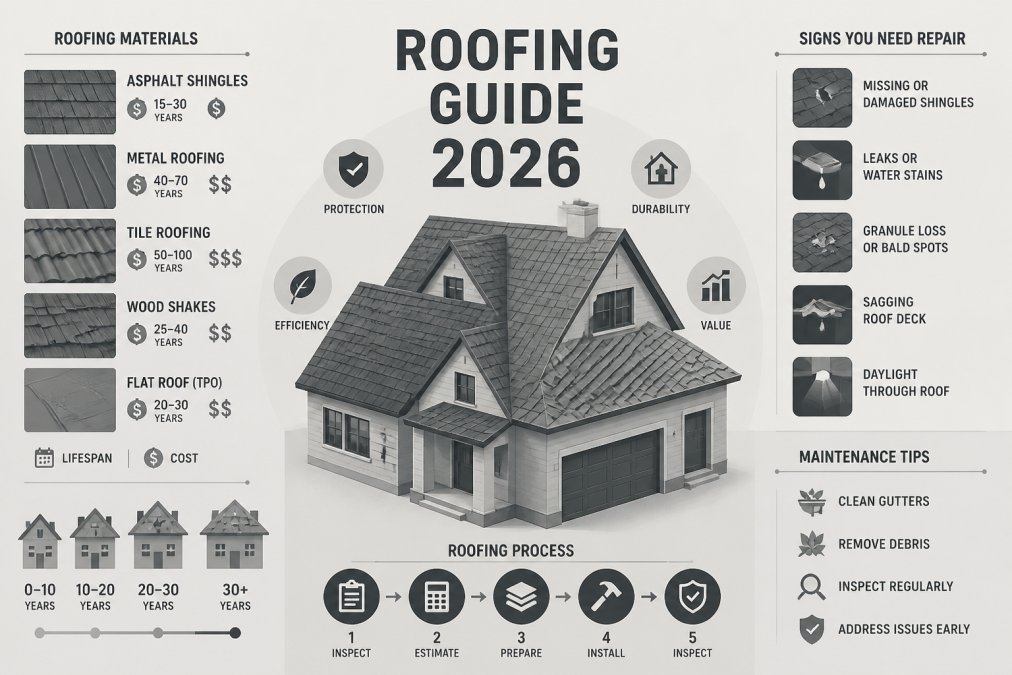
The clearest signs a roof needs replacement are curling or missing shingles, granules collecting in gutters, visible sagging, and interior water stains after heavy rain. Any one of these can trigger a buyer's inspection contingency, and two or more usually means the roof becomes a negotiation item rather than a selling point.
Walk the perimeter and check for:
- Shingles that are cracked, curling, or bald in patches
- Flashing around chimneys and vents that has pulled away
- Granules washing into gutters and downspouts
- Ceiling stains or attic moisture after storms
- A roof lifespan that is already past its expected window
Roof Inspection for Home Sellers: What to Expect
A roof inspection for home sellers is a professional evaluation of the roof's condition, remaining lifespan, and any active or past water intrusion. It typically happens during the buyer's inspection period, but getting one yourself before listing gives you control over the conversation.
Selling As-Is vs. Replacing the Roof First
Selling as-is makes sense when the roof still has usable years left and your market is competitive enough to absorb the disclosure. Replacing the roof first makes sense when the inspection is likely to fail, when your buyer pool is thin, or when you want a faster close with fewer buyer concessions.
How to Prevent Unexpected Remodeling Costs During a Roof Project
Unexpected remodeling costs during a roof project almost always trace back to hidden damage found once the old shingles come off. Rotted decking, failed flashing, and damaged underlayment are invisible from the ground, and they add work that was not in the original scope.
Angles Most Sellers Miss: Climate, Insurance, and Curb Appeal
Most cost-versus-value articles stop at a national recoupment percentage. The angles below are where the real money hides, and they are the ones buyers, insurers, and lenders actually act on.
Climate and Regional Wear Patterns
Roof materials age at very different rates depending on the climate they live in. In areas with intense sun exposure, wide daily temperature swings, and seasonal storms, shingles lose granules and sealant faster, and buyers in those markets know it. A roof rated for the local climate, impact-rated shingles, enhanced underlayment, proper ventilation, recoups better than a generic replacement because it answers a question the buyer is already asking.
Insurance Underwriting: The Deal-Killer Most Sellers Never See
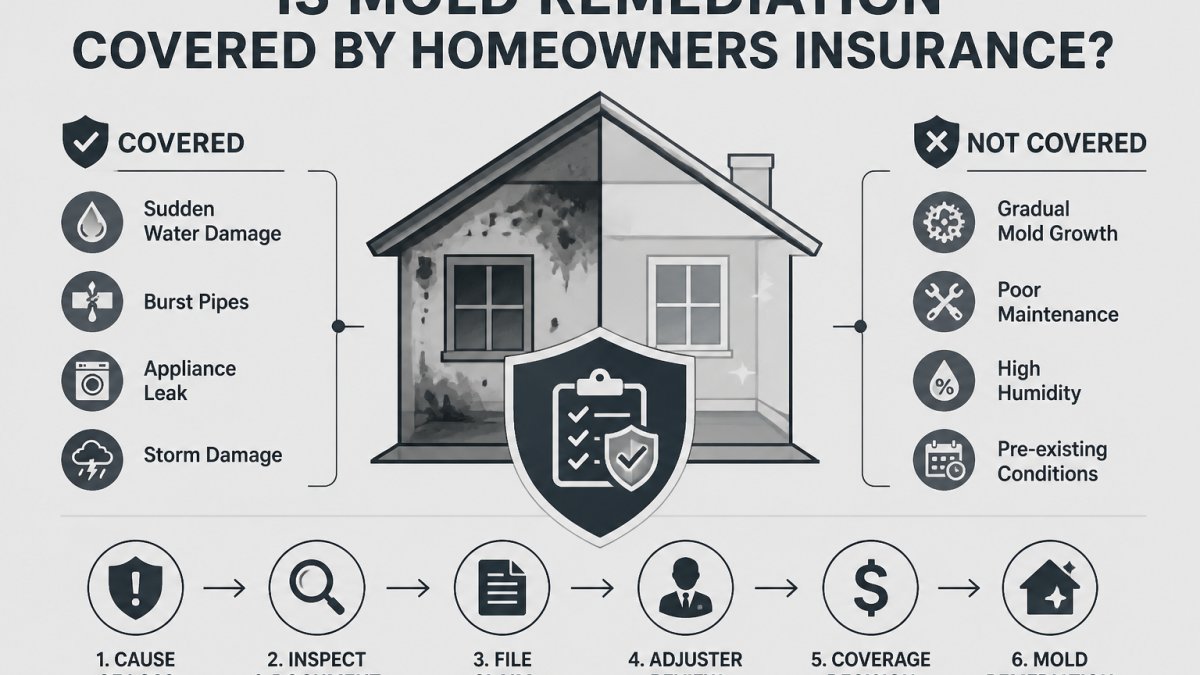
This is the single most overlooked factor in the entire resale decision. Property insurers increasingly use roof age as an underwriting trigger. Once a roof passes a certain age, many carriers will not issue a new policy, will issue one only with an actual cash value endorsement on the roof, or will require a roof inspection before binding coverage. Because most buyers finance their purchase, and lenders require proof of insurance before closing, an uninsurable roof can kill a sale even when the buyer and seller agree on price.
Roof Certification: The Middle Path Between As-Is and Full Replacement
Sellers often frame the choice as replace the whole roof or sell as-is. There is a third option. A roof certification is a written statement from a licensed roofing contractor documenting the roof's current condition, the work performed (if any), and its estimated remaining service life. Buyers, lenders, and insurers frequently accept a certification in place of a full replacement when the roof still has usable years left.
Curb Appeal and the Psychology of the First Look
The roofline is one of the first things a buyer sees, and it frames everything else. A clean, straight roof signals a maintained home; a patched, stained, or sagging roof signals deferred maintenance before the buyer ever reaches the front door. That first impression shapes how the buyer reads the interior, the asking price, and the inspection report. It is difficult to put a dollar figure on, but it is easy to observe in showing feedback, and it is one of the few improvements that pays off both in the appraisal and in the buyer's gut reaction.
Conclusion
The real question is not whether a new roof pays for itself in full, because it usually does not. The question is whether the roof is currently costing you buyers, concessions, or a failed inspection, and whether fixing it now nets you more than selling as-is.
Frequently Asked Questions
How much does a new roof increase resale value?
A new roof typically recoups a significant portion of its cost at resale, though the exact percentage depends on materials, region, and market conditions. Asphalt shingle roofs generally recoup more than premium materials in mid-range markets. Beyond the direct dollar figure, a new roof removes a major buyer objection, which can speed up the sale and reduce the risk of price negotiations centered on deferred maintenance.
Should I repair or replace my roof before selling?
If your roof has isolated damage and plenty of remaining lifespan, a targeted repair is usually the smarter financial move. If the roof is near the end of its service life, shows widespread wear, or has active leaks, replacement is the better choice. Buyers and inspectors will flag an aging roof, and a failed inspection can cost you more in concessions than a replacement would have.
What is the 25% rule for roofing?
The 25% rule is a common guideline suggesting that if repairs would cost more than 25% of a full replacement, you should replace rather than repair. It is not a formal standard, but it helps homeowners avoid sinking money into a failing roof. If your roof is older and the damage is spread across multiple areas, replacement is usually the more sensible path.
How does a roof's age affect home appraisal?
Appraisers factor roof age into their valuation because it signals remaining useful life and potential near-term costs for the buyer. A roof in the final third of its expected lifespan can trigger appraisal adjustments or lender conditions. A recently replaced roof with documentation gives the appraiser a concrete reason to value the home at the higher end of its comparable range.