 how-to
Avoiding Contractor Project Delays in 2026
Table of Contents
- Why Contractor Project Delays Are Getting Worse in 2026
- How to Prevent Unexpected Remodeling Costs Before Breaking Ground
- Construction Contract Timeline Clauses That Protect You
- Average Duration of Kitchen and Bathroom Remodels (And Why Yours Might Run Longer)
- Managing Contractor Communication for Faster Project Delivery
- Climate, Insurance, and Post-Delay Recovery: Angles Most Guides Miss
- Frequently Asked Questions
Last Updated: September 13, 2026
Why Contractor Project Delays Are Getting Worse in 2026
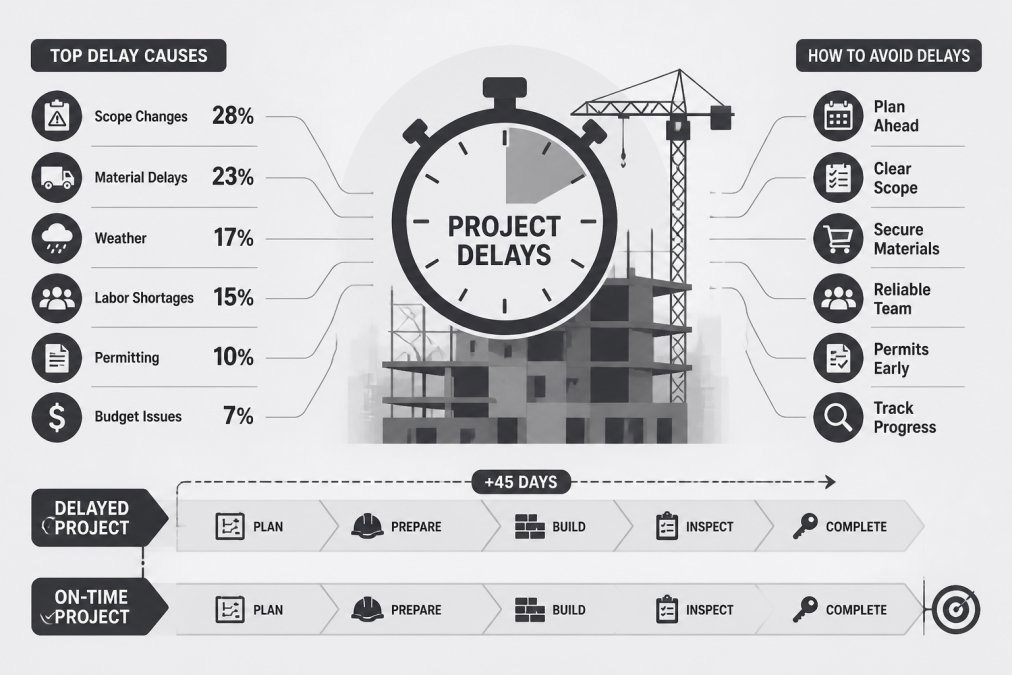
Avoiding contractor project delays in 2026 starts with an uncomfortable fact: the bottlenecks have moved. Delays now compound across material sourcing, labor availability, and permit approval at once. This guide from Times Square Remodeling Inc. breaks down where timelines slip and what property owners can do before ground breaks.
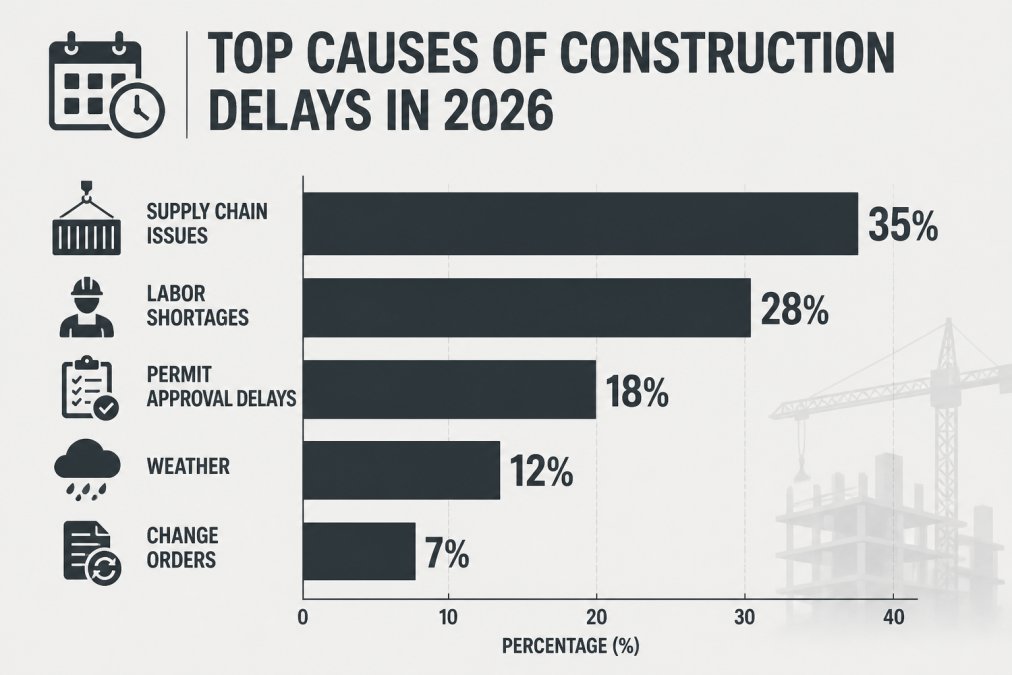
The New Normal: Supply Chain Volatility and Labor Shortages
Supply chain volatility is the unpredictable disruption of material availability and pricing caused by manufacturing slowdowns, transportation bottlenecks, and shifting demand. It hits remodeling hardest because so many components, from cabinetry to windows, are made to order.
Procurement lead times that once ran four to six weeks can stretch much longer for specialty items. A common mistake is ordering finishes after demolition begins, stalling the project while the site sits idle. Ordering before demolition starts costs nothing extra and protects the schedule.
Labor availability compounds the problem. Skilled trades are stretched thin, and a crew booked solid is a crew that cannot absorb surprises.
What Delays Actually Cost You
Every idle week carries carrying costs: extended rental housing, storage fees, and financing interest on draws already taken. The less obvious cost is decision fatigue, homeowners managing a dragged-out renovation make worse choices late, creating change orders that push the timeline further.
How to Prevent Unexpected Remodeling Costs Before Breaking Ground
Preventing unexpected remodeling costs comes down to two disciplines: a contingency budget sized for real-world surprises, and a pre-construction phase that resolves unknowns before they become invoices. Most overruns come from unplanned discoveries, hidden water damage, outdated wiring, or structural issues behind a wall.
Building a Contingency Budget That Actually Works
Set aside a contingency reserve separate from your finish budget. Size it to what you know about the structure: a cosmetic refresh on a well-documented home needs less cushion than a full gut of an older property with unverified plumbing and electrical.
- Cosmetic updates with no structural work: smaller reserve
- Mid-range remodels touching plumbing or electrical: moderate reserve
- Full gut renovations or older homes with unknown conditions: larger reserve
Critically, the contingency is not for upgrades. The moment you spend it on a nicer countertop, it stops being a contingency.
The Pre-Construction Phase: Where Delays Are Won or Lost
The pre-construction phase is the planning period between signing a contract and starting physical work, covering design finalization, permit submission, and material selection. Delays won or lost here rarely surface until month three, which is why they get missed.
A thorough pre-construction phase includes a documented site assessment, a finalized permit approval process timeline, and locked-in material selections. If your contractor wants to start demolition before selections are final, that is a red flag, not efficiency.
Construction Contract Timeline Clauses That Protect You
Construction contract timeline clauses define start dates, milestone deadlines, completion dates, and the consequences of missing them. Without them, a schedule is a hope rather than an obligation. What separates a protective clause from one that merely sounds protective is specificity: dates, definitions, and notice procedures.
Penalty Clauses, Milestone Tracking, and Contractor Accountability
A penalty clause, sometimes called liquidated damages, sets a defined consequence when the contractor misses an agreed deadline without a valid excuse. Courts generally enforce liquidated damages only when the amount is a reasonable estimate of actual loss at signing, not a punitive figure, so pair it with a clear definition of what counts as an excusable delay.
Milestone tracking breaks a long project into dated checkpoints: demolition complete, rough-in inspections passed, drywall hung, finishes installed. This makes contractor accountability measurable instead of a matter of opinion at the end.
| Clause Type | What It Does | What to Verify |
|---|---|---|
| Start date | Fixes the first day of work | Tied to permit issuance, not signing date |
| Milestone schedule | Sets checkpoint dates | Each phase dated separately, not lumped |
| Completion date | Defines project end | Includes weather allowance terms |
| Penalty clause | Defines delay consequences | Excusable delays listed clearly |
| Notice provision | Sets how disputes are raised | Written notice window and delivery method |
| Change order process | Controls scope additions | Written approval and revised date required |
Excusable vs. Non-Excusable Delays: The Distinction That Decides Disputes
Most contracts list excusable delays, events that extend the schedule without penalty, such as acts of God, unusually severe weather, permit office backlogs outside the contractor's control, and material shortages documented with vendor correspondence. Non-excusable delays are everything else: crew no-shows, sequencing errors, rework from poor workmanship, and late material orders.
The trap is vague language. "Delays beyond the contractor's reasonable control" sounds fair but gives both sides room to argue. A stronger clause names specific categories and requires written notice within a set number of days when an excusable delay occurs, without it, a contractor can claim an excusable delay months later with no contemporaneous evidence.
What to Do When Your Contractor Misses a Milestone
Document the miss in writing the same day. Reference the specific milestone and its contract date. Request a written recovery plan with a new date. Keep the tone factual; a paper trail protects both sides.
If misses repeat, escalate to a formal notice under the contract's dispute terms. Most contracts specify a notice period before further action, and skipping it can weaken your position. A common pattern is two-step: a cure notice giving the contractor a defined window to correct the miss, then a formal dispute notice if the cure period passes.
state contractor licensing board complaint process
Contract Clauses That Quietly Weaken Your Timeline Protection
Three clauses routinely undercut otherwise strong timeline language. A broad force majeure clause listing supply chain disruption as excusable can excuse almost any material-related slip. A "time is of the essence" clause contradicted by a later "no damages for delay" provision is neutralized. And an arbitration clause can push disputes into a process longer than the project itself.
Read the contract as a whole, not clause by clause. A protective clause in one section can be neutralized by a limiting clause in another.
Average Duration of Kitchen and Bathroom Remodels (And Why Yours Might Run Longer)
The average duration of kitchen and bathroom remodels ranges widely because scope, not room size, drives the schedule. A cosmetic bathroom refresh moves far faster than a full gut with relocated plumbing, and kitchens generally run longer than bathrooms because they involve more trades, cabinetry, and inspection points.
Your project may run longer than average for predictable reasons: structural repairs discovered mid-demolition, custom cabinetry with long lead times, permit revisions, or a change order that resets a completed phase. What matters is whether they were planned for.
Renovation Scope Creep: The Silent Timeline Killer
Renovation scope creep is the gradual expansion of a project beyond its original agreed scope, and it is the most common self-inflicted delay. It rarely arrives as one big decision, it arrives as small ones: moving a wall "while we're in there," upgrading tile, adding a niche.
Each addition resets a phase. A change order management process that requires written approval and a revised date before work continues keeps scope creep visible instead of invisible.
Managing Contractor Communication for Faster Project Delivery
Managing contractor communication is the highest-use habit a homeowner can build, because most disputes are information failures rather than workmanship failures. Set a fixed weekly check-in, agree on who decides what, and put every decision in writing.
Digital Tools and Automated Reporting for Real-Time Progress Monitoring
Digital project management software gives both sides the same view of the schedule. Real-time progress monitoring means a milestone marked complete is visible to everyone, with photos and notes, and automated reporting sends a weekly summary without anyone chasing it.
For homeowners, the practical benefit is simple: you stop asking "what's happening this week?" because the answer is already documented.
Stakeholder Communication Protocols That Prevent Finger-Pointing
Assign one point of contact on your side. When two family members both give instructions to a crew, conflicting directions and rework follow. Agree in advance on a decision deadline for selections; undecided finishes are a schedule delay wearing a different hat.
Climate, Insurance, and Post-Delay Recovery: Angles Most Guides Miss
Three angles get almost no coverage in standard remodeling advice: weather contingency planning, insurance and liability for delay-related costs, and post-delay recovery workflows. Each is easier to handle before a problem than after, and these are where projects actually go sideways.
Weather Contingency Planning for Outdoor and Roofing Work
Roofing and exterior work are directly exposed to weather, so any outdoor schedule needs a weather allowance written into it rather than assumed away. Roofing cannot proceed safely in high wind or heavy rain, and pushing a crew through unsafe conditions risks injury and defective installation (osha.gov).
A practical weather allowance is built from historical patterns, not guesswork: the days per month outdoor trades historically lose to weather during the project window. For roofing, wind speed thresholds and precipitation limits are set by manufacturer installation specs and federal workplace safety standards. A crew that stops work during unsafe conditions is complying with the contract, not breaching it, provided the weather allowance language reflects that reality.
Build a weather allowance into the contract timeline. It is not padding; it acknowledges that outdoor trades depend on conditions nobody controls. Specify which trades it applies to, how many days it covers, and whether unused days roll forward or expire.
Insurance and Liability for Delay-Related Costs
Standard contractor liability coverage addresses property damage and injury, not the cost of a delayed schedule. Delay-related losses like extended temporary housing or lost rental income usually require specific coverage or a contract provision. Read your policy and contract for what is actually covered, and ask your contractor for a certificate of insurance before work begins.
Three coverage types matter. General liability covers third-party bodily injury and property damage on site. Workers' compensation covers crew injuries, an injured worker can halt a project regardless of fault. Builder's risk covers the structure under construction against fire, wind, and vandalism, and some policies include soft costs coverage reimbursing expenses like temporary housing and loan interest when a covered loss delays the project. Securing these financial protections provides a necessary buffer against unforeseen setbacks, though specialized site management remains the most effective strategy for avoiding pool construction delays.
The gap most homeowners miss is between what the contractor's policy covers and what their own covers. A homeowner's policy typically excludes damage to a structure under renovation, and the contractor's policy typically excludes the homeowner's carrying costs. Neither closes the gap alone, a contract provision allocating delay-related costs, or a rider on the homeowner's policy, is what protects the schedule financially.
Post-Delay Recovery Workflows: Getting Back on Track
Post-delay recovery is a structured process, not a push to work faster. Rebuild the schedule from the current date, re-sequence remaining trades, and re-confirm material lead times, since availability may have shifted during the pause. Compressing a schedule by stacking trades into the same space usually creates rework that costs more time than the original delay.
A workable recovery workflow has four steps: document the cause and duration of the delay in writing with dates and correspondence; rebuild the schedule from today forward rather than compressing the original into the remaining time; re-confirm every material lead time, since a pause may have changed vendor availability; and identify which remaining tasks can be parallelized safely, those in separate areas, and which cannot.
The tasks that cannot be parallelized determine the new completion date. Inspection sequences, curing times for concrete and finishes, and any work requiring the same trade in the same space impose hard limits. A recovery plan that ignores those limits is not a plan; it is a wish.
When to Escalate Beyond the Contractor
If a delay persists after a documented recovery plan, escalation options include the state contractor licensing board, which handles complaints against licensed contractors, and the dispute resolution process named in the contract. Most contracts specify mediation or arbitration before litigation. Knowing which path applies, and the notice period required, prevents a delay from becoming a legal dispute that outlasts the project.
state contractor licensing board complaint process
Frequently Asked Questions
What are the most common causes of home renovation delays in 2026?
The biggest culprits are supply chain volatility, labor availability gaps, and permit approval backlogs. Material sourcing for specialty items like custom cabinetry or imported tile can add weeks. Sub-contractor coordination failures also rank high, especially when multiple trades need to work in sequence. Weather-related setbacks affect roofing and exterior work. Finally, renovation scope creep, where homeowners add tasks mid-project, remains a leading cause of overruns. Planning for these variables in your pre-construction phase dramatically reduces risk.
How can I legally protect my project timeline in a construction contract?
Include specific construction contract timeline clauses that define start and completion dates, milestone schedules, and penalty clauses for missed deadlines. Require written change order management for any scope adjustments. Specify what constitutes a valid delay (weather, permits, material shortages) versus contractor-caused delays. Include a dispute resolution process. Have an attorney review the contract before signing. These protections give you legal recourse if the project stalls and keep contractor accountability clear from day one.
What should I do if my contractor misses a major project milestone?
First, review your contract's milestone tracking provisions and penalty clauses. Send written notice documenting the missed deadline and request a recovery plan within 48 hours. Meet on-site to understand the cause. If delays stem from sub-contractor coordination or material sourcing issues, ask for a revised schedule with weekly checkpoints. If the contractor fails to respond or provide a credible plan, consult an attorney about contractual remedies. Document everything: emails, photos, and daily logs protect you if the dispute escalates.
How do supply chain issues impact home improvement timelines in 2026?
Supply chain volatility still adds 2-6 weeks to many projects, especially for specialty materials. Procurement lead times for windows, custom doors, and HVAC equipment remain unpredictable. Smart contractors order long-lead items during the pre-construction phase and build float into the schedule. Homeowners can help by finalizing material selections early and accepting equivalent alternatives when first-choice products are backordered. Asking your contractor about their material sourcing strategy before signing prevents surprises later.