 how-to
How to Prepare for a Roof Replacement Project
Table of Contents
- Your Roof Replacement Checklist: What to Do Before the Crew Arrives
- How to Prepare Your Home for Roof Replacement: Interior and Exterior Tasks
- Clearing the Driveway, Yard, and Work Area for the Roofing Crew
- Protecting Landscaping, Outdoor Furniture, and Belongings
- Preparing the Attic and Guarding Interior Valuables
- What to Expect During Roof Replacement: Noise, Safety, and Daily Routines
- How Long Does Roof Replacement Take and How to Plan Around Delays
- Frequently Asked Questions
Last Updated: October 6, 2026
Your Roof Replacement Checklist: What to Do Before the Crew Arrives
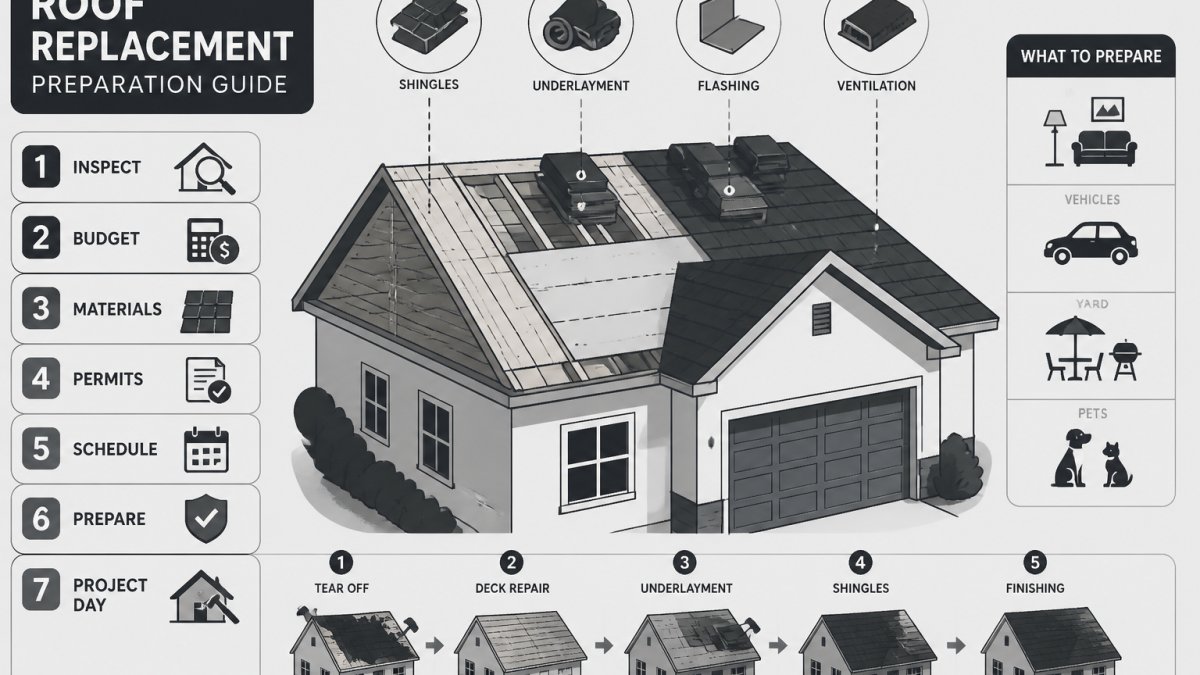
Knowing how to prepare for a roof replacement project comes down to one idea: clear the work zone, protect what stays, and stay reachable. This guide from Times Square Remodeling Inc. walks through the full roof replacement checklist, from the week before the crew arrives to the final walkthrough.
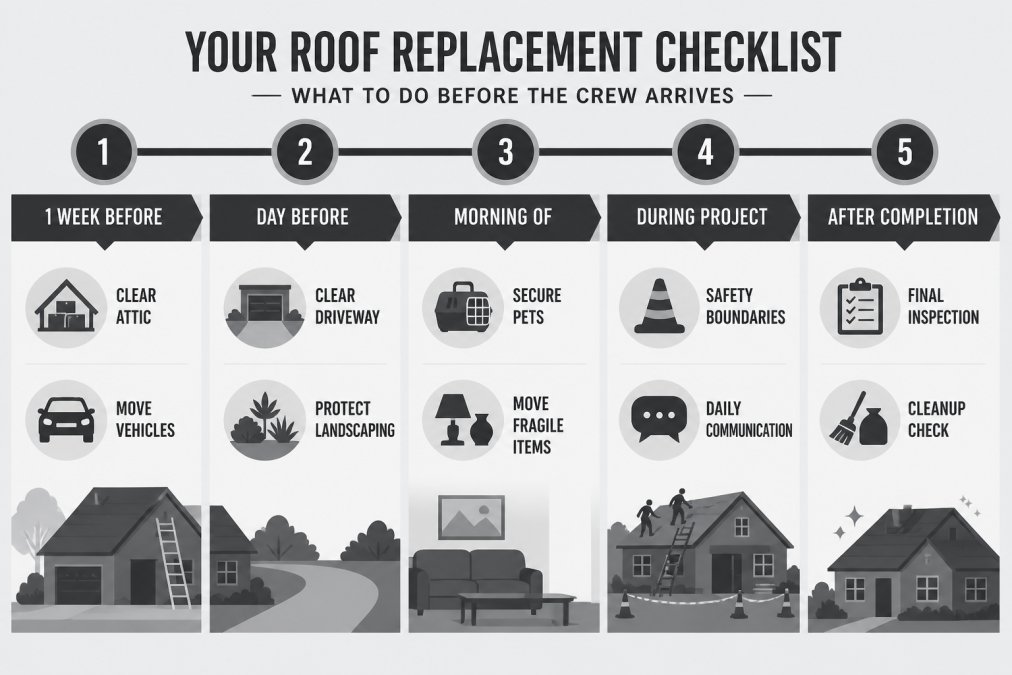
A roof replacement is loud, messy, and surprisingly fast once it starts. Most of the disruption happens in the first two days, when the old roof comes off and the new roof goes on.
Below, we break the roof replacement checklist into five phases so nothing gets missed.
How to Prepare Your Home for Roof Replacement: Interior and Exterior Tasks
Start inside, because dust and vibration travel farther than most people expect. Roof replacement work shakes the structure, and fine debris sifts down through attic spaces and light fixtures.
Interior tasks to handle first:
- Move wall hangings, mirrors, and shelves off exterior walls
- Take fragile items off high shelves and out of attics
- Cover furniture in rooms directly below the roof
Outside, walk the perimeter and note anything that could be damaged. Roofing materials land hard. A dropped bundle of shingles will crack a planter or dent a grill.
Exterior prep includes:
- Park vehicles on the street or in a neighbor's driveway
- Move patio furniture, grills, and kids' toys into the garage
- Bring in wind chimes, bird feeders, and flagpoles
One more thing: confirm your roofing contract lists the scope of work, material specifications, and the project timeline in writing. If it doesn't, ask before work begins.
Clearing the Driveway, Yard, and Work Area for the Roofing Crew
The driveway is not just parking. It becomes the staging area for a roll-off dumpster, a shingle delivery, and the crew's trucks.
A typical roof replacement needs room for:
- One roll-off dumpster, usually placed as close to the house as possible
- A delivery truck that drops shingles, underlayment, and flashing
- Space for the crew to carry materials to ladders
Clear the full driveway, not just half. Move trash bins, basketball hoops, and anything on wheels.
If your driveway is short or shared, tell your roofing contractor before the project starts.
Also check your gutters and downspouts. Old shingles and nails will fall into them during tear-off, and a blocked downspout sends water straight to your foundation if it rains mid-project.
Protecting Landscaping, Outdoor Furniture, and Belongings
Landscaping takes the hardest hit during a roof replacement. Shingles, nails, and old roofing felt fall from the roof edge, and they land in whatever sits below.
Protect the yard before tear-off day:
- Cover shrubs and flower beds with tarps or drop cloths
- Move potted plants to the garage or a side yard
- Water the lawn the night before, since damp grass catches debris better
Nails are the real problem. Roofing crews use magnetic sweepers at the end of each day, but nails still hide in grass and mulch.
If you have a pool, cover it. Shingle granules and nails sink, and they're miserable to fish out later.
Preparing the Attic and Guarding Interior Valuables
The attic is where the roof meets your home, so it needs attention before the crew arrives.
What to do in the attic:
- Remove boxes, holiday decorations, and stored items from directly under the roof
- Check for signs of old leaks, like stained decking or damp insulation
- Look for daylight coming through the roof boards
Roof decking, also called sheathing, is the layer of boards or panels under the shingles. If it's rotted, it has to be replaced before new shingles go down.
Inside the house, move valuables away from exterior walls and cover electronics in rooms below the roof.
What to Expect During Roof Replacement: Noise, Safety, and Daily Routines
Tear-off is the loudest and most disruptive phase, and it usually starts early. Most crews begin staging between 6:30 and 7:30 a.m. so they can finish the noisiest work before afternoon heat. Expect the first two days to be the worst.
What the noise actually sounds like:
- Scraping and pounding during tear-off
- Thuds as shingles and debris hit the dumpster
- Nail guns and compressors during installation
Set Up a Communication Plan Before Day One
Most frustration on a roof replacement comes from not knowing what is happening, not from the work itself. Fix that with a simple plan agreed on before the crew arrives.
Ask your contractor these questions at the pre-job walkthrough:
- Who is my single point of contact, and what is the best way to reach them (call, text, email)?
- What time will the crew arrive each day, and how will I be told if that changes?
- How will you notify me about weather delays, and by what time of day?
A common pattern that works well: a short end-of-day text or call from the crew lead summarizing what was completed, what is planned for tomorrow, and any open questions. Ask for it in writing so you have a record.
Safety Boundaries During Active Work
Falling debris is the most common injury on a roofing project, and it happens fast. Set hard rules for the whole household and enforce them.
- Keep everyone out of the yard while the crew is working. No exceptions for a quick trip to the mailbox.
- Never walk under a ladder, near the dumpster, or within the fall zone around the house perimeter.
- Keep pets indoors or boarded elsewhere. A startled dog can bolt past a crew member carrying materials.
Should You Stay Home? A Decision Framework
There is no single right answer, but the decision gets easier if you match it to your household.
Stay home if:
- You can work in a room away from the roof and tolerate intermittent noise
- You need to be present for the contractor's questions or approvals
- You have a pet that does better in its own space than at a boarding facility
Plan to be out if:
- You have infants, toddlers, or anyone who naps during the day
- You work from home and take calls that require quiet
- Anyone in the household has mobility needs, medical equipment, or sensory sensitivities that noise and vibration would disrupt
If you leave, give the crew lead a phone number and let them know when you will be back. Do not leave the house unlocked for the crew unless you have agreed to that in writing.
How Long Does Roof Replacement Take and How to Plan Around Delays
A typical roof replacement takes one to three days for an average home. Larger roofs, steep pitches, or multiple layers of old shingles can stretch it to four or five days. Add a day if the crew finds significant decking damage.
Here is how the schedule usually breaks down:
| Phase | Typical Duration | What Happens |
|---|---|---|
| Setup and delivery | Half day | Dumpster drops, materials arrive |
| Tear-off | 1-2 days | Old shingles, felt, and flashing removed |
| Decking repair | Same day or next | Rotted boards replaced if found |
| Installation | 1-2 days | Underlayment, flashing, shingles, vents |
| Cleanup and inspection | Half day | Magnetic sweep, final walkthrough |
How Weather Delays Actually Work
Weather is the biggest wildcard, and the way it is handled matters more than whether it happens. Rain, high wind, and extreme heat can all pause work, but the crew's response is what protects your home.
What a well-run crew does when weather threatens:
- Stops tear-off before the roof is fully exposed, not after
- Installs a temporary tarp or underlayment over any open section before leaving for the day
- Secures loose materials and weights down tarps so wind does not peel them back
What you should ask before the project starts:
- What is your threshold for stopping work (wind speed, rain intensity, temperature)?
- How do you protect an exposed roof overnight or over a weekend?
- Who is responsible if water gets in during a delay?
- Is there a contingency day built into the schedule, or is every day already committed?
A common pattern is that crews lose one to two days per project to weather in most markets. Build that into your expectations rather than treating it as a surprise.
Planning Around the Schedule
If you are scheduling around work, travel, or family events, build in two extra days. It is the single easiest way to avoid frustration.
- Do not schedule anything important for the day after the projected finish. Final inspection and cleanup often slip by half a day.
- If you have a trip, plan it for at least three days after the projected finish, not the day after.
- If you work from home, block your calendar for the first two days and plan to be elsewhere or in a quiet room.
- If you are hosting anything, move it. A roof replacement is not a backdrop for guests.
Post-Project Cleanup and Acceptance
The project is not done when the last shingle goes down. Before you make the final payment, do a walkthrough with the crew lead.
Check for:
- Nails in the yard, driveway, and flower beds. Walk the perimeter with a magnetic sweeper or a strong magnet.
- Shingle granules in gutters and downspouts. Flush them and confirm water flows away from the foundation.
- Damage to siding, gutters, window screens, or landscaping from falling debris.
- Dumpster removal and any leftover materials.
Ask for:
- The manufacturer's warranty paperwork, registered in your name if required
- The contractor's workmanship warranty in writing, with the coverage period
- Any permits closed out with the local building department
Document anything you find with photos and send it to your contractor in writing before final payment. A reputable contractor will fix it. If you find damage after the crew has left, report it the same day.
Frequently Asked Questions
What should I do before a roof replacement crew arrives?
Clear your driveway and yard of vehicles, furniture, and planters. Move fragile items away from walls and cover furniture in the attic. Secure pets indoors and plan for noise during work hours. Remove wall hangings in rooms directly below the roof to prevent vibration damage. Confirm the project timeline and scope of work with your roofing contractor the day before, and make sure someone is available to answer questions during the installation process.
How do I protect my belongings during a roof replacement?
Cover attic storage with plastic sheeting and move boxes away from the roof decking. Remove or secure wall hangings, mirrors, and shelves on walls below the roofline. Move outdoor furniture, grills, and planters at least 10 feet from the house. Park vehicles on the street or in the garage. If you have fragile items near exterior walls, relocate them to interior rooms. The roofing crew will use tarps, but dust and vibration travel farther than most homeowners expect.
How long does roof replacement take?
Most residential roof replacements take one to three days for an average-sized home, depending on roof size, pitch, material type, and weather. Complex roofs with multiple valleys, dormers, or steep pitches may take four to five days. Your roofing contractor should provide a project timeline in the scope of work. Weather delays are common, so plan for at least one buffer day. Ask for daily updates on progress and any additional repairs discovered during old roof removal.
Should I stay home during a roof replacement project?
You can stay home, but expect significant noise, vibration, and foot traffic on the roof and around the exterior. If you work from home or have young children, consider scheduling time away during the noisiest hours, typically mid-morning through late afternoon. If you leave, give the roofing contractor a phone number and confirm how they will reach you. Pets should be kept indoors in a quiet room or boarded elsewhere. Coordinate with the crew on safety boundaries, especially if children are present.