 listicle
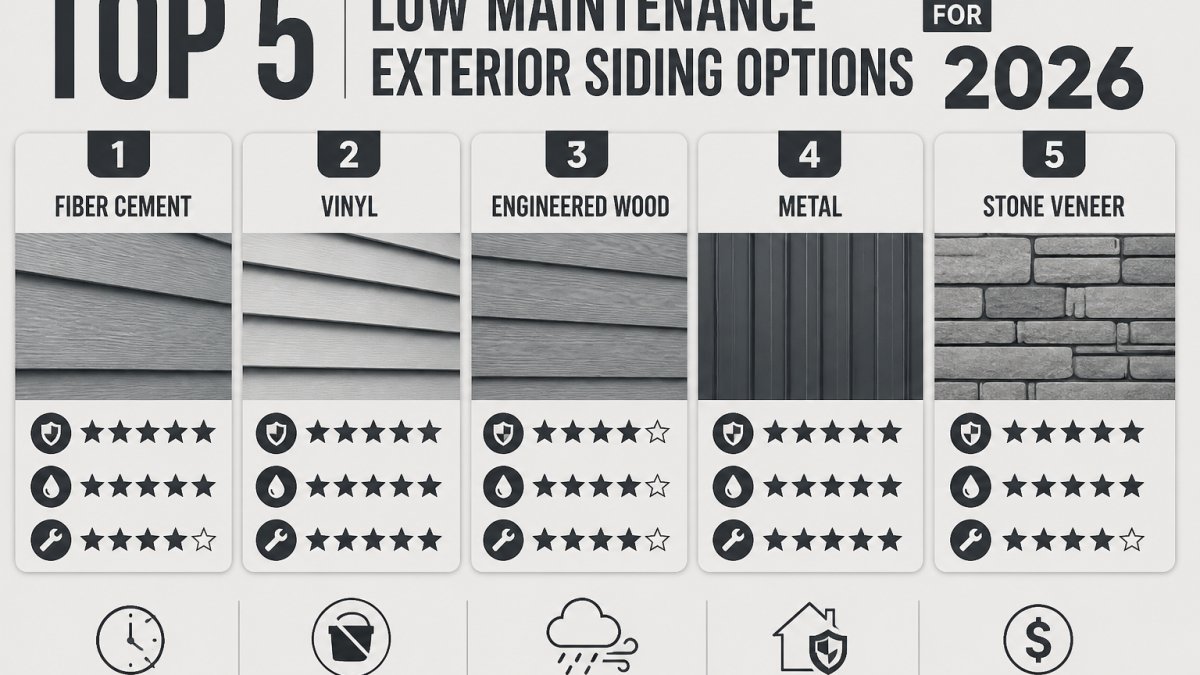
Top 5 Low Maintenance Exterior Siding Options for 2026
Table of Contents
- How We Ranked the Top 5 Low Maintenance Siding Options
- 1. Vinyl Siding: The Vinyl Siding Pros and Cons Homeowners Should Weigh
- 2. Fiber Cement Siding: Fiber Cement Siding Maintenance Explained
- 3. Engineered Wood Siding: Wood Curb Appeal With Less Work
- 4. Metal Siding: Steel and Aluminum for Weather Resistance
- 5. Fused Bamboo Siding: The Durable Alternative to Natural Wood
- Siding Lifespan and Maintenance: Side-by-Side Comparison
- The Best Siding Material for the Money in 2026
- Frequently Asked Questions
Last Updated: October 19, 2026
How We Ranked the Top 5 Low Maintenance Siding Options
Choosing among the top 5 low maintenance exterior siding options for in 2026 comes down to one question: which material asks the least of you after installation? At Times Square Remodeling Inc., we have spent more than 15 years installing and repairing exteriors, and we ranked each option on four things: upkeep frequency, weather and moisture resistance, expected lifespan, and installation quality.
We scored every material on the same criteria so the comparison stays honest. A product that looks good in a brochure but needs resealing every few years is not low maintenance, no matter how it is marketed. The five materials below earned their place because they reduce cleaning, painting, and repair over the life of the home.
| Criterion | What We Measured | Why It Matters |
|---|---|---|
| Upkeep frequency | Cleaning, painting, sealing intervals | Predicts lifetime effort |
| Weather resistance | Moisture, rot, fade, heat performance | Predicts repair risk |
| Lifespan | Expected service life | Predicts replacement timing |
| Installation quality | Skill required, failure risk | Predicts long-term performance |
1. Vinyl Siding: The Vinyl Siding Pros and Cons Homeowners Should Weigh
Vinyl siding is the most affordable low-maintenance option for most homes, and it resists rot and warping without paint. That combination keeps upkeep close to a periodic wash with a garden hose and mild soap.
The tradeoffs deserve equal weight. Vinyl can fade or crack under intense sun, and it expands and contracts with temperature swings, so installation must leave room for movement. Cheap panels look thin up close.
Vinyl Siding Pros and Cons at a Glance
- Pros: Lowest upfront cost, no repainting, resists rot and insects, easy to clean
- Cons: Can fade in strong sun, may crack on impact, limited color depth, expansion gaps required
- Best for: Budget-focused homeowners who want minimal upkeep
2. Fiber Cement Siding: Fiber Cement Siding Maintenance Explained
Fiber cement siding maintenance is lighter than most people expect. The material resists fire, moisture, and insects, and it holds paint far longer than wood, so repainting cycles stretch out considerably.
What it does require is correct installation and periodic caulking at joints and penetrations. Factory-finished boards cut repainting to a rare touch-up. Unfinished boards need painting, but the interval is measured in years, not seasons.
3. Engineered Wood Siding: Wood Curb Appeal With Less Work
Engineered wood siding delivers the warm look of real wood with far less upkeep. Pre-finished options arrive with a factory coating that resists moisture and fading, and the material holds paint better than natural boards.
It still needs attention at seams and edges where moisture can enter. Keep up with caulking and touch up any damaged spots promptly, and the exterior keeps its curb appeal for years.
4. Metal Siding: Steel and Aluminum for Weather Resistance
Steel and aluminum siding handle weather better than almost any other cladding. Metal resists rot, insects, and moisture, and it does not need repainting on a regular schedule, which makes it a strong choice for harsh exposure. But "metal siding" is not one product, and the maintenance profile differs sharply between steel and aluminum.
Steel vs. Aluminum: What Actually Drives Upkeep
Steel siding is heavier and more impact-resistant. Higher-grade steel panels resist denting better than aluminum, and proper backing, sheathing plus a solid substrate, improves performance further. Steel also holds paint well when the factory finish is a multi-coat system, which is why many steel products carry finish warranties measured in decades rather than years.
Aluminum siding is lighter and easier to handle, but it dents more readily under hail, ladder contact, and flying debris. On the plus side, aluminum will not rust, so the corrosion risk that plagues steel at cut edges and fasteners is largely absent. While these metallic options offer durability, homeowners often weigh the long-term aesthetic maintenance against the rising siding replacement costs when deciding between refreshing existing finishes or opting for a full material transition.
Metal Siding Maintenance Schedule
Metal siding is genuinely low maintenance, but "low" is not "none." A realistic schedule looks like this:
- Twice a year: Rinse the exterior with a garden hose to remove pollen, dust, and grime. In areas with heavy pollen or agricultural dust, add a third rinse.
- Annually: Inspect caulk lines at windows, doors, and penetrations. Re-caulk any joint that has pulled away.
- Every few years: Check fasteners and panel seams for loosening, especially after high-wind events.
- As needed: Touch up scratches on painted steel to prevent corrosion at the exposed metal.
Where Metal Siding Struggles
The main caveats are denting on lighter aluminum panels and heat transfer in direct sun. Metal conducts heat efficiently, so without proper backing and insulation, panels can feel hot to the touch and contribute to heat gain in upper stories. Dark colors amplify this effect. On the maintenance side, the biggest risk is not the panel itself but the finish: cheap paint systems chalk and fade faster, and once the coating fails, repainting metal is more involved than washing it.
Climate Fit
Metal performs well in hot, dry, and windy climates where other materials fade, crack, or dry out. In coastal areas, aluminum avoids the rust risk that steel fasteners and cut edges face, though salt air still demands periodic rinsing. In hail-prone regions, heavier steel panels outperform aluminum.
Metal Siding Pros and Cons at a Glance
- Pros: Resists rot, insects, and moisture; no routine repainting; long service life; recyclable at end of life
- Cons: Aluminum dents; heat transfer in direct sun; finish quality varies widely; repainting a failed finish is labor-intensive
- Best for: Homeowners in harsh or high-exposure climates who want weather resistance with minimal routine upkeep
5. Fused Bamboo Siding: The Durable Alternative to Natural Wood
Fused bamboo siding is the sleeper pick on this list. It is engineered for durability and can last more than 30 years with minimal maintenance, according to Dasso XTR's 2026 siding material comparison. It resists moisture and insects while keeping a natural wood appearance.
Availability and installer familiarity are the practical limits. Fewer crews have hands-on experience with fused bamboo, so vet your installer carefully. Where it is installed correctly, it delivers wood looks with a fraction of the upkeep.
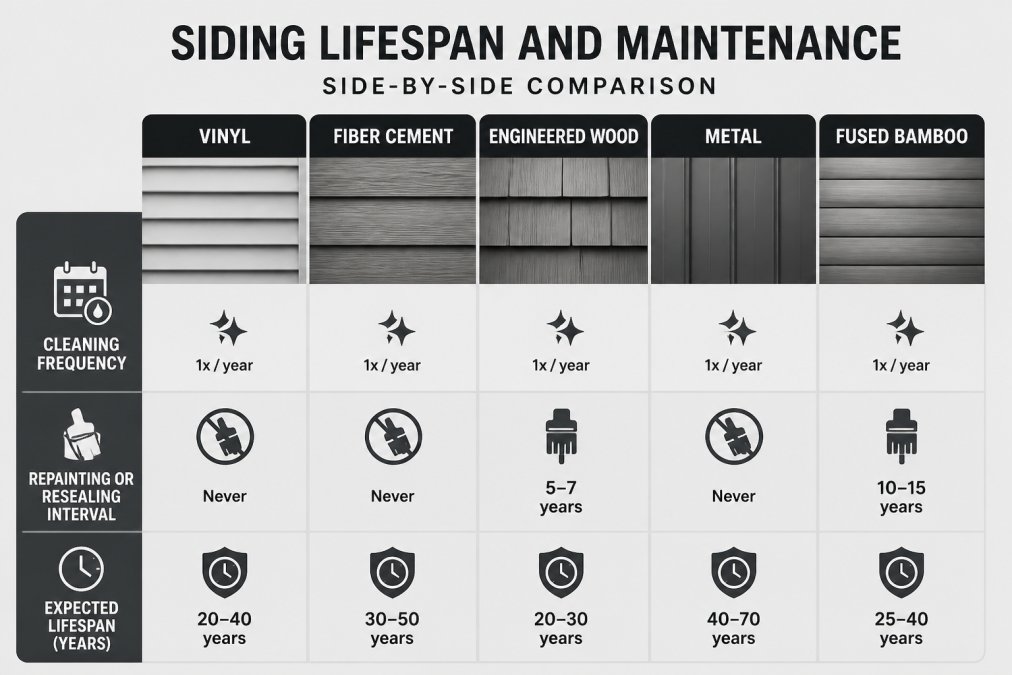
Siding Lifespan and Maintenance: Side-by-Side Comparison
Siding lifespan and maintenance vary widely by material, and the gap matters more than any single spec sheet. The table below compares the five options on the factors that drive lifetime effort.
| Material | Cleaning | Repainting/Sealing | Expected Lifespan | Key Risk |
|---|---|---|---|---|
| Vinyl | Periodic wash | None | Long service life | Fading, impact cracks |
| Fiber cement | Occasional wash | Rare after factory finish | Long service life | Joint caulking neglect |
| Engineered wood | Occasional wash | Touch-ups at seams | Long service life | Edge moisture |
| Metal | Rinse twice yearly | None | Long service life | Denting |
| Fused bamboo | Minimal | Minimal | 30+ years | Installer experience |
The Best Siding Material for the Money in 2026
The best siding material for the money in 2026 depends on how long you plan to stay. Vinyl wins on upfront cost, and for a quick, budget-conscious refresh it is hard to beat. Fiber cement and engineered wood cost more initially but spread that cost across decades of low upkeep.
For homeowners who want the lowest total effort, metal and fused bamboo lead on weather resistance and minimal maintenance. Climate matters too: intense heat stresses vinyl, while moisture-heavy areas favor fiber cement and metal. The U.S. Department of Energy's guidance on home exterior and energy performance is a useful starting point for understanding how cladding choices affect efficiency.
Whichever material you choose, installation quality decides how low-maintenance it truly is. Poor flashing, skipped caulking, and rushed seams cause the failures that turn a low-maintenance product into a repair bill. If you are planning an exterior renovation, our team at Times Square Remodeling Inc. can help you weigh materials against your home, your climate, and your long-term plans.
Frequently Asked Questions
Which type of siding requires the least maintenance?
Vinyl and metal siding generally require the least routine upkeep. Vinyl needs occasional washing with a hose or mild detergent and does not need repainting. Metal siding, whether steel or aluminum, resists rot, insects, and moisture and typically only needs periodic cleaning. Fiber cement and engineered wood sit close behind but may need repainting or resealing at longer intervals. Fused bamboo is marketed as low maintenance with a lifespan of more than 30 years, though verified warranty terms should be confirmed with the manufacturer before you commit.
What is the best siding material for the money?
Vinyl siding is frequently cited as the most affordable low maintenance option, which makes it the best siding material for the money for many homeowners on a tight budget. Fiber cement costs more upfront but resists fire, moisture, and insects, which can reduce repair costs over decades. Weigh the upfront cost against expected lifespan and upkeep when comparing quotes. A licensed contractor can help you model total cost of ownership for your specific home rather than relying on national averages.
How long does fiber cement siding last?
Fiber cement siding is described in industry guides as a long-lasting option with minimal maintenance, thanks to its resistance to fire, moisture, and insects. Exact lifespan depends on installation quality, climate, and how consistently you repaint or reseal it. In hot, sunny climates, fading and surface wear can shorten the interval between repaints. Ask your installer for the manufacturer's warranty terms in writing, since coverage length varies by product line and finish.
Is vinyl siding easier to maintain than wood siding?
Yes. Vinyl siding resists rot and warping and typically needs only occasional washing, while natural wood siding requires regular repainting, sealing, and inspection for rot and insect damage. The vinyl siding pros and cons still matter: vinyl can fade or crack under extreme heat and offers limited insulation value compared with fiber cement or engineered wood. For homeowners who want to minimize annual upkeep, vinyl usually wins on effort even if it trails on premium curb appeal.
What should homeowners compare when choosing exterior siding?
Compare five things: maintenance requirements, expected lifespan, weather and climate suitability, upfront cost versus long-term value, and warranty coverage. Also check how each material handles moisture, rot, fading, and insects in your region. Ask for installation details, since poor installation causes most premature failures regardless of material. Request written warranty terms and a maintenance schedule from your contractor so you know exactly what upkeep the siding will demand over the next decade.
A low-maintenance exterior still depends on expert installation, and that is where most siding problems begin. Times Square Remodeling Inc. brings over 15 years of experience as a California licensed general contractor, with comprehensive remodeling services that include roofing and energy-efficient upgrades. We handle the project end to end so you are not coordinating multiple crews. Get started with Times Square Remodeling Inc. and protect your home with siding that holds up for years.