 listicle
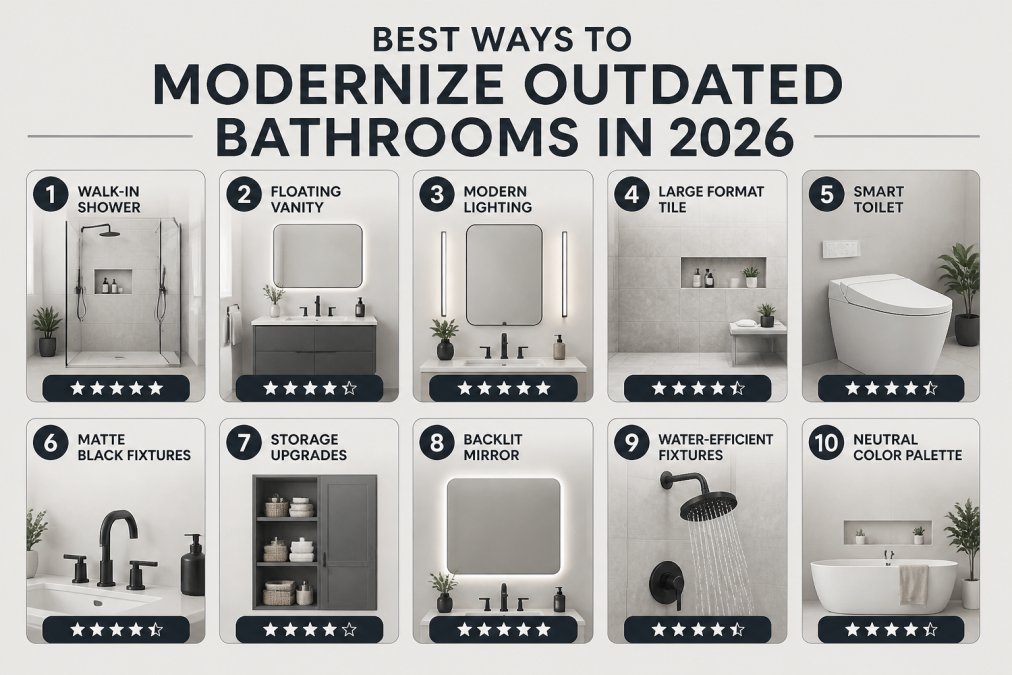
Best Ways to Modernize Outdated Bathrooms in 2026
Table of Contents
- Quick Comparison: 8 Bathroom Modernization Upgrades
- 1. Replace Builder-Grade Vanities With Modern Storage Units
- 2. Swap Outdated Hardware and Faucets for Modern Finishes
- 3. Modern Bathroom Lighting Trends That Transform the Space
- Frequently Asked Questions
Last Updated: September 14, 2026
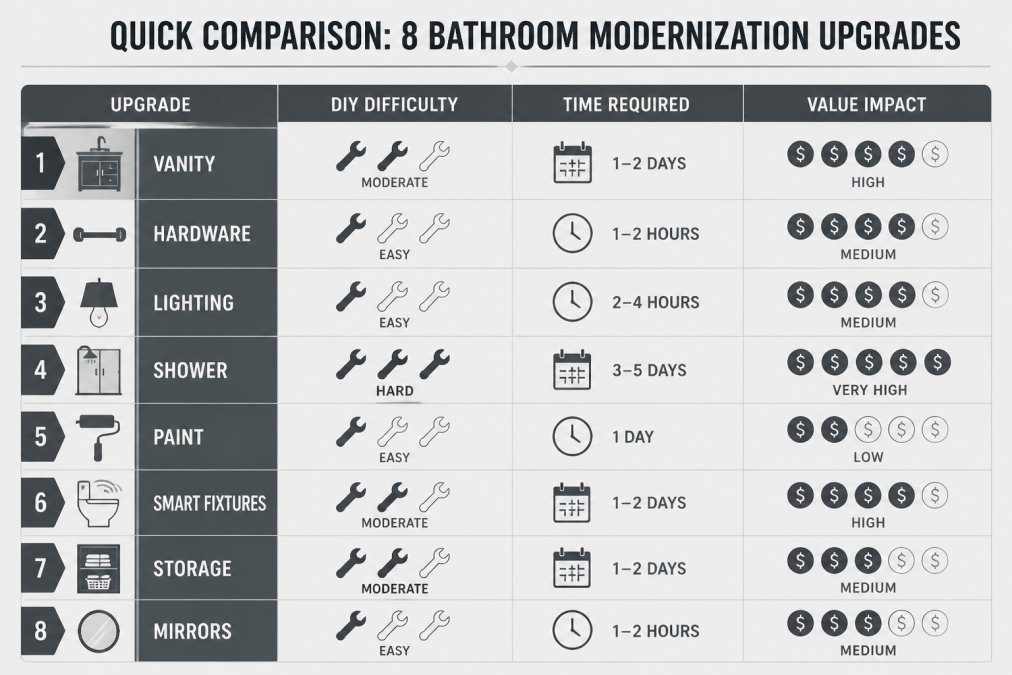
Quick Comparison: 8 Bathroom Modernization Upgrades
The best ways to modernize outdated bathrooms start with the upgrades that deliver the biggest visual change for the least disruption. At Times Square Remodeling Inc., we've spent 15+ years transforming homes, and the pattern is always the same: a handful of targeted swaps do more than a full gut renovation at a fraction of the hassle.
Here's how the eight upgrades compare before you commit to any of them.
| Upgrade | DIY Difficulty | Time Required | Impact on Value |
|---|---|---|---|
| Vanity replacement | Professional | 1-2 days | High |
| Hardware and faucets | Easy | 2-4 hours | Medium |
| Lighting fixtures | Moderate | 3-5 hours | High |
| Shower head, rod, tile | Mixed | 1-5 days | High |
| Paint and wallpaper | Easy | 1-2 days | Medium |
| Smart fixtures | Professional | 4-8 hours | Medium |
| Storage and organization | Easy | 2-3 hours | Medium |
| Mirrors and accessories | Easy | 1-2 hours | Medium |
1. Replace Builder-Grade Vanities With Modern Storage Units
Replacing a builder-grade vanity is the single highest-impact change in most outdated bathrooms. Those original units, usually flat-front cabinets with a dated countertop, anchor the whole room's aesthetic, and swapping one out changes the space more than any paint color can.
Modern vanity units from Home Depot's bathroom vanity collections come pre-assembled with soft-close drawers and integrated quartz or stone tops, which removes the two-step dance of buying a cabinet and a countertop separately. The tradeoff is sizing: standard units don't fit every plumbing configuration, so measure the rough-in before you order.
Vanity Sizing and Countertop Options
Standard vanity widths run 24, 30, 36, 48, and 60 inches. A 48-inch unit suits most primary bathrooms, while powder rooms usually top out at 30 inches. For countertops, quartz resists moisture and staining better than natural stone in a wet environment.
2. Swap Outdated Hardware and Faucets for Modern Finishes
Hardware and faucet swaps deliver the best return per dollar of any upgrade on this list. A full set of cabinet knobs, drawer pulls, and a replacement faucet typically takes an afternoon and transforms a vanity's entire character.
WaterSense-certified models cut water use without changing how the faucet feels. One caveat: older sinks sometimes need a plumbing adapter, so check the supply line configuration before ordering.
Popular Finish Trends for 2026
Matte black remains the default choice for a modern look, and brushed gold has settled in as the warmer alternative. Mixed metals, such as a black faucet with brass pulls, are now common in design-forward bathrooms. Match the finish across faucet, pulls, and towel rack or the room reads as unfinished.
3. Modern Bathroom Lighting Trends That Transform the Space
Modern bathroom lighting trends have moved toward layering: a vanity bar for task light, a sconce at eye level, and a dimmable overhead for ambiance. Replacing a single builder-grade fixture with three layers changes how the room feels at 7 a.m. and at 9 p.m.
Moisture-rated LED fixtures rated for wet locations are important because standard fixtures can corrode in a humid bathroom. Color temperature is the detail most guides skip: 3000K reads warm and flattering for grooming, while 4000K feels clinical.
Frequently Asked Questions
What are the most cost-effective ways to update bathroom fixtures?
Start with hardware and faucet swaps, which deliver the biggest visual change for the least investment. Pair that with new cabinet knobs and pulls, a fresh mirror, and updated lighting. These four changes alone can transform a builder-grade bathroom without touching tile or plumbing lines.
How can I modernize a bathroom without a full gut renovation?
Focus on surface-level upgrades: paint the vanity, swap hardware, replace the mirror, and update lighting. Moisture-resistant bathroom paint resists moisture. Add a frameless LED mirror and a new sconce. These changes take a weekend and avoid demolition, plumbing reroutes, or permit requirements.
What are some outdated bathroom features that should be removed?
Builder-grade oak vanities, brass or chrome fixtures from the 1990s, small pedestal sinks with no storage, and wall-to-wall mirrors glued to the wall are the most common outdated features. Also remove textured glass shower doors, dated wallpaper borders, and fluorescent lighting bars. Replacing these with flat-front vanities, matte black or brushed gold hardware, and LED sconces instantly modernizes the space.
How long does a bathroom remodel take?
The timeline for a bathroom remodel depends on the scope of work, material lead times, inspection scheduling, and whether structural issues surface during demolition. Cosmetic refreshes are generally quicker, while full renovations with layout changes and plumbing reroutes take longer.
How much value does a bathroom remodel add to a home?
Bathroom remodels consistently rank among the highest-return home improvements. A mid-range remodel typically recoups a significant portion of its cost at resale, while upscale projects appeal to buyers seeking move-in-ready homes. Beyond resale value, updated bathrooms reduce maintenance costs, improve energy efficiency with LED lighting and WaterSense fixtures, and eliminate hidden moisture damage that can lead to mold.