 how-to
Is Professional Roof Cleaning Worth the Cost?
Table of Contents
- The Real Cost of Roof Cleaning: What You're Actually Paying For
- Roof Cleaning Cost Factors That Move the Quote Up or Down
- Roof Cleaning vs. Pressure Washing: Which Method Fits Your Roof
- DIY Roof Cleaning vs. Professional: An Honest Comparison
- How Often to Clean a Roof (and the Signs It's Overdue)
- When Professional Roof Cleaning Is Not Worth the Money
- Conclusion
- Frequently Asked Questions
Last Updated: October 12, 2026
The Real Cost of Roof Cleaning: What You're Actually Paying For
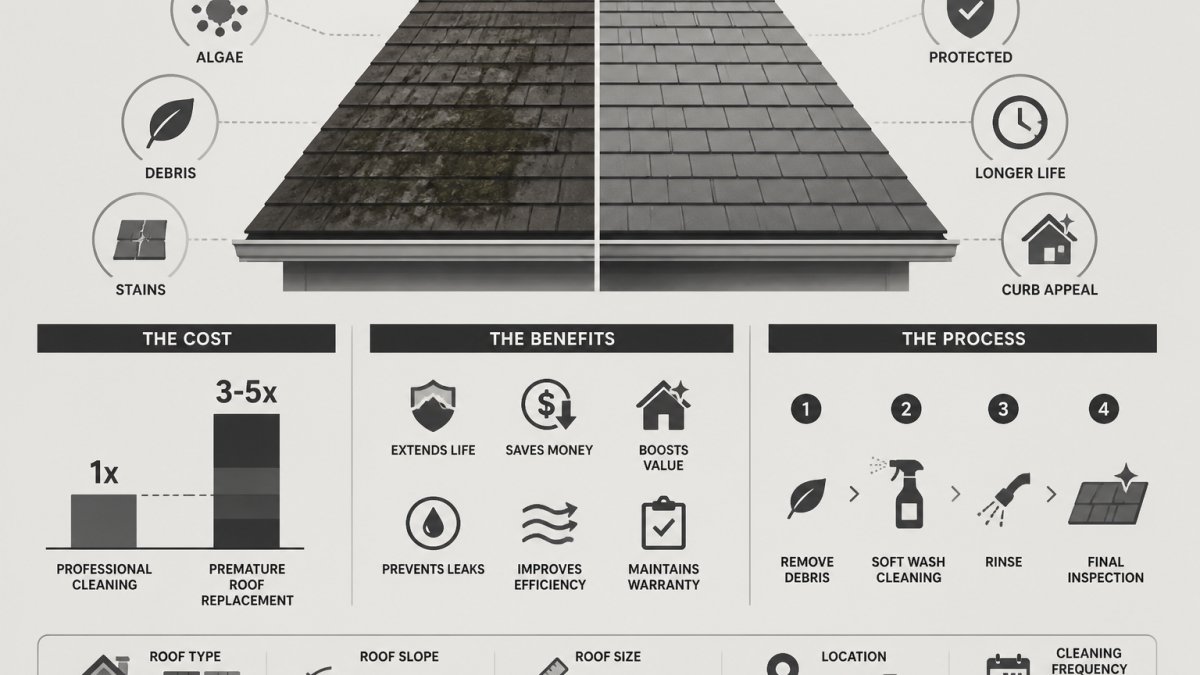
Is professional roof cleaning worth the cost? For most homes with visible moss, algae, or lichen, yes. The reason is simple: replacing a roof costs far more than maintaining one.
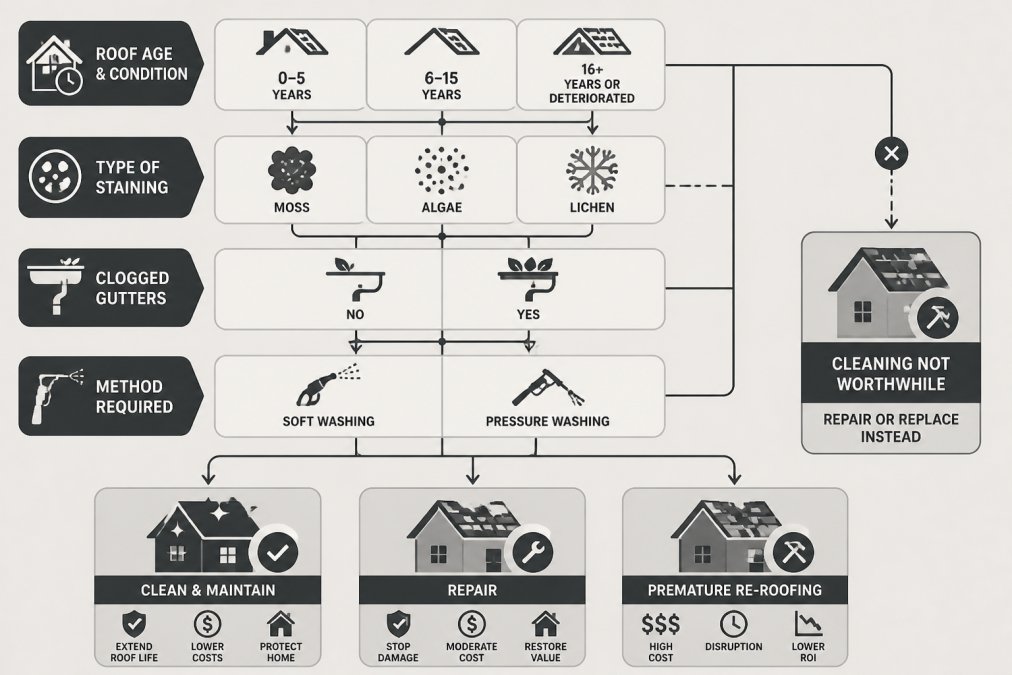
This guide from Times Square Remodeling Inc. breaks down what drives the price, when cleaning pays off, and when it does not.
A roof cleaning cost is not just a cleaning bill. It is a maintenance decision. You are trading a small, predictable expense now against a large, unpredictable one later.
A Cost-versus-Value Calculation You Can Run Yourself
Skip the guesswork. Compare two numbers.
- Cleaning and maintenance: a recurring cost you control
- Repair or replacement: a large, one-time cost you do not
- The gap between them: your actual savings from cleaning
If cleaning extends the years you get from your roof, the math favors cleaning. If the roof is already failing, cleaning is money spent on a losing battle.
How the Math Actually Works
Most homeowners never run the numbers. They either clean on a schedule or wait until something leaks. Both approaches leave money on the table.
Here is the framework a roofer uses when deciding whether cleaning is worth it:
- Estimate remaining roof life. An asphalt shingle roof typically lasts 15 to 30 years depending on climate, ventilation, and maintenance. If yours is 20 years old and showing wear, cleaning buys you very little.
- Identify what the growth is doing. Surface algae and moss are cosmetic and slow. Lichen and moss with root systems can lift shingle edges, trap moisture, and accelerate granule loss.
- Price the alternative. A roof replacement is a five-figure project for most homes. Cleaning and gutter service is a fraction of that. The question is whether cleaning delays the replacement by enough years to matter.
- Factor in the downside of waiting. Clogged gutters back water into fascia and soffit. Trapped moisture under moss can rot decking. Those repairs stack on top of the eventual replacement.
When Cleaning Is Unlikely to Pay Off
Be honest about these scenarios:
- The roof is in its final few years of service and already showing widespread granule loss or curling shingles
- There is active leaking, soft decking, or visible rot
- The growth has spread under flashing or into valleys where cleaning cannot reach
- You are already budgeting for a replacement within the next year or two
In those cases, cleaning is cosmetic at best. Put the money toward the repair or replacement.
Roof Cleaning Cost Factors That Move the Quote Up or Down
Several things change what you pay. None of them are mysterious once you know what to look for.
- Roof size: more square footage means more time and more solution
- Roof pitch: steep roofs need more safety setup and slower work
- Accessibility: tight lots and tall trees slow a crew down
- Roof material: asphalt shingles, roof tiles, and metal roofing each need a different method
- Type of growth: moss, algae, and lichen respond to different treatments
- Service scope: gutter cleaning and jobsite cleanup add to the job
The Asphalt Roofing Manufacturers Association guidance on roof maintenance is a good reference for why material type matters so much. A soft, low-pressure approach suits some roofs. Others tolerate more. Get this wrong and you cause damage instead of preventing it.
How to Read a Cleaning Quote Line by Line
A vague quote is a warning sign. A good one tells you exactly what happens.
- Roof size and pitch are listed
- The cleaning method is named (soft washing vs. pressure washing)
- The cleaning solution is described
- Gutter cleaning is included or excluded, clearly
- Jobsite cleanup is spelled out
- Property protection steps are mentioned
If a quote skips these, ask. A professional roofer will answer without hesitation.
Roof Cleaning vs. Pressure Washing: Which Method Fits Your Roof
This is where most damage happens. Pressure washing and roof cleaning are not the same thing.
Roof cleaning is the process of removing moss, algae, lichen, and debris from a roof surface using methods matched to the material. It protects the roof. Pressure washing uses high-pressure water that can strip granules, crack tiles, and force water under shingles.
For most roofs, soft washing wins. Soft washing uses low-pressure cleaning with a water and bleach cleaning solution to kill growth at the root. Pressure washing belongs on concrete, not on asphalt shingles.
Material-by-Material Cleaning Guidance
Every roof material has a different tolerance for pressure, chemicals, and foot traffic. Get the method wrong and you cause the exact damage you were trying to prevent.
- Asphalt shingles: soft washing only. The mineral granules on the surface are the roof's first line of defense against UV and rain. High pressure strips them, and once they are gone, the asphalt underneath ages fast. A low-pressure application of a diluted sodium hypochlorite solution, followed by a gentle rinse, kills algae and moss without touching the granules.
- Clay and concrete tile: low-pressure cleaning. Tiles are brittle and can crack under a direct high-pressure stream, especially older tiles that have already weathered. Walkable tile roofs still require care because foot traffic alone can crack tiles. Soft washing with a manufacturer-approved solution is the safer path.
- Metal roofing: low-pressure cleaning with a gentle solution. Painted metal finishes can be dulled or stripped by harsh chemicals or high pressure. Check the panel manufacturer's cleaning recommendations before any solution touches the surface.
- Wood shakes and shingles: the most delicate. Hand cleaning and gentle treatment are the norm. High pressure splinters the wood, and harsh chemicals can bleach or degrade it. Many wood roofs need a preservative treatment after cleaning.
- Slate: low-pressure only, and often hand work. Slate is durable but brittle, and a pressure stream can chip edges or dislodge pieces.
Why Pressure Washing Damages Roofs
The mechanism is simple. A pressure washer concentrates water into a narrow, high-velocity stream. On an asphalt shingle, that stream lifts the granular surface layer. On a tile, it can crack the tile or force water past the overlap. On any roof, it can drive water under flashing and into the deck.
Soft washing works differently. It relies on the cleaning solution to kill organic growth at the root, then a low-pressure rinse to carry the dead material away. The result lasts longer because the growth is dead, not just knocked off the surface.
Matching the Method to the Growth
- Black streaks (algae): a soft wash with a diluted bleach solution is the standard treatment
- Green moss: often needs a longer dwell time and sometimes manual removal before treatment
- Lichen: the toughest. Lichen anchors into the surface and may need repeated treatments or hand removal
- Debris and leaves: gutter clearing and a gentle rinse, not pressure
What to Ask Before Any Method Is Used
- What pressure will be used, and is it appropriate for this material?
- What chemical is in the solution, and is it safe for the roof and the landscaping below?
- Will plants, siding, and windows be protected or covered?
- Is the runoff being managed so it does not flow into storm drains or garden beds?
A contractor who can answer these without hesitation is a contractor who has done the work before.
DIY Roof Cleaning vs. Professional: An Honest Comparison
DIY looks cheaper on paper. The real cost shows up elsewhere.
- Safety: falls are a leading cause of serious home-injury accidents; roof pitch and height raise the risk fast
- Equipment: professional equipment, including proper ladders and safety gear, costs money to buy or rent
- Results: store-bought mixes often miss the root of moss and algae, so growth returns
- Risk: too much pressure or the wrong solution can damage shingles, tiles, or landscaping
Professional roof cleaning brings the right method, the right solution, and the safety setup. For a steep or tall roof, that difference is not a luxury. It is the whole point.
How Often to Clean a Roof (and the Signs It's Overdue)
Most roofs need attention every one to three years, depending on shade, moisture, and tree cover. Homes under heavy tree canopy or in damp, shaded spots need it more often.
Watch for these signs it is overdue:
- Dark streaks or roof stains that keep spreading
- Green or black patches of moss and algae
- Crumbling lichen on shingles or tiles
- Clogged gutters full of granules and debris
- Water damage or staining on ceilings below
The Centers for Disease Control and Prevention guidance on fall prevention is worth reading before anyone steps on a roof. Fall hazards are real, and they are the top reason to leave steep roofs to a crew.
When Professional Roof Cleaning Is Not Worth the Money
Cleaning is not always the answer. Sometimes it is throwing money at a roof that is already done.
- The roof is near the end of its lifespan: cleaning will not add meaningful years
- There is structural damage: soft spots, sagging, or missing shingles need repair, not a wash
- The growth has caused rot: the problem is deeper than the surface
- You are already planning a roof replacement: save the cleaning money for the new roof
In these cases, put the money toward repair or replacement. A professional can tell you which path you are on.
Conclusion
The hard part is not deciding whether to clean your roof. It is knowing when cleaning helps and when it just delays the inevitable.
At Times Square Remodeling Inc., we have spent over 15 years helping homeowners protect their roofs and their budgets. As a California licensed general contractor (License #953868), we handle roof cleaning, roof repairs, and new roof installation. We also bring that same care to kitchen and bathroom remodeling, ADU construction, and energy-efficient upgrades.
Get started with Times Square Remodeling Inc. and protect your roof before small problems become big ones.
Frequently Asked Questions
Is professional roof cleaning worth it for a typical asphalt shingle roof?
It depends on what the staining is and how old the shingles are. If the roof is structurally sound and the problem is moss, algae, or lichen holding moisture against the surface, professional roof cleaning can remove the growth and let you inspect the shingles underneath. If the shingles are already brittle, curling, or near the end of their service life, cleaning will not restore them and the money is better put toward repair or replacement. Ask the contractor to assess roof condition before quoting the cleaning.
Can roof cleaning damage shingles?
Yes, if the wrong method is used. High-pressure washing forces water under shingle edges and strips the protective granules, which shortens the roof's life. Soft washing uses low pressure with a cleaning solution to kill moss, algae, and lichen at the root instead of blasting them off. Ask any roof-cleaning service which method they plan to use on your roof material before you approve the work, and walk away from anyone who defaults to pressure washing on asphalt shingles.
How often should a roof be cleaned?
Most roofs need attention when staining, moss, or debris becomes visible, not on a fixed calendar. Shaded roofs, roofs under trees, and roofs with poor drainage accumulate growth faster. A practical routine is to inspect the roof and gutters twice a year, in spring and fall, and clean when you see dark streaks, moss patches, or clogged gutters. Leaving growth in place holds moisture against the roof surface and can shorten its lifespan.
What should I check before hiring a roof cleaning contractor?
Ask for the license number, proof of insurance, and a written scope that names the cleaning method, the areas covered, and how they protect landscaping, siding, and gutters during the job. Get the quote in writing before work starts. A contractor who handles roofing as part of a broader remodeling practice can also tell you whether the staining is cosmetic or a sign of a repair issue, which a cleaning-only crew may not catch.