 listicle
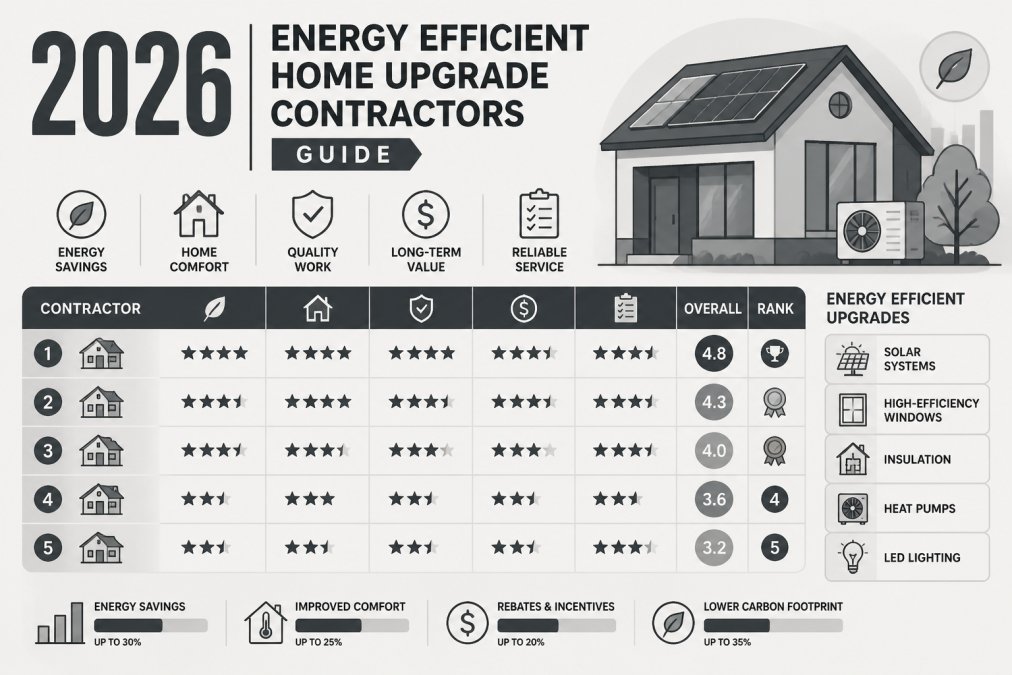
Energy Efficient Home Upgrade Contractors: 2026 Guide
Table of Contents
- What Energy Efficient Home Upgrade Contractors Actually Do
- Home Energy Audit Services: The First Step Before You Hire Anyone
- Energy Efficient Insulation Upgrades for Homes: What Contractors Should Recommend
- Federal Tax Credits for Energy Efficiency and Local Rebates
- A Contractor Vetting Checklist: 12 Questions to Ask Before You Sign
- Electrification Upgrades: Heat Pumps, Mini-Splits, and Induction Cooking
- How Energy Efficient Home Upgrades Improve Resale Value and Comfort
- Maintenance After the Upgrade: Keeping Efficiency High
- Frequently Asked Questions
Last Updated: September 18, 2026
What Energy Efficient Home Upgrade Contractors Actually Do
Energy efficient home upgrade contractors are licensed professionals who audit, plan, and install improvements that cut a home's energy consumption, insulation, air sealing, heat pumps, high-performance windows. Times Square Remodeling Inc. has completed these projects for over 15 years as a California-licensed general contractor.
Typical scope includes:
- Home energy audit and blower-door testing
- Attic, wall, and crawlspace insulation
- Air sealing and weatherization
- HVAC efficiency upgrades, including heat pumps and mini-splits
- Energy-saving windows and doors
- Documentation for rebates and tax credits
The Difference Between a General Contractor and a Specialized Retrofit Crew
A general contractor manages the whole project, permits, trades, scheduling. A specialized retrofit crew focuses on building science: pressure testing, duct sealing, envelope work. The best outcome comes from one licensed general contractor coordinating both, so you're not managing three companies.
Home Energy Audit Services: The First Step Before You Hire Anyone
Home energy audit services are professional assessments that identify exactly where a house loses energy, using blower doors, infrared cameras, and duct pressure testing. No reputable contractor should quote a big upgrade without one.
What a BPI or RESNET Certified Auditor Checks
BPI certification is a credential from the Building Performance Institute for technicians who test and improve home energy performance. RESNET sets the national standard for home energy ratings, including the HERS Index.
A certified auditor typically inspects:
- Air leakage through the building envelope
- Insulation levels and gaps in attics, walls, and floors
- Duct leakage and HVAC system performance
- Windows, doors, and thermal comfort issues
- Combustion safety and indoor air quality
Energy Efficient Insulation Upgrades for Homes: What Contractors Should Recommend
Energy efficient insulation upgrades for homes should target the attic first, then air sealing, then walls and crawlspaces. Insulation without air sealing is the most common wasted investment.
Air Sealing, Weatherization, and Building Envelope Work
The building envelope is the barrier between your living space and the outside. Air sealing closes gaps; insulation slows heat transfer. Do one without the other and you leave performance on the table.
A contractor should recommend:
- Sealing gaps around wiring, plumbing, and framing
- Adding or replacing attic insulation to current recommended levels
- Sealing and insulating ductwork in unconditioned spaces
- Weatherization of doors, windows, and rim joists
Federal Tax Credits for Energy Efficiency and Local Rebates
Federal tax credits for energy efficiency can cover a meaningful share of qualifying upgrade costs and often stack with state and utility rebates. Rules change, so verify current amounts before you buy.
The Two Federal Programs Homeowners Actually Use
Most residential efficiency work falls under two Inflation Reduction Act programs administered through the IRS:
- Energy Efficient Home Improvement Credit (Section 25C), a nonrefundable credit for existing homes, claimed on the year's tax return. It covers a percentage of qualifying equipment and materials, with separate annual caps for different categories (envelope, HVAC, water heating, electrical panel).
- Residential Clean Energy Credit (Section 25D), a separate credit for qualifying clean energy property, including certain heat pumps, solar, and battery storage. It has its own rules and does not share the 25C caps.
How Federal, State, and Utility Incentives Stack
Federal credits are claimed on your tax return. State and utility rebates are applied for separately, often after installation, and paid as a check or bill credit. They can generally be combined, but the order matters:
- Confirm eligibility first. Not every product qualifies for every program. A heat pump that meets federal efficiency thresholds may not meet a specific utility's rebate list.
- Install to spec. Rebate programs often require installation by a licensed contractor and may require a specific performance test (for example, a duct leakage or airflow measurement).
- Document everything. Itemized invoices, model and serial numbers, and permit records are the three items most often requested.
- File in the right order. Utility and state rebates are usually submitted first; federal credits are claimed on the following tax return.
| Incentive Type | Who Provides It | Typical Form | When You Get It |
|---|---|---|---|
| Federal tax credit (25C / 25D) | IRS | Nonrefundable credit on your return | With your tax filing |
| State rebate | State energy office | Check or bill credit | Weeks to months after install |
| Utility rebate | Your utility | Bill credit or check | After inspection or proof of purchase |
| Manufacturer rebate | Equipment maker | Prepaid card or check | Varies; often at purchase |
Where Homeowners Get Tripped Up
Three patterns recur:
- Buying before checking. A product purchased before the program year or before the current efficiency threshold took effect may not qualify.
- Assuming the contractor will file for you. Most contractors will prepare documentation, but the tax credit is claimed by you, on your return. Rebates are usually submitted by the homeowner or the contractor, depending on the program.
- Missing the performance requirement. Some rebates require a post-installation test (blower door, duct leakage, or airflow). If the test is not performed, the rebate is denied even if the equipment is correct.
The IRS guidance on energy efficient home improvement credits and the ENERGY STAR federal tax credit overview list which products qualify and what documentation is required. Check both before you sign a contract, and ask your contractor to put the qualifying model numbers in writing.
A Contractor Vetting Checklist: 12 Questions to Ask Before You Sign
Use this checklist before signing anything. It takes about 20 minutes and prevents the most expensive mistakes.
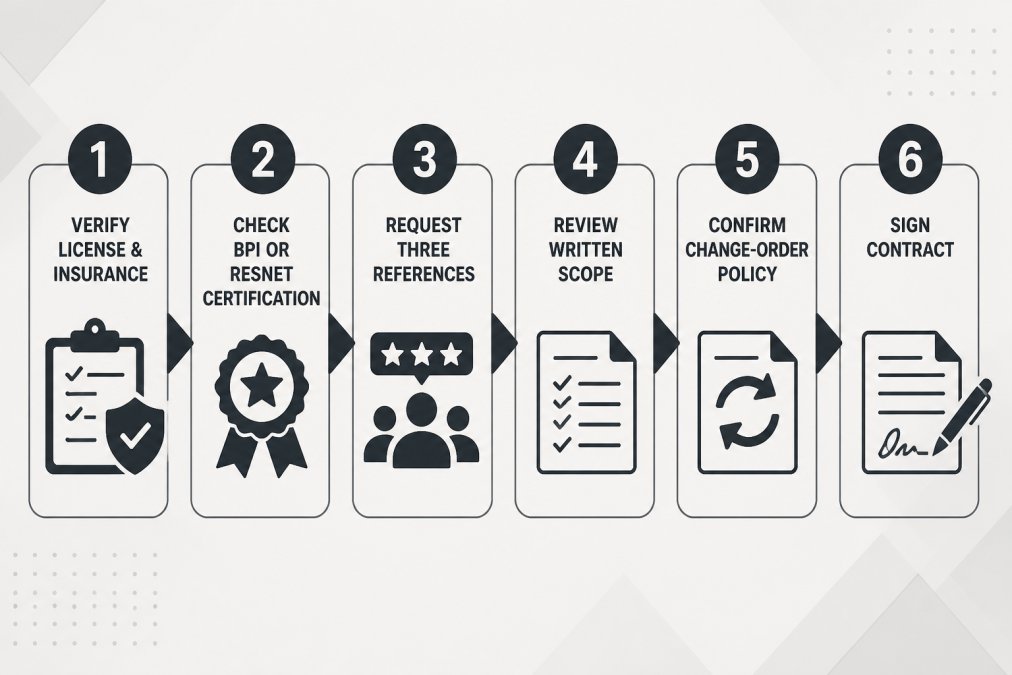
- Are you licensed, and what is your license number?
- Can I see your certificate of insurance?
- Do your auditors hold BPI or RESNET credentials?
- Will you perform a home energy audit first?
- How do you handle change orders and hidden damage?
- What is the written scope, and what is excluded?
- Who pulls the permits?
- How long will the project take, start to finish?
- Can you provide three recent references?
- What warranty covers labor and materials?
- How do you document work for rebates and tax credits?
- What happens if the results don't match the audit?
Electrification Upgrades: Heat Pumps, Mini-Splits, and Induction Cooking
Electrification means replacing gas appliances with electric ones, the fastest-growing category of home performance work. Heat pumps, mini-splits, and induction cooking are the upgrades homeowners ask about most, but the decision is rarely as simple as swapping one box for another.
Heat Pumps: The Whole-Home Option
A heat pump moves heat rather than generating it, delivering more heating energy than the electricity it consumes. Modern cold-climate models operate well below freezing, though capacity and efficiency drop as temperatures fall. In colder regions, a dual-fuel setup lets the heat pump handle most of the year with gas or electric backup on the coldest days.
What a contractor should confirm before quoting:
- Manual J load calculation, the room-by-room heating and cooling load that sizes the equipment. Skipping this is the single most common cause of an oversized or undersized system.
- Duct condition, a heat pump on leaky ducts loses much of its advantage. Duct sealing is often bundled with the install.
- Refrigerant line routing and condensate management, small details that drive cost and appearance.
Mini-Splits: Room-by-Room Without Ductwork
Ductless mini-splits solve two problems at once: they avoid the cost and disruption of new ductwork, and they let you condition only the rooms you use. They fit additions, converted attics and garages, and older homes where ducts were never installed or cannot be sealed economically.
Induction Cooking: The Kitchen Side of Electrification
Induction cooktops heat the pan directly through a magnetic field: faster response, more precise low-heat control, and no combustion byproducts. The practical requirements are simple but easy to overlook:
- Cookware must be magnetic. A refrigerator magnet is the quickest test.
- A dedicated 240-volt circuit is usually required. Many older kitchens only have a 120-volt gas igniter circuit.
- Ventilation still matters. Cooking produces grease, moisture, and smoke regardless of fuel type.
The Panel Question Nobody Wants to Hear
Electrification often requires an electrical service upgrade first. A contractor should check available capacity during the audit, not after the heat pump arrives. The relevant numbers are existing service amperage and calculated load after new appliances are added.
How Electrification Interacts With the Rest of the Upgrade
Electrification works best when sequenced with envelope work. Air sealing and insulation reduce the load the heat pump must meet, allowing a smaller, quieter, less expensive system. Done in the wrong order, heat pump first, envelope later, homeowners often pay for capacity they did not need.
How Energy Efficient Home Upgrades Improve Resale Value and Comfort
Energy efficiency improvements tend to support resale value, especially where buyers ask for utility costs up front. Documented upgrades with rebate paperwork give buyers proof, not promises.
Maintenance After the Upgrade: Keeping Efficiency High
Efficiency drifts downward without maintenance, even on a well-installed system. A simple annual routine protects the investment.
- Replace HVAC filters on schedule
- Schedule annual HVAC system optimization and inspection
- Re-check attic insulation after any roof or plumbing work
- Keep vents and returns clear of furniture and rugs
- Re-test duct sealing every few years
Frequently Asked Questions
What should I look for when hiring energy efficient home upgrade contractors?
Start with licensing and insurance. A qualified contractor holds a state general contractor license, carries general liability and workers' compensation coverage, and can show credentials such as BPI or RESNET certification for audit and retrofit work. Ask for three recent references from similar projects, a written scope of work, and a clear change-order policy. Confirm the crew has specific experience with heat pumps, air sealing, and building envelope improvements rather than only general remodeling.
Are there tax credits available for energy efficient home improvements?
Yes. Federal tax credits for energy efficiency cover a percentage of qualifying equipment and installation costs, including heat pumps, insulation, windows, and doors. Annual caps vary by category, and the credits are claimed when you file your return. State and utility rebates can stack on top, but each program has its own eligibility rules and paperwork. Ask your contractor for itemized invoices and manufacturer certification statements, since you will need those to claim anything.
How do energy efficient upgrades improve home resale value?
Buyers increasingly factor utility costs into their offers. Documented upgrades such as new insulation, air sealing, energy-saving windows, and high-efficiency HVAC systems give you verifiable performance data to show at listing. A home energy audit report and a record of completed retrofits make the value tangible rather than a vague selling point. Appraisers in many markets now recognize certified high-performance features when comparable sales support them.
How do I verify if a contractor is licensed for energy efficiency projects?
Look up the license number directly on your state contractor licensing board's website and confirm it is active, in the right classification, and carries a current bond. Ask whether the company holds BPI or RESNET certifications for audit and retrofit work, and check those credentials with the issuing organization. Verify insurance by requesting a certificate of insurance and calling the carrier. A legitimate contractor will provide all of this without hesitation.
What are the most common energy efficient home upgrades?
The most frequent projects are attic and wall insulation, air sealing and weatherization, energy-saving windows and doors, and HVAC system optimization or replacement with heat pumps or mini-splits. Many homeowners also add smart home technology such as programmable thermostats and zoned controls. The right sequence starts with a home energy audit so you address the biggest losses first instead of guessing which upgrade will pay off.