 comparison
Best Energy Efficient Heat Pump for California Homes
Table of Contents
- Why California Homes Are Switching to Energy Efficient Heat Pumps
- Heat Pump Efficiency Ratings: SEER2, HSPF2, and COP Explained
- Heat Pump Sizing for Homes: Why a Load Calculation Comes First
- Ducted vs Ductless Heat Pump: Which Fits Your California Home?
- ENERGY STAR Heat Pumps: What the Certification Actually Confirms
- Top Heat Pump Brands California Homeowners Compare
- Retrofit Readiness: Electrical Panel, Ductwork, and Rebates
- Conclusion: Choosing the Best Energy Efficient Heat Pump for Your Home
- Frequently Asked Questions
Last Updated: October 8, 2026
Why California Homes Are Switching to Energy Efficient Heat Pumps
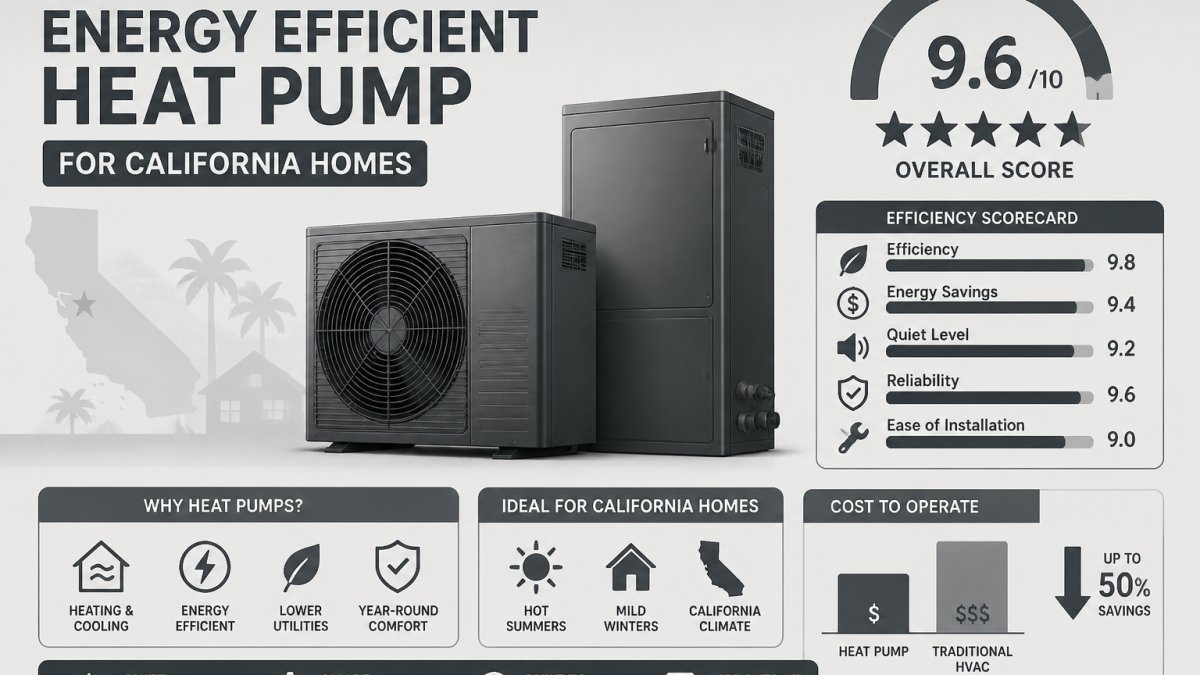
The best energy efficient heat pump for California homes is a correctly sized, variable-speed system with a high SEER2 and HSPF2 rating, matched to your climate zone and ductwork.
A heat pump moves heat instead of burning fuel, so the same equipment heats in January and cools in August. That shift cuts on-site carbon emissions and can lower utility bills, but only when the system is sized and installed correctly.
Heat Pump Efficiency Ratings: SEER2, HSPF2, and COP Explained
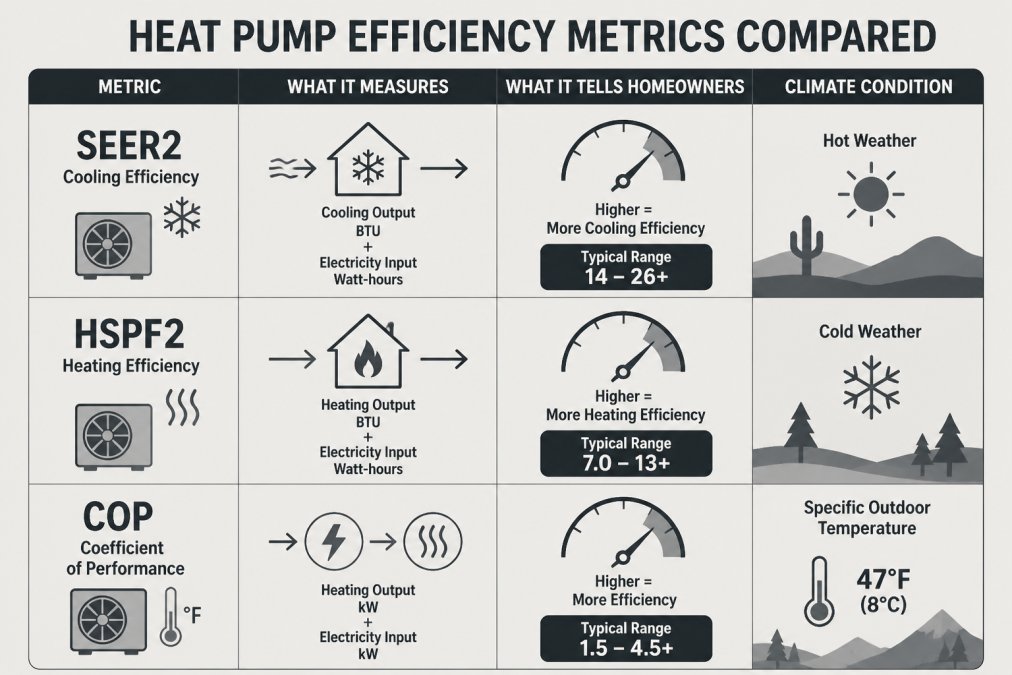
SEER2 measures cooling efficiency, HSPF2 measures heating efficiency, and COP measures heat delivered per unit of electricity at a specific outdoor temperature. Higher numbers mean lower operating costs.
| Rating | What It Measures | Higher Is Better Because | Reflects This Condition |
|---|---|---|---|
| SEER2 | Cooling efficiency | Less electricity per unit of cooling | Hot summer afternoons |
| HSPF2 | Heating efficiency | Less electricity per unit of heat | Mild to cold winter nights |
| COP | Heat output per unit of electricity | More heat from the same power draw | A stated outdoor temperature |
How to Read a SEER2 and HSPF2 Label
The yellow EnergyGuide label lists the model's SEER2 and HSPF2 values next to the federal minimums for its equipment class. SEER2 replaced the older SEER scale, and HSPF2 replaced HSPF, so you cannot compare a SEER2 number directly against an old SEER number. Check the model against the ENERGY STAR certified heat pump product finder before you sign a proposal.
Heat Pump Sizing for Homes: Why a Load Calculation Comes First
Heat pump sizing for homes starts with a load calculation, not a square-foot rule of thumb. A proper Manual J load calculation measures insulation, window area, orientation, ceiling height, and local design temperatures to determine the exact capacity your home needs.
An oversized heat pump short-cycles, wearing the compressor and leaving rooms uneven; an undersized unit runs constantly during heat waves and cold snaps. Ask your contractor to show the load calculation before quoting equipment.
Ducted vs Ductless Heat Pump: Which Fits Your California Home?
Ducted systems use existing ductwork to condition the whole house from one central unit. Ductless mini-splits deliver air directly from wall, floor, or ceiling heads, so no ductwork is required.
- Ducted whole-house system: Best when ducts are sealed and sized correctly. One thermostat, even temperatures.
- Ductless mini-split: Best for additions, garages, ADUs, and homes without ducts. Zoned control per room.
- Hybrid approach: A ducted system for main living areas plus one or two ductless heads for problem rooms.
Ductless units often score higher efficiency because they avoid duct losses entirely. Ducted systems win on comfort and aesthetics when the ductwork is in good shape.
ENERGY STAR Heat Pumps: What the Certification Actually Confirms
ENERGY STAR heat pumps meet efficiency thresholds set above the federal minimum for their class. The certification confirms the model was independently tested to those levels and is the fastest way to shortlist equipment.
Certification does not confirm the system is right for your home, your ducts, or your climate zone. The U.S. Department of Energy guidance on heat pump systems explains how ratings translate into real running costs.
Top Heat Pump Brands California Homeowners Compare
Brand-level roundups all say the same four names, but skip what actually decides your utility bill: which model, at which capacity, in which climate zone. Below is a brand-by-brand breakdown framed around California's four climate bands, coastal, inland valley, mountain, and desert, plus the model-level data you should demand before signing.
How to Compare Brands Without Getting Sold a Logo
A brand name is a warranty and a parts network. The efficiency you actually get comes from the specific model number, its rated capacity at your design temperature, and the quality of the install. Two systems from the same brand can differ by several SEER2 points and thousands of dollars in lifetime operating cost.
Carrier
Carrier's variable-speed, inverter-driven equipment is a common upgrade from single-stage systems, and its cold-climate models are frequently listed in the ENERGY STAR product finder. Carrier fits inland valley and coastal homes where cooling dominates and heating is mild. In mountain zones, verify the specific model's rated heating capacity at your winter design temperature, not the brochure's headline number.
Mitsubishi Electric
Mitsubishi Electric is best known for ductless and ducted inverter systems that maintain rated heating capacity at lower outdoor temperatures than many standard units, making it a frequent choice for mountain and higher-elevation inland homes. The trade-off: ductless heads condition rooms, not a whole house, so a full-home retrofit usually means multiple heads or a ducted air handler.
Daikin
Daikin offers both ducted and ductless lines and is often cited for cold-weather performance similar to Mitsubishi. Its breadth lets you match a single brand across a main system and a garage or ADU unit, simplifying warranty and service. Confirm the exact model's HSPF2 rating, the brand's cold-climate reputation does not transfer to every SKU.
Rheem
Rheem is commonly positioned as a value option with solid reliability and broad contractor availability. For coastal and mild-inland homes where heating demand is modest, a Rheem variable-speed unit can deliver most of the efficiency benefit at a lower equipment cost. In mountain zones, check whether the specific model is rated for your design temperature.
Model-Level Data You Should Demand
Before you approve any proposal, ask the contractor to provide, in writing, for the exact model number quoted:
- SEER2 and HSPF2 ratings as listed on the ENERGY STAR product finder
- Rated heating capacity at your local winter design temperature (not at 47°F)
- Rated cooling capacity at your local summer design temperature
If a contractor cannot produce those five items, the proposal is not ready to sign.
Climate-Zone Fit at a Glance
| Climate Band | Dominant Load | What to Prioritize |
|---|---|---|
| Coastal | Mild heating, moderate cooling | High SEER2, humidity control, quiet outdoor unit |
| Inland valley | Heavy cooling, moderate heating | High SEER2, variable-speed, correctly sized ducts |
| Mountain | Cold winters, mild summers | High HSPF2, rated capacity at low outdoor temps |
| Desert | Extreme cooling, mild heating | High SEER2, high-temperature performance, durable condenser |
Brand matters less than the specific model and the installer. A premium unit installed on undersized ducts will underperform a mid-range unit installed correctly.
Retrofit Readiness: Electrical Panel, Ductwork, and Rebates
Retrofit readiness comes down to three checks: your electrical panel, your ductwork, and your available incentives. Heat pumps draw more power than a gas furnace, and older panels may not have capacity for the new circuit. What most guides skip is the order of operations, doing these checks in the wrong sequence is how projects blow their budget.
Step 1: Electrical Panel Capacity
A heat pump needs a dedicated 240-volt circuit for the outdoor unit, and often a second for electric backup heat or an air handler. Before anything else, have a licensed electrician confirm:
- The panel's main breaker rating and available bus capacity
- Whether there is physical space for the new breakers
- Whether the service entrance and meter can support the added load
If the panel is full or undersized, a service upgrade or subpanel may be required. Scope and permit that work before the heat pump is ordered, not on install day.
Step 2: Ductwork Condition and Sizing
Ducted heat pumps inherit whatever ductwork is already in the house. Leaky, undersized, or poorly sealed ducts will waste the efficiency you paid for. Ask for:
- A duct leakage test (total leakage as a percentage of system airflow)
- A static pressure reading at the air handler
- A visual inspection for crushed, disconnected, or uninsulated runs
In many older homes, duct sealing and minor rework are the highest-return line items in the project. In homes with no ducts, a ductless or hybrid approach avoids the problem entirely.
Step 3: Insulation and Air Sealing
A heat pump's efficiency is only as good as the envelope it serves. Attic insulation, air sealing at penetrations, and window performance all affect the load the system must meet. Addressing these before sizing equipment often lets a smaller, less expensive system do the same job.
Step 4: Permits and Local Requirements
Confirm permit requirements with your local building department before work begins. Electrical, mechanical, and any panel upgrade typically require separate permits and inspections. Skipping permits can complicate insurance, resale, and future rebate claims.
Step 5: Incentives and Eligibility
Rebate amounts and eligibility rules change often, so confirm current figures with the Database of State Incentives for Renewables and Efficiency and your utility before you buy. Eligibility commonly depends on:
- The specific model's efficiency ratings
- Whether the installation is performed by a licensed contractor
- Whether permits were pulled and inspections passed
Keep every invoice, permit, and inspection record. Most incentive programs require documentation at application, and retroactive claims are often denied.
Zone-Specific Retrofit Notes
| Climate Band | Common Retrofit Constraint | What to Plan For |
|---|---|---|
| Coastal | Older panels, mild loads | Panel capacity check, humidity control |
| Inland valley | Undersized ducts, heavy cooling load | Duct resizing, high-SEER2 equipment |
| Mountain | Cold-weather capacity, propane or electric resistance heat | Cold-climate model, backup heat strategy |
| Desert | Extreme cooling, long runtimes | High-temp performance, condenser placement |
As a California-licensed general contractor (License #953868), we handle the electrical, ductwork, and insulation scope as one project so nothing falls between trades.
Conclusion: Choosing the Best Energy Efficient Heat Pump for Your Home
The right system is sized to your home, rated for your climate zone, and installed by a team that checks the panel and ducts first.
Times Square Remodeling Inc. brings over 15 years of California remodeling experience to energy-efficient upgrades, from panel and ductwork readiness to full installation. We manage the project end to end, so you are not coordinating separate trades.
Frequently Asked Questions
Which heat pump is the most energy efficient?
The most energy efficient heat pump for a given home is the one with the highest SEER2 and HSPF2 ratings that still matches your home's load calculation and ductwork. Variable-speed compressor models generally outperform single-stage units because they modulate output instead of cycling on and off. Check certified ratings in the ENERGY STAR product finder rather than relying on brand marketing, since efficiency varies by model within the same brand.
What is the best heat pump brand for Southern California?
Brands like Carrier, Mitsubishi Electric, Daikin, and Rheem all appear in California-focused heat pump guides, and each has models with different efficiency levels. Southern California's mild climate means you rarely need extreme cold-weather performance, so prioritize high SEER2 for cooling and solid HSPF2 for winter. The installer's sizing and ductwork quality matter as much as the brand name, so compare certified model ratings before deciding.
How do you compare heat pump efficiency ratings?
Compare SEER2 for cooling efficiency and HSPF2 for heating efficiency, since both replaced the older SEER and HSPF metrics. Higher numbers mean lower electricity use for the same output. Also check the coefficient of performance at your expected winter temperatures if you live in a colder part of the state. Two units with identical SEER2 can perform differently in heating, so look at both ratings together.
Are ductless mini-split heat pumps more efficient than ducted systems?
Ductless mini-splits often deliver higher efficiency in practice because they avoid duct losses, which can waste a significant share of conditioned air in older homes. A ducted system with well-sealed, properly sized ductwork can perform close to a ductless unit. If your home has no existing ducts or leaky ducts that are hard to fix, ductless is usually the better choice. If ductwork is in good condition, a ducted whole-house system can be more comfortable and less visually intrusive.
What size heat pump does a home need?
Size comes from a load calculation, not square footage alone. A contractor measures insulation, window area, ceiling height, sun exposure, and local design temperatures to determine the correct heating and cooling capacity. An oversized unit cycles frequently, which raises electricity use and wears parts faster. An undersized unit runs constantly and struggles during heat waves. Ask for the load calculation in writing before you approve a system.