 how-to
Does Adding Insulation Reduce HVAC Energy Bills?
Table of Contents
- How Insulation Reduces HVAC Energy Bills
- Attic Insulation R-Value Requirements for Your Climate
- Signs of Poor Home Insulation You Should Not Ignore
- The Home Energy Audit Process: Finding Heat Loss Before You Insulate
- Insulation Materials Compared: Fiberglass, Spray Foam, and Cellulose
- HVAC Sizing vs. Insulation Levels: Why More Insulation Changes the Math
- DIY vs. Professional Insulation Installation: Risks That Cost More Later
- Frequently Asked Questions
Last Updated: September 30, 2026
How Insulation Reduces HVAC Energy Bills
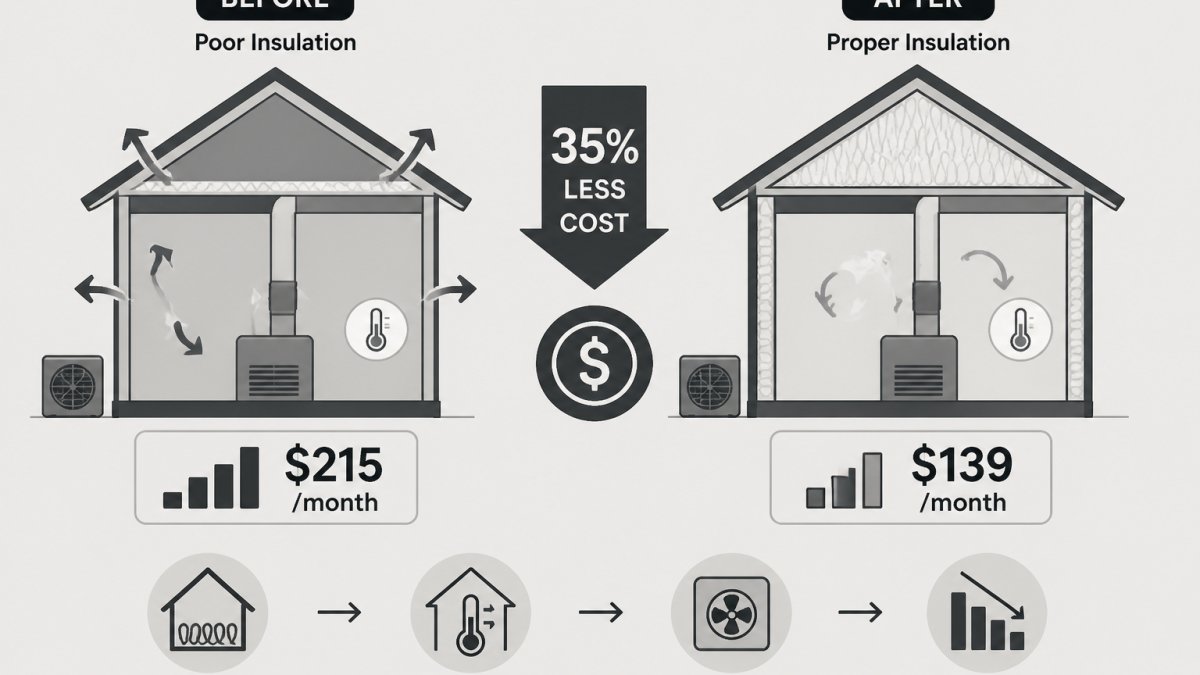
Does adding insulation reduce HVAC energy bills? Yes, it does. Insulation slows heat transfer between your home and the outside air, so your system runs less to hold a steady temperature. That directly lowers energy consumption and monthly utility bills. This guide from Times Square Remodeling Inc. explains how the effect works and how to get it right.
Insulation is a material that resists heat flow. Its power is measured by R-value, or thermal resistance. Higher R-value means slower heat transfer through walls, attics, and floors.
Here is the chain reaction that cuts your bills:
- Heat escapes in winter and enters in summer
- Insulation blocks that movement
- Your HVAC system cycles less often
- Less runtime means lower energy use
The Department of Energy guide to insulation explains that insulation works best when paired with air sealing. Gaps and cracks let air move freely, which defeats even thick insulation.
So the answer is yes, but only when the job is done correctly.
Attic Insulation R-Value Requirements for Your Climate
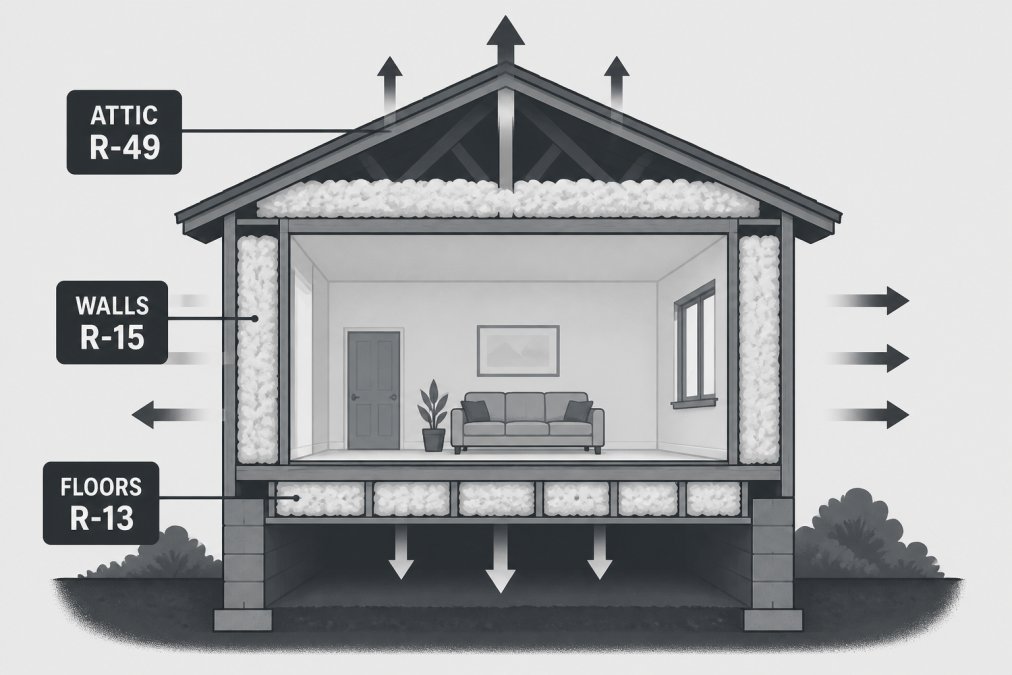
Attic insulation R-value requirements depend on your climate zone. The DOE publishes a climate zone map with recommended R-values for attics, walls, and floors. Warmer zones need less; colder zones need more.
For most of Southern California, attics typically call for R-30 to R-49. That range suits hot summers and mild winters. Homes in the mountains need more.
Check your zone before you buy. The wrong R-value wastes money in two ways. Too little does not stop heat gain. Too much adds cost with little benefit.
Key points to remember:
- R-value measures thermal resistance
- Climate zone sets the target
- Attic insulation matters most, since heat rises
- Air sealing always comes first
A pro can confirm your target in minutes.
Signs of Poor Home Insulation You Should Not Ignore
Signs of poor home insulation show up as comfort and cost problems, not just as visible gaps. Most homeowners notice the symptoms before they ever see the cause.
Watch for these signals:
- Rooms that feel too hot or too cold
- High monthly utility bills that keep climbing
- Drafts near outlets, doors, and windows
- Ice dams or uneven roof snow melt
- Cold floors in winter
- A stuffy or humid indoor feel
- Pests and moisture in the attic
Any one of these points to energy loss. Two or more usually means your thermal envelope needs work.
The fix is not always a full replacement. Sometimes air sealing and added attic insulation solve most of the problem.
The Home Energy Audit Process: Finding Heat Loss Before You Insulate
A home energy audit is an inspection that finds where your house loses heat before you spend money on fixes. It turns guesswork into a plan.
The process usually follows these steps:
- Review past utility bills for usage patterns
- Walk the home to check insulation, windows, and doors
- Run a blower door test to measure air leaks
- Use thermal imaging to spot heat loss and thermal bridging
- Inspect the attic, crawlspace, and ductwork
- Deliver a report with prioritized fixes
A blower door test measures how much air leaks through your building envelope. Thermal imaging shows temperature differences on walls and ceilings.
Do the audit first. Insulating before you seal leaks traps the problem in place.
Insulation Materials Compared: Fiberglass, Spray Foam, and Cellulose
The three main insulation materials are fiberglass, spray foam, and cellulose. Each fits different spots and budgets.
| Material | R-Value per Inch | Best For | Watch Out For |
|---|---|---|---|
| Fiberglass batts | About R-3 | Open attics, walls | Air gaps if poorly fitted |
| Spray foam | About R-6 | Cramped spaces, air sealing | Higher upfront cost |
| Cellulose | About R-3.5 | Attics, retrofitting | Settling over time |
Fiberglass is the most common and the cheapest. It works well in open, easy-to-reach areas. It loses value if it is compressed or leaves gaps.
Spray foam expands to fill cracks. It handles air sealing and insulation in one step. It costs more, so many use it in tricky spots only.
Cellulose is blown-in and good for retrofitting existing walls and attics. It needs proper density to avoid settling.
Choose by location, not by brand loyalty.
HVAC Sizing vs. Insulation Levels: Why More Insulation Changes the Math
HVAC sizing and insulation levels are linked through a single number: the heating and cooling load. That load is the amount of heat your home gains or loses per hour under design conditions. Insulation reduces it. When the load drops, the system that was sized for the old load no longer matches the house.
Here is the mechanism most guides skip. A contractor sizes equipment using a load calculation, the industry-standard method is ACCA Manual J, followed by Manual S for equipment selection and Manual D for duct design. Manual J accounts for square footage, window area and orientation, ceiling height, duct location, infiltration rate, and insulation R-values. Change the R-values in the attic or walls, and the calculated load falls.
What happens when you insulate but keep the old system:
- The unit now has more capacity than the house needs
- It satisfies the thermostat setpoint faster and shuts off
- It restarts sooner because the house loses less heat
- Runtime per cycle drops, and cycles per hour climb
That pattern is short-cycling. In cooling mode, short cycles mean the evaporator coil does not run long enough to pull humidity out of the air. The house feels clammy even at the setpoint.
- If you are adding insulation as part of a larger renovation, ask for a fresh Manual J before anyone quotes equipment.
- If your current system is already near the end of its service life, size the replacement for the post-insulation load, not the pre-insulation load.
- If your system is new and you are only topping off attic insulation, a load recalculation is still worth it, you may find the existing unit is now oversized.
- Two-stage and variable-capacity equipment handles a reduced load far better than single-stage, because it can run at part load instead of cycling on and off.
DIY vs. Professional Insulation Installation: Risks That Cost More Later
Common DIY mistakes:
- Compressing fiberglass batts, which lowers their effective R-value below the labeled rating
- Skipping air sealing before adding material, so the insulation still has air moving through it
- Blocking attic ventilation at the soffits or ridge, which traps moisture in the assembly
- Leaving gaps around pipes, wires, can lights, and the top plates of walls
- Installing the wrong R-value for the climate zone
- Covering knob-and-tube wiring or non-IC-rated recessed fixtures without proper clearance
Where DIY can make sense:
- Adding unfaced batts over existing attic insulation in an open, easily accessed space
- Sealing obvious gaps with caulk or spray foam in accessible areas
- Installing baffles at soffits before adding loose-fill
Where it usually does not:
- Spray foam, which requires proportioning equipment, temperature control, and PPE
- Dense-pack cellulose in closed wall cavities, which needs specific density to avoid settling
- Any work around combustion appliances, knob-and-tube wiring, or recessed fixtures without IC rating
- Crawlspaces with moisture problems, which need a vapor barrier strategy first
That is where Times Square Remodeling Inc. comes in. As a California-licensed general contractor with over 15 years of experience, the team handles insulation and energy-efficient upgrades as part of a full-service approach. You get one crew, one plan, and professional project execution instead of coordinating several trades yourself.
Frequently Asked Questions
Does the house get hotter in summer with no insulation?
Yes. Without insulation, heat gain through the roof and walls raises indoor temperatures quickly, forcing the air conditioner to run longer and harder. Attic temperatures can climb well above outdoor levels, and that heat radiates down into living spaces. Adding insulation slows heat transfer and helps stabilize indoor temperatures, so the HVAC system cycles less often during peak afternoon hours.
What is the most important place to insulate a house?
The attic is usually the first priority because it is where the largest share of heat loss and heat gain occurs in most homes. After the attic, focus on air sealing around windows, doors, and penetrations, then address walls and floors over unconditioned spaces. A home energy audit can confirm which areas of your thermal envelope are leaking the most before you spend money on materials.
How does insulation affect the lifespan of an HVAC system?
Insulation reduces HVAC workload by lowering how often and how long the system runs to maintain a set temperature. Less runtime means less wear on the compressor, blower motor, and other components. A system that is not constantly straining to overcome heat loss or heat gain tends to last closer to its expected service life, and it is less likely to need early repairs.
Can adding insulation prevent HVAC short-cycling?
It can help. Short-cycling often happens when a system is oversized or when a home loses conditioned air so fast that the thermostat triggers frequent on-off cycles. Sealing air leaks and adding insulation reduce that rapid loss, which supports longer, more even run times. If short-cycling continues after insulation work, have a licensed contractor check whether the HVAC unit itself is properly sized for the home.
Adding insulation cuts HVAC energy bills, but only when the job is done right. The wrong R-value, poor air sealing, or blocked ventilation can cancel the savings and create new problems. Times Square Remodeling Inc. brings licensed, experienced crews to energy-efficient upgrades, with full-service project management and a focus on long-term home value. Get started with Times Square Remodeling Inc. and turn a drafty house into a comfortable, efficient home.