 listicle
Best Bathroom Vanity Styles for 2026: Top Trends
Table of Contents
- 2026 Bathroom Vanity Trends at a Glance
- Floating vs Freestanding Vanities: Which Fits Your Bathroom?
- Small Bathroom Vanity Storage Solutions That Maximize Space
- Warm Earth Tones and Natural Materials for 2026
- Fluted Fronts, Curved Silhouettes, and Textural Design
- Bathroom Remodeling Cost Factors: What Drives Your Budget
- Maintenance and Durability of Natural Vanity Materials
- Frequently Asked Questions
Last Updated: September 19, 2026
2026 Bathroom Vanity Trends at a Glance
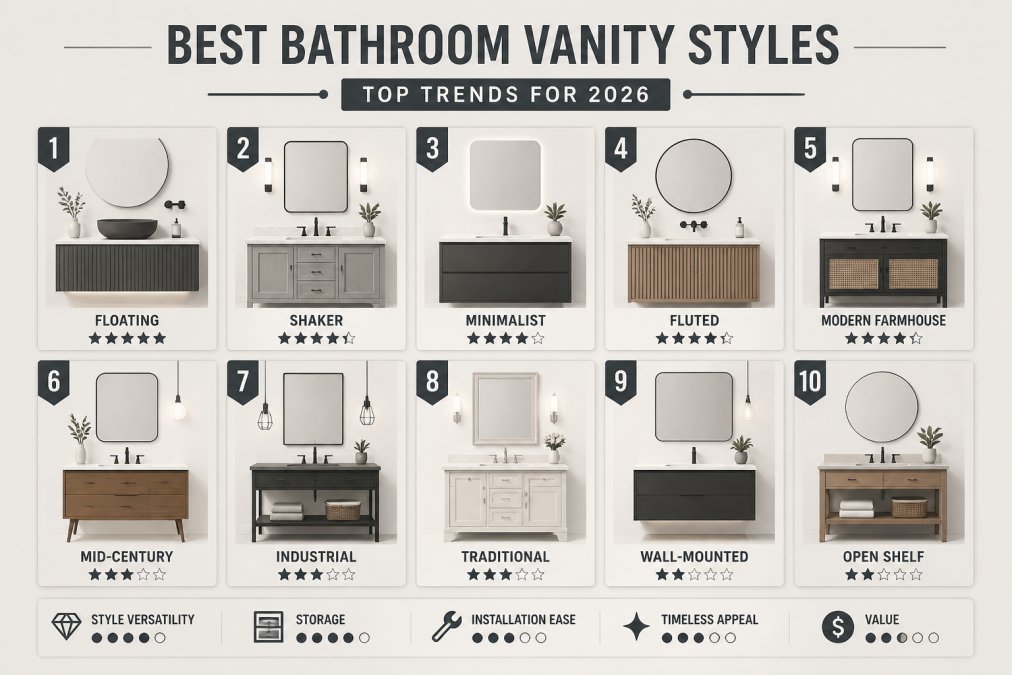
The best bathroom vanity styles for 2026 favor warm, natural materials paired with clean, organic lines, and these bathroom vanity styles reward homeowners who plan ahead. Floating designs, fluted fronts, and earthy palettes dominate the year, while practical storage and moisture resistance matter more than ever. This guide from Times Square Remodeling Inc. breaks down what's worth installing and what to skip.
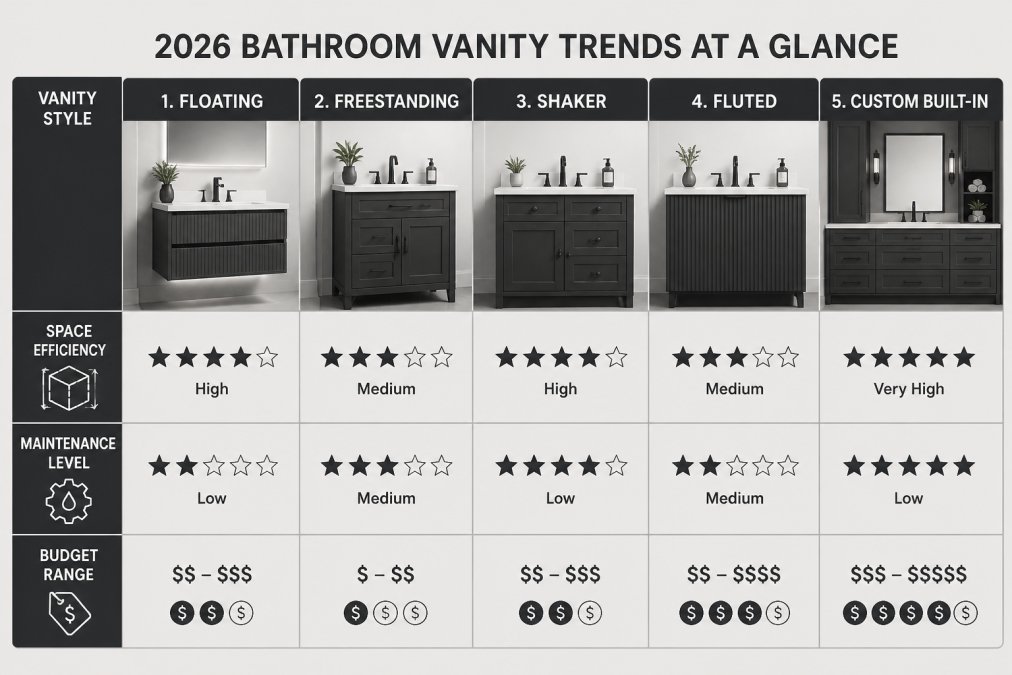
| Style | Space Efficiency | Maintenance | Budget Range |
|---|---|---|---|
| Floating wall-mounted | High | Low | Mid to high |
| Freestanding furniture | Medium | Low | Mid |
| Shaker solid wood | Medium | Medium | Mid |
| Fluted fronts | Medium | Medium | Mid to high |
| Custom built-in | Low | Low | High |
Floating vs Freestanding Vanities: Which Fits Your Bathroom?
Floating vanities mount to the wall and free up floor space, while freestanding vanities rest on legs or a base and offer more storage. The right pick comes down to room size, plumbing placement, and how much you need to store.
Wall-Mounted Floating Vanities
Wall-mounted units create an open-concept feel that makes small rooms read larger.
Freestanding and Furniture-Style Vanities
Freestanding vanities behave like furniture, which suits transitional and organic designs. They sit on the floor, so plumbing runs are simpler and installation is faster.
Small Bathroom Vanity Storage Solutions That Maximize Space
Most 2026 vanity roundups treat "small bathroom" as a single category. In practice, a 5-by-8-foot powder room, a 6-by-10-foot hall bath, and a narrow primary bath each need a different storage strategy. The best small bathroom vanity storage solutions use vertical space and drawer organization instead of wide footprints, a 30-inch floating vanity with deep drawers often stores more than a 48-inch unit with a single cabinet door.
Match the Vanity to the Footprint
- Powder rooms (under 20 sq ft of usable floor): A 24- to 30-inch floating or console vanity keeps the floor visually open. Skip the cabinet door, a single deep drawer plus an open shelf below handles guest towels and spare soap.
- Hall baths (roughly 35-50 sq ft): A 36- to 42-inch freestanding or floating unit with two drawers and one door is the sweet spot. Add a mirrored medicine cabinet for toiletries so the countertop stays clear.
- Narrow primary baths (under 6 ft wide): A 48-inch single-sink vanity with offset plumbing frees one side for a tall linen tower. Two sinks in this footprint usually cost you the storage you actually need.
Drawer and Vertical Storage That Works
- Use divided drawer inserts for toiletries and grooming tools
- Choose one deep drawer over two shallow ones for hair dryers and bulk items
- Add a tall cabinet or open shelving above the vanity for towels
- Mount a floating shelf at eye level for daily-use products
- Keep the countertop clear with a wall-mounted soap and cup holder
- Use the toe-kick or the space under a floating unit for a pull-out tray or basket
Clearance Rules That Prevent Regret
A common pattern is to buy the widest vanity that fits the wall and then discover the door won't open past the toilet. Plan for at least 21 inches of clear floor in front of the vanity and 15 inches from the vanity edge to the centerline of the toilet. According to guidance from the U.S. Department of Housing and Urban Development on home accessibility, clear floor space and reachable storage improve usability for aging homeowners, which matters if you plan to stay in the home long term.
Powder Room Specifics Most Guides Skip
Powder rooms are the highest-visibility, lowest-square-footage room in the house, so the vanity does more design work per inch. A console or furniture-style vanity with open legs reads lighter than a full cabinet, and a vessel sink on a narrow countertop can actually save depth compared to an undermount. If storage is truly scarce, a recessed medicine cabinet between the studs adds usable inches without stealing floor space.
Warm Earth Tones and Natural Materials for 2026
Warm earth tones anchor 2026 palettes: greige, clay, soft terracotta, and muted olive. These shades pair with natural timber and stone countertops to create a calm, spa-like atmosphere, but the difference between a palette that looks current and one that looks dated comes down to undertone matching and finish sheen, not the color name alone.
The 2026 Palette, Broken Down
- Greige foundations: Warm gray-beige cabinet fronts work with almost any stone. Look for a greige with a yellow or red undertone rather than a cool blue-gray, which reads sterile against warm wood.
- Clay and terracotta accents: Best used on a single element, a backsplash, a mirror frame, or a painted ceiling, not on full cabinetry, where the color can overwhelm a small room.
- Muted olive and sage: Pairs cleanly with brushed brass and unlacquered brass. Avoid pairing olive with chrome, which fights the warmth.
- Cream and bone whites: Replacing stark white as the default cabinet color. Cream reads warmer under bathroom lighting and hides water spots better than pure white.
Wood Finishes: White Oak vs. Teak vs. Walnut
White oak and teak remain the two most requested wood finishes. White oak brings a light, contemporary aesthetic with a straight grain that suits fluted and slab fronts. Teak handles moisture better in steam-heavy primary suites because of its natural oils, but it costs more and darkens over time. Walnut is the third option gaining ground, richer and darker, but it needs a more aggressive sealing schedule in a wet room.
Stone and Hardware Pairings
- Marble: Timeless but stains; seal annually and wipe up acidic products immediately.
- Quartzite: Harder and more stain-resistant than marble, with similar movement.
- Quartz: Consistent and low-maintenance, but reads more manufactured, best when the wood or tile carries the natural texture.
- Brushed brass and champagne gold: Warm up cooler stone surfaces and are the dominant hardware finishes for the year.
- Unlacquered brass: Develops a living patina; choose it only if you want the finish to change over time.
For homeowners weighing sustainability, the U.S. Environmental Protection Agency's guidance on sustainable materials notes that durable, responsibly sourced materials reduce long-term replacement waste. Solid wood construction and refacing existing cabinets both fit that goal, and refacing lets you shift an outdated palette to a 2026 earth tone without replacing the box.
Fluted Fronts, Curved Silhouettes, and Textural Design
Fluted fronts, softened edges, and curved silhouettes define the year's textural design language. Reeded and ribbed cabinet faces add depth without pattern, and matte finishes keep the look understated.
Bathroom Remodeling Cost Factors: What Drives Your Budget
Bathroom remodeling cost factors include vanity size, countertop material, plumbing changes, and whether you reface or replace. Labor and layout changes usually drive the biggest swings.
Maintenance and Durability of Natural Vanity Materials
Natural materials need real care in a wet room. Wood expands and contracts with humidity, stone stains without sealing, and brass tarnishes unless it is lacquered.
- Reseal stone countertops yearly to block water and soap staining
- Wipe wood fronts dry after splashes; standing water dulls the finish
- Use a bathroom exhaust fan to cut humidity at the source
- Avoid abrasive cleaners on matte finishes and brushed brass
- Check caulk lines around the sink every six months
Frequently Asked Questions
Are floating vanities still in style for 2026?
Yes, floating vanities remain a leading choice for 2026, especially in primary suites and small bathrooms. Wall-mounted designs open up floor space and pair well with organic minimalism and spa-like aesthetics. These units often include moisture-resistant materials. The trade-off is installation: floating vanities need proper wall blocking and professional mounting to handle daily weight safely.
What materials are trending for bathroom vanities in 2026?
White oak, teak, and solid wood construction lead the 2026 material trends, often paired with stone countertops like quartz or marble. Warm earth tones such as greige and muted greens are replacing cool grays. Moisture-resistant finishes matter in bathrooms, so look for sealed wood and marine-grade plywood. Many brands offer Shaker collections in organic wood tones.
How do I choose the right vanity style for a small bathroom?
Start with measurements, then prioritize storage. A floating vanity with soft-close drawers frees up floor space and makes cleaning easier. For tight powder rooms, consider a single-sink wall-mounted unit under 30 inches wide with vertical storage. If your existing vanity frame is solid, refacing services can update the look without a full replacement, saving both money and construction waste.
What are the best color palettes for bathroom vanities in 2026?
Warm earth tones dominate 2026 palettes: greige, muted sage, terracotta, and soft clay. These pair naturally with brushed brass or champagne gold hardware and stone countertops. Matte finishes are replacing high-gloss looks, and softened edges are appearing on drawer fronts and countertops. For contrast, deep charcoal or walnut vanities work well against light tile and open-concept layouts.
How much does a bathroom vanity remodel cost?
Bathroom remodeling cost factors include vanity size, material selection, plumbing changes, and whether you choose stock, semi-custom, or custom built-ins. Stock vanities are available, while custom solutions cost more due to labor and materials. For an accurate quote specific to your bathroom layout and finishes, contact a licensed contractor for an in-home assessment.